
Podcast: Download
Subscribe: Apple Podcasts | RSS

Looking for the best Memory Palace book to truly sharpen your mind?
You’re in the right spot.
After decades of studying and teaching the Memory Palace technique, I’ve narrowed the field down to books that actually work.
They’ve worked for me personally because I’ve tested their specific instructions based on years of research into what memory is and how it works.
I know good mnemonic strategies when I see them, and am sharing all the details so you can make an informed choice when looking for a robust Memory Palace guide.
In each description, I’ll explain exactly how each title helped me specifically. Many have helped my students in the Magnetic Memory Method Masterclass too. This means that many of my insights are informed by what has helped them succeed in their journeys too.
Stick around to the end, and I’ll show you how to apply what you learn from these books to truly boost your memory, starting today.
Here’s what I’ll cover:
- The Best Books to Learn Memory Techniques and Improve Your Memory
- 3 Better Ways to Improve Your Memory
Ready?
My Top Recommended Memory Palace Books
As we get into my recommendations, this point is important:
Plenty of books talk about the concept of using Memory Palaces.
But this list is different.
In addition to discovering books that will show you how to improve your memory, I’ve selected books that also show you how to put the technique into practice.
To make it easier for you to find the right starting point, I’ve organized my recommendations into three levels:
- Beginner books with accessible, clear introductions that inspire you about what the technique is and what it can do for you.
- Intermediate books that include deeper dives into advanced applications, creative variations and historical examples you might not have encountered before.
- Specialized memory works that will challenge you and expand your understanding of the memory arts.
Beginner Memory Palace Books
When you’re just getting started, consider reading these books first.
One: The Memory Palace by Lewis Smile
It was a hit on Kindle when it first came out.
Everyone was talking about it, and I was especially impressed when Alicia Crosby came on the Magnetic Memory Method Podcast.
As she discussed on the show with her father, this quick read helped her quickly memorize all of Shakespeare’s plays in historical order.
Not everyone will share the goals that Smile uses as an example in this book.
But if you want a quick, easy and fast introduction, this is a great place to start.
Two: Remember, Remember by Ed Cooke
Remember, Remember is another simple introduction.
Like Smile’s book, it walks you through developing a simple Memory Palace to learn a list of historically important names.
And Ed Cooke is a great person to learn from.
As a Grandmaster of Memory, Cooke’s also the founder of Memrise.

Plus, Cooke has been immortalized in one of the most famous memory training guides of all time.
That’s because he took the author of our next Memory Palace form novice to champion.
Three: Moonwalking with Einstein: The Art and Science of Remembering Everything.
First published in 2011, Joshua Foer’s bestseller debuted at No. 3 on the New York Times bestseller list.
Incredibly, it stayed on the list for eight weeks. I’ll never forget how inspired I felt when I read it after it first appeared in bookstores. To this day people email me about how fun and engaging they find it.
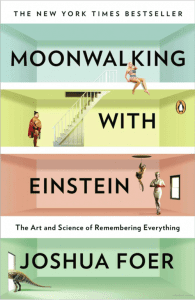
Thanks to a combination of lived experience and expert writing style, Foer takes you on a fascinating journey through how the mind of a memory champion works. From that perspective, the book goes in-depth about the mnemonic techniques they use to store memories.
A freelance science journalist, Foer learned the technique of memory training while researching the US Memory Championship. At the contest, Foer observed how people would memorize an entire deck of cards in just a couple of minutes.
Foer’s Call to Adventure
This skill fascinated Foer and got him interested in learning how to memorize a deck of cards himself. Foer discovered that individuals who aced memory contests used special strategies handed down from the ancient Greeks.
These strategies included mnemonic visualization that taps into spatial memory.
The combination of spatial memory and visualization leads to the Memory Palace technique. By visualizing a structure (such as your home), you can use these Memory Palaces to rapidly encode large amounts of information.
After learning about this ancient technique, Foer decided to learn the strategy and test his own memory power. He sought out some of the most iconic figures in the field and trained based on their recommendations.
A year later, Foer won the US Memory Championship against much more experienced ‘mental athletes’ who could memorize the exact order of ten shuffled decks of cards in less than an hour. It was an amazing feat, and also proof of concept that anyone can learn this technique.
Foer’s book draws on thorough research, the history of memory studies, and various tricks of mental champions. But it’s the true story of someone learning the technique from scratch and rising the ranks that makes it so interesting.
I have a personal connection to Moonwalking with Einstein too, an amazing association that never would have formed had I not read this guide all those many years ago.
Warrior of the Mind
Here’s the inside story:
In the opening pages of Moonwalking with Einstein, Joshua Foer discusses a pin worn by my dearly departed friend and mentor Tony Buzan.
Buzan, himself the author of The Memory Book, gave this pin to a select group of people, awarding them a special title to go with it, “Warrior of the Mind Emblem for Outstanding Contributions to Global Mental Literacy.”
One day, Tony Buzan awarded the Warrior of the Mind emblem to me. I’ll never forget the day he pinned the emblem on my lapel.
And because Buzan gave me this award, when you come across the part of Moonwalking with Einstein where Foer describes the pin, you now know what this special ceremonial brain cell looks like. Here’s a picture:

Four: The Art of Memory by Frances Yates
Published in 1966, people still reference The Art of Memory as one of the most influential books to cover the Memory Palace technique to this day.

The author, Frances A. Yates, traces the development of a wide variety of mnemonic systems, from the Simonides of Ceos era through the Renaissance until the 17th century when scientific methods were initiated.
As she describes in detail, the Memory Palace technique is the oldest mnemonic strategy and is also known as the method of loci.
Like many guides, Yates’ book narrates the story of Simonides, who was hired by a nobleman to recite poems from memory during a banquet. After the presentation, Simonides servant called him outside to meet some people who asked for him.
Before Simonides could re-enter the banquet hall after meeting two men who turned out to be Castor and Pollux, it collapsed, killing everyone inside.
The collapse mangled all the bodies beyond recognition. The story goes that Simonides used his memory to recall the faces and names of every victim.
After visiting each person based on where they had sat during the banquest, Simonides realized the importance of recalling facts based on their locations. That’s why the Memory Palace technique is still sometimes called the method of loci. You literally use Simonides’ method of visiting locations to recall information.
Thanks to contemporary memory science, decades of memory competition records and new translations, the techniques documented by Yates are stronger than ever before.
For example, if a defense lawyer needs to recall evidence during a trial, he can first create mental images of a place familiar to him – maybe his home – and peg each piece of evidence to a room.
During the trial, he can then recall those pieces of evidence by mentally walking through his house.
But there’s more to it than memory stunts for winning court cases.
In the following video, I talk about some of the problems with the book. They relate to Yates’ hotly contested interpretation of a Renaissance memory master named Giordano Bruno.
Don’t get me wrong: The book is excellent. But my own research has shown that her interpretations of Bruno are misguided. She’s much stronger on Robert Fludd, however. I’ll introduce you to Fludd a little bit later on in this list.
Five: The Memory Palace of Matteo Ricci by Jonathan Spence
Like The Art of Memory, Jonathan D. Spence’s The Memory Palace of Matteo Ricci gives you the history of memory techniques. Except in this case, you experience the technique through the life of one man.
As a biographical work, this book explores the story of a Jesuit priest named Matteo Ricci who lived during the 16th century, and how he used special mnemonic memory techniques to convert the Chinese to Christianity.
 The priest joined the new Catholic order, the Society of Jesus, in 1571, and studied law in Rome.
At that time, the order was quite young and needed to widen its influence. To ensure success, the church sent young priests into the world to convert people to Catholicism.
The story goes that Ricci became a willing member of that mission and sailed to China as a missionary.
For more than three decades, Ricci used his vibrant personality to convert the Chinese to Catholicism.
One fascinating aspect of the book is that Ricci knew a lot about how to memorize speeches. But with a twist.
To show off his skills, Ricci would sometimes recite what he memorized backwards.
Overall, this Jesuit priest believed he could convert more people by impressing them with his learning. That was when he started to use mnemonic devices to memorize huge amounts of information.
One of his key tasks was to convey basic Christian principles to the Chinese people in a manner they could appreciate and learn from. So he turned to memorization techniques for help.
He taught the Chinese people the art of creating Memory Palaces, helping them store several pieces of information in their mind and be able to recall it later. It’s the exact same strategy Foer discusses in Moonwalking with Einstein.
But instead of competing, Ricci tried to help people overseas understand Biblical teachings through their own cultural and spiritual norms. Ricci even learned Classical Chinese so well that he wrote a book about the Memory Palace technique called Xiguo Jifa (Western Technique).
Overall, I found The Memory Palace of Matteo Ricci so interesting, I made it a priority to visit Ricci’s grave the first time I visited Beijing.
Here’s a pic of the visit I made from my personal travel collection:

Beyond that, Ricci inspired me to start learning Chinese.
In fact, when the Chinese Language Institute in Guilin heard me talk about Spence’s study of Ricci on the Magnetic Memory Method Podcast, they invited me to give a presentation at their school.
I did exactly that and presenting the art of memory for them was a lot of fun. I almost felt like I was leading a life much like Ricci’s own.
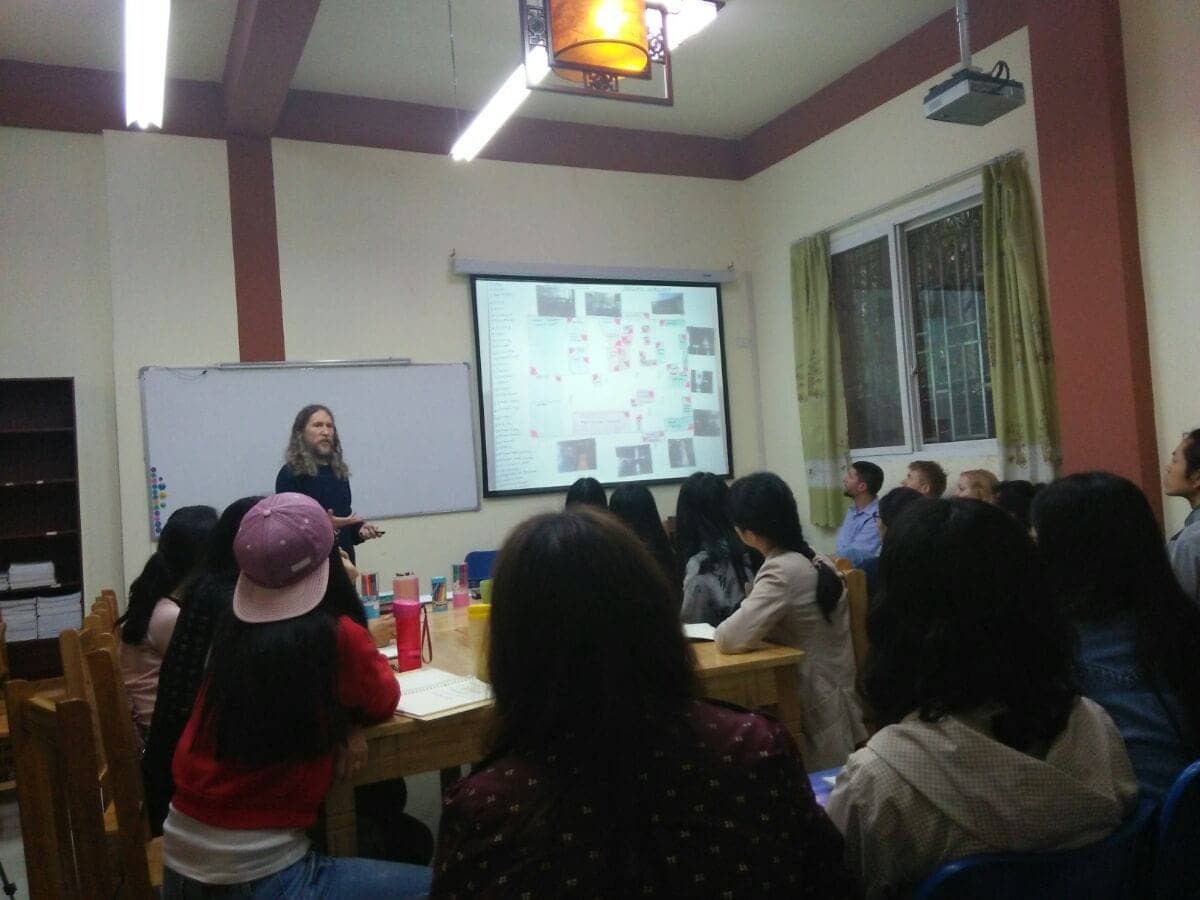
Although you might not wind up having an adventure like I did after reading this book, another thing I love about it is how it gives you insight into Ricci’s approach to memorizing Chinese characters. It did a lot to help me come up with my own.
Six: Unlock Your Amazing Memory: The Fun Guide That Shows Grades 5 to 8 How to Remember Better and Make School Easier by Brad Zupp
If your children are struggling with learning in school, Unlock Your Amazing Memory has plenty of ideas they can quickly read, understand and put to use.
 Zupp’s guide outlines powerful strategies that can improve memorization skills while making it a fun activity. The techniques teach young students how to remember what they see, read, and hear. As a result, they can expect better grades and more confidence in classroom settings.
The best part?
Studies shows that these techniques work and have helped thousands of students learning a variety of topics.
That includes students who are forgetful, lack motivation, prefer some subjects over others, feel stressed out or find themselves bored in class.
Teacher Tested Memory Techniques
It’s also important to note that the book is based on Zupp’s show, The Feats of Memory. This is an assembly program Zupp created for both students and teachers.
Teachers who have used his techniques say that it transformed the way their students processed their lessons and made tremendous improvements.
The guide also dives into the main issues that affect attention span, memory and focus. This additional element makes Zupp’s book especially useful for students in grades 5 to 8. Children in grades 3 and 4 can also benefit from it with some help from parents and teachers.
Zupp’s devotion to helping young people has inspired me many times over the years. I almost always recommend this book when parents ask me for suggestions to help their kids learn memory techniques.
For a full review of Unlock Your Amazing Memory, you can read more about my take on Zupp’s incredible book here.
Intermediate Memory Palace Books
When it comes to intermediate books, my exact definition is this:
They go deeper than the introductory material.
That might be in the form of providing more historical context or a personal story with using memory techniques like Tony Judt does in The Memory Chalet.
Or it could be that they contain additional Memory Palace exercises based on the author’s personal expertise or experiences.
This is a very important consideration as you’re growing your skills:
Always try to find intermediate instruction manuals from people who have provided proof of concept in the form of a demonstration. You will avoid spinning your wheels when you’re learning from people who have actually accomplished something substantial with the Memory Palace technique.
Seven: Memory Craft by Lynne Kelly
Perhaps the most important memory improvement author at the moment is Lynne Kelly.
Her book, Memory Craft, offers a unique exploration of the Memory Palace because she embeds it in the full tradition. Her approach is unique in the field because her approach is both scholarly and deeply personal. And as a science writer, she knows a great deal about how memory works.
For example, she uses a lot of neighborhood walks to form her Memory Palaces. And drawing upon the medieval aspects of the memory tradition, she uses animals linked to the alphabet to assign her mnemonic images.
Kelly is also well-versed in the Aboriginal variation of the Memory Palace technique, known as the Songline. She creates memory boards (lukasa) and helps you understand how they work as mini-Memory Palaces with practical examples from her own learning projects.
Overall, Memory Craft is a celebration of the diverse ways humans have committed information to memory and transmitted it. This book will not only educate you, but also provide endless fascination and inspiration as you begin your exploration of the ultimate memory technique.
Eight: How to Remember Anything by Mark Channon

In this book, memory Grandmaster and author Mark Channon focuses on how a radically improved memory can add more value to anyone’s personal and professional life.
It is filled with memorization techniques that teach you how to recall numbers, dates, and facts, as well as ideas on how to remember them by using different processing strategies.
The variety of approaches is just part of what makes Channon’s book one of the most practical ones on the art of memory improvement, however.
Exercise-Based Learning
It also comes with innovative exercises that will build your confidence. These will help you better understand the core strategies that make memories and mental images more ‘magnetic’.
In fact, it’s Channon’s innovative exercises that have helped me the most. I’m confident they will give your memory a fantastic workout.
Here’s another fact to know when considering Channon’s How to Remember Anything:
Mark’s history as an actor brings a unique level of experience to this guide.
If you’ve never considered the role of memory from an acting perspective, Channon and I talk all about it in this episode of the Magnetic Memory Method Podcast.
Channon also has a book specifically for actors if you want to learn more about how he memorizes lines. Although this one is a bit slim when it comes to Memory Palaces themselves, he does include the technique from the perspective of an actor.
Nine: Mnemonic Methods by Robert Fludd
Like Giordano Bruno, Robert Fludd believed it was possible to know and understand everything.
And in Mnemonic Methods, translator Paul Ferguson has cut out everything from Fludd’s The Metaphysical, Physical, and Technical History of the Two Worlds, the Major as well as the Minor that doesn’t have to do with memory.
This helps us as readers focus only on Fludd’s mnemonic ideas, most of which are innovative and powerful.
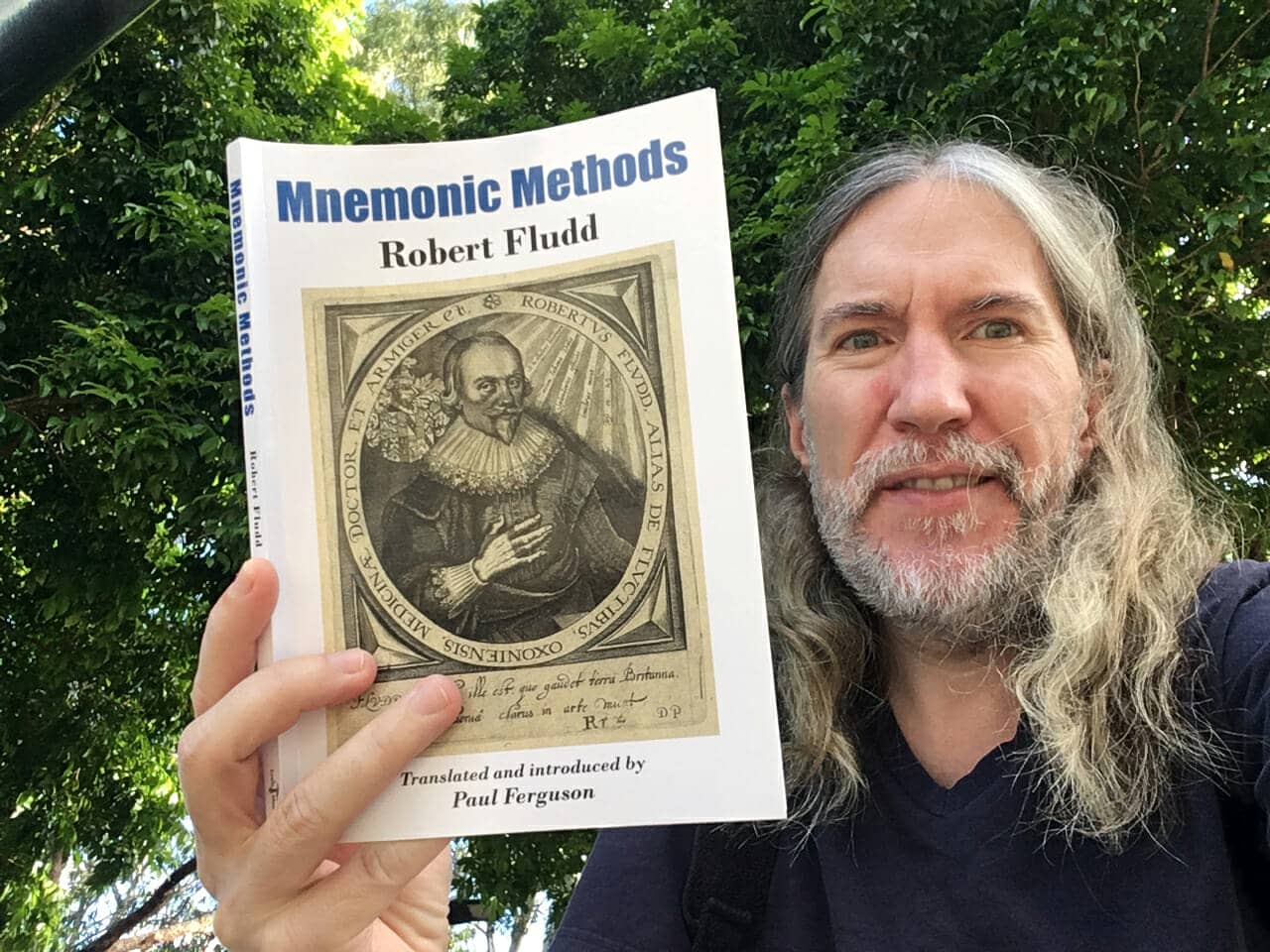
In brief, Fludd helps the reader establish:
- Memory Palace systems
- Alphabet pegwords
- A number shape system
These days most of us memorize numbers with the Major Method and build that mnemonic system out to a PAO System. Nonetheless, Fludd’s mnemonic examples are great to go through and can help you arrive at ideas of your own.
What I appreciate about this translation above all is that the publisher has included Fludd’s original Latin. As a student of Latin myself, it is wonderful to be able to practice the language while going through incredible instructions about how to use memory techniques.
Want to know more? Here’s a full review of this book, including notes on the context of Robert Fludd’s life.
Ten: The Victorious Mind: How To Master Memory, Meditation and Mental Well-Being by Anthony Metivier
 The Victorious Mind tells the story of how I overcame the mental distress that imprisoned me in a “highly functioning manic-depressive” identity and almost took my life.
This detailed guide describes how I used Memory Palaces in combination with three practices to get myself back on track: self-inquiry meditation, memory training, and “biohacking.”
But more than a story of self-transformation, The Victorious Mind offers detailed guidance on how to apply the techniques even when you’re not feeling well. For example, I used some of the breathing and meditation techniques to help me successfully use Memory Palaces even while dealing with the haze of lithium side-effects..
This book is ideal not just for those struggling with mental illness but for anyone suffering mental malaise – whether it’s digital amnesia and scatterbrain, depression, or “control freakism.”
I share a lot of personal stories in this book.
Opening up about my life was not easy, but I got myself to do it because using memory techniques helped save my life.
Not only that, but sharing the outcomes of combining memory techniques with meditation got the attention of memory expert and 6x USA Memory Champion Nelson Dellis. He reviewed The Victorious Mind and shared some of its best tips in this review:
So even though The Victorious Mind is a deeply personal book, I don’t mind exposing my troubled background.
Time and again I receive letters from people who tell me how much it’s helped them. And the feedback on the TEDx Talk short version of the book I gave a few years ago has been incredible too.
If you’re interested, I’ve published a long extract from the audiobook edition of The Victorious Mind on this episode of my podcast.
Advanced Memory Palace Books
When it comes to reaching the “next level” in your practice, there are books that can be challenging to learn from.
But they’re worth every ounce of attention you pour into them.
The following titles are my top recommendations for after you have developed familiarity with using the technique and gotten some intermediate wins.
Eleven: The Hermetic Art of Memory
I was delighted when Lewis Masonic sent me The Hermetic Art of Memory. Here’s a full video review:
The two things I love most about this book are:
- Its review of the classic memory techniques people have been using since ancient times
- Its many wonderful philosophical points
If you’re into Zen and like to read from a teacher who inspires you to take action, this book uses a lot of philosophical ideas to help prompt you to take action.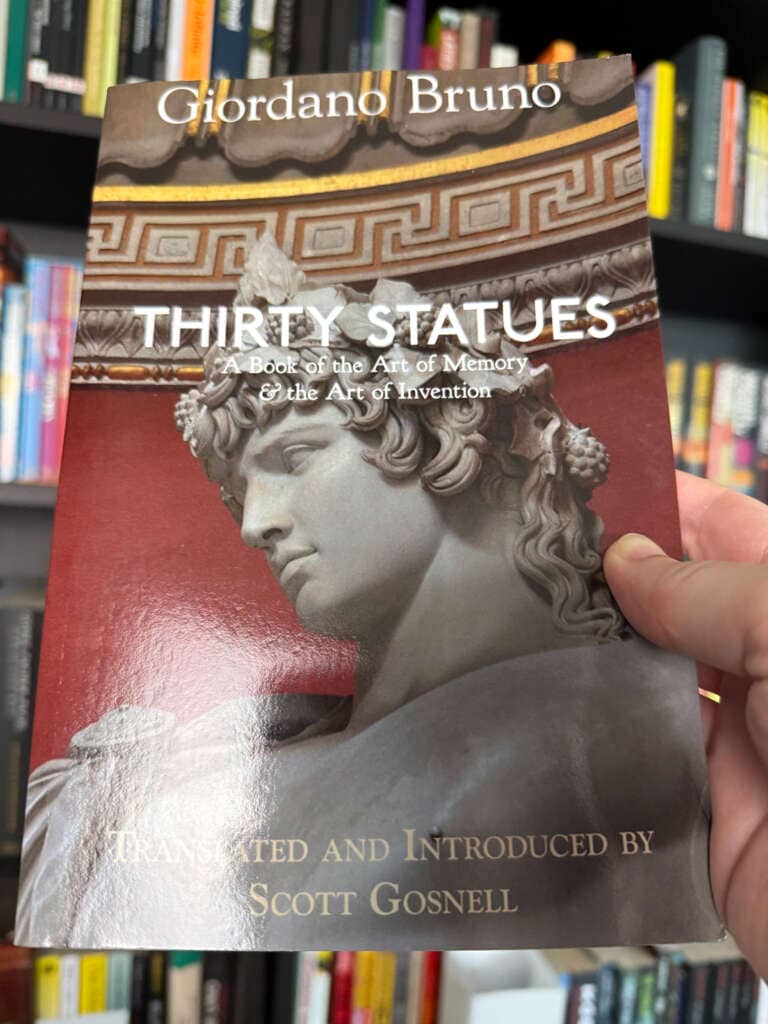
Twelve: Thirty Statues by Giordano Bruno
I mentioned Giordano Bruno above when discussing The Art of Memory, and many people learn about him through Yeats.
Often, they think of On the Shadows of the Ideas as his best book. The John Michael Greer translation is certainly a favorite of mine when it comes to this text.
But the Bruno memory book I find the best is one of the most challenging. It’s called Thirty Statues in Scott Gosnell’s English translation and what makes it unique includes:
- A theory of information and how to deal with overwhelm
- A simple way to use the body as a Memory Palace
- Mentally stimulating ideas that will raise important philosophical questions in your mind
Although Bruno’s body Memory Palace solution is more complex than the way I’ve ultimately adapted it in my own practice, it’s tremendously useful.
You can literally turn anyone’s body into a quick, impromptu Memory Palace and learn to memorize on the fly.
It’s advanced, but well worth learning.
Thirteen: The Phoenix by Peter of Ravenna
When it comes to proof of concept, Peter of Ravenna was legendary during his time.
He not only spoke multiple languages. Ravenna could also recite scripture from memory at large volumes and recited matters of law with ease.
In addition to including a Memory Palace game in The Phoenix, he also had an interesting way of using the body and colors in his memory training.
To help revive this underappreciated work and spread his more advanced ideas further, in 2025 I released Phoenix Reborn.

This newly revised guide comes with a commentary and multiple exercises that will help you reach Ravenna’s level of skill.
Fourteen: The Mnemonic Alphabet of Jacobus Publicius
Perhaps the most ambitious book of them all was written by Jacobus Publicius.
One aspect that makes it so unique is its use of a special Memory Wheel designed for combinatory exercises.
At the highest level of technique, you want to have one Memory Palace for each letter of the alphabet and one mnemonic image for each letter.
That way, no matter what information you encounter, you’re able to rapidly place it in a Memory Palace and encode it.
As with The Phoenix, I’ve made my own version of this work by Publicius. It’s called Rules Reborn and helps you understand this key illustration from his book:

Albeit challenging, once you know how to use it, you’ll be delighted by how it makes you faster at memorizing anything.
Of course, you’ll want to make sure that you’re well-versed with other techniques first, so save this one for when you’re conversant with the basics.
Fifteen: Solomon’s Memory Palace
Bob Lingerfelt’s Solomon’s Memory Palace: A Freemason’s Guide to the Ancient Art of Memoria Verborum isn’t just for Masons.
I’ve included it in this list because Lingerfelt goes through verbatim memory, but also how to remember symbols, gestures and concepts.
Rather than use the word “loci” to describe the various spots you will identify in your Memory Palaces, he prefers the term “focal points.” This update will help readers who may be new to memory techniques and struggle to use the ancient terms.
The book also includes a number of helpful illustrations, both modern and from the older memory training guides. You’ll see the techniques from multiple angles, dimensionalizing your understanding of how to best put it to use.
What To Do After You Read A Memory Palace Book
All these books on memory are sure to give you a wonderful insight into the art of brain training using mnemonic techniques, including Memory Palaces.
However, let’s face the facts:
Learning something by reading a long book may not be everyone’s cup of tea. Unless you diligently make notes and push yourself to try out the instructions, your chosen Memory Palace book will end up being just a dusty one on your bookshelf.
What could be more achievable is this: Make a few small lifestyle changes, or learn from online videos and courses that you can re-read quickly or listen to any time.
Here are three alternative ways to improve your memory based on lifestyle that could be far easier to implement. Work with these and you almost certainly will be able to read more books, more often and get more out of them.
How to Get the Most From These Books
Reading about Memory Palaces is one thing. Using them consistently is where the real transformation happens.
Here are three ways to go beyond the page and actually boost your memory:
1. Pair Your Practice with Mindfulness
Mindfulness is about listening to your mind and body, being aware of your surroundings, and being completely present in the moment you live in. Mindfulness expert Jon Kabat-Zinn calls it “moment to moment non-judgmental awareness”.

Practicing mindfulness meditation for just 10-20 minutes a day can work wonders on your memory. You can also do it while doing your daily chores – just by stopping for a minute to take in the sensation of whatever you’re doing – eating a meal, walking to work, or driving down a busy road.
Mindfulness is known to increase blood flow to the brain. It can strengthen the network of blood vessels in your cerebral cortex and reinforce memory capacity.
Meditation reduces stress on your brain and can be effective in improving memory — even after a brain injury.
A recent study proved that mindfulness improves your working memory. A few participants spent a few weeks learning to focus on breathing and body sensations, being aware of what was happening around them, and redirecting their attention when they were distracted.
After this, they took memory tests that clearly showed an improvement in short-term memory and a slight increase in hippocampus volume.
Detailed Example of Reciting From a Memory Palace
And just so you know that I walk my talk on this one, here you see me recite 32 verses of Sanskrit in front of a live audience while meditating:
It is really fun and so much more powerful when you combine meditation with a Memory Palace strategy!
2. Stimulate Your Brain with Word Puzzles
Word puzzles like crosswords, word association games, and Scrabble can stimulate your brain. They activate parts of the brain that deal with vocabulary and word finding, forcing the brain to stay active. It can delay any cognitive decline due to aging and mental illness.

Research proves that using crossword puzzles to teach a second language is an effective strategy of vocabulary instruction. Paper-based and interactive puzzles are used frequently in language teaching, to make learning interesting for teaching spelling rules, lexical meanings, and synonyms.
Opt for the old-school way of doing it. Here’s what I mean:
Use newspapers or puzzle books you can scribble on, rather than mobile apps that pop up distracting ads or tempt you to switch away to social media.
Remember to vary the type and difficulty of word puzzles frequently. Once you’re an expert at simple crosswords, go for more cryptic ones.
3. Build and Use Memory Palaces Daily
The Memory Palace is a powerful mnemonic tool to develop because it uses your spatial memory in a way that unlocks the power of autobiographical memory, episodic memory, semantic memory, procedural memory, and more.
The technique also helps you move information into long-term memory faster in ways the makes it easier to access for years to come.

Building Memory Palaces using the Magnetic Memory Method will provide you with the ultimate organizational system for learning, committing things to long-term memory, and recalling anything.
The trick is to associate information to parts of a location you’re familiar with. This helps your brain file things to remember them easily.
So if you’re learning a new language, peg all words related to travel on your living room sofa, words related to the weather on your dining table, and so on. You could use familiar locations so that you spend your time quickly memorizing a lot more information, and reduce cognitive load.
The more you practice mnemonic methods for learning and recalling vocabulary, routes, names, and so on, the easier the process becomes.
Improve Your Memory Magnetically with These Books on Memory Improvement
The books on memory recommended above will give you a good understanding of the history of memory improvement techniques and ideas on how to build Memory Palaces.
But, creating memory palaces regularly using the Magnetic Memory Method can be the quickest and most effective way to learn, memorize, and recall anything.
If you’d like to get started (for free), sign up for my memory improvement kit.

And before you go, please let me know:
What are your favorite memory improvement books?




28 Responses
Wow! Really great ideas about the Memory Palace!
Thanks for stopping by, Prasanna.
Have you read any of these books yourself? If not, which one seems most interesting to you?
Wow! I’m going to apply for Cambridge College, but what’s next step after reading these if I want to be legendary in memory techniques? Which books are most effective and will improve my learning skills to pass my exams 99%?
Great goal!
I would suggest reading a variety of books and practicing memorizing the content that will help you pass those exams rather than generic information. Some practice with generic info is a good thing, but you want to move past it as quickly as possible so you can deal with volume and complexity a.s.a.p.
Would you please name some other resources or books to get deeper into the method of loci and and the memory palace technique? I want to use this for my studies at an advanced level.
Thanks, Miana.
There are countless books to read.
If you want to specifically improve your abilities when it comes to studying, you might look at Learning How to Learn by Barbara Oakley and other books like it.
Dr Metivier, what is next step after the above list?
I wanna learn the memory palace and loci method deeply and use it a a core technique in my life please help and I think as Peter of Ravenna devised more than a hundred thousand memory-places. I want to reach that. Can you give me some more resources?
Thanks for this, Zahra.
If you want to create 100,000 Memory Palaces, then you will have more than enough reading material from this list and will want to get started right away.
The real advice I would give is to not try to copy the journey of anyone else. Do you actually need so many Memory Palaces? Wouldn’t it be better to look back on life when you are old and see that you made full use of less rather than having an excess of Memory Palaces you never actually used?
Hi Anthony,
Do we have any secret methods in mnemonics?
Which may not be revealed until today? And maybe there is an unknown book or treasure?
After searching, reading, and using over 100 classic and modern books, I knew that all methods were the same, and that your course was probably the best course on the web, so do we have a particular unknown method in the art of memory?
In fact, are the methods used to encode information and perform complex tasks actually an advanced form of our own memory methods? Thanks.
Thanks for this, Zahra.
I’m surprised that after reading 100 classic and modern books that you would conclude that all memory techniques are the same. That has not been my conclusion or experience at all.
Certainly there are books yet to be discovered or explored – and for each individual, this will always be true. None of us know what we don’t know.
There is currently a modest revival going on of certain Renaissance memory books. The most recent of note is The Hermetic Art of Memory, which combines two lesser known texts by Alexander Dicsone. It was released by Lewis Masonic and is excellent. There’s a video review of it on my YouTube channel that I will add to this page.
Apparently more are coming out soon from their press, and I will hopefully be reviewing them as well.
I don’t understand your final question. Can you please reword it?
Hey there, Anthony.
These books were exactly what I was looking for and more.
But in the basic skills I have problems with association between loci and images. I can’t connect images and loci well.
Would you mind please give a recommendation for which books/method i may need to read to fix my problem.
Blessings
Thanks for this, Mianwa.
If you have read all the books on this page, then the next step is to apply the techniques in them. It’s often useful to read a book at least twice, and of the utmost important to actually follow the steps.
Of all these books, I feel that The Victorious Mind solves your issue the closest, provided that you follow the steps.
You also do not have to connection loci with associative imagery. Technically, they cannot connect because they are in your mind. Why do you need them to be connected?
If you need that connection, then perhaps real growth will come from letting that need go. If you’re using the full range of the Magnetic Modes discussed in The Victorious Mind, there should be no need for an explicit connection.
Please let me know if you have further questions and feel free to keep us posted on your progress.
Thank you and yes, happy to expand.
In my last comment I meant mnemonic techniques used by intelligence agencies. Are they the same as those in the sources you talked about? If so, why we can’t be like them?
Given that anyone working in an intelligence agency would have a brain, I don’t know how the techniques they use would be any different. The only difference I can think of is that they would have training and career motivations that cause or help them to practice with greater diligence than many people can do on their own.
However, it’s important not to reify such agencies as having some particular ability that others don’t. Many people in many fields are top performers, so I would not focus just on intelligence agencies. I would look at top performers as such and cross-index that against the mental arts of memory.
And then just learn the techniques and use them consistently. It’s not rocket science and you can save a lot of time by putting these games of comparisons aside and just focusing on your own training.
Wow, but what comes after reading these?
How much should I practice to reach my goal?
Each person needs to determine their own practice needs, but typically 5-15 minutes a day should be enough.
That comes after building your systems of mnemonic devices. Most people tell me it takes them about 2-5 hours to do that after they’ve completed an effective memory training book.
Thanks for this amazing article.
What book do you suggest that has citations to other references?
Memory Craft has a number of solid references, as does The Victorious Mind and The Art of Memory.
Books on memory by Mary Carruthers are also usually well-researched and packed with references.
Was curious about memorization books out there and stumbled upon this. Thanks for these great recommendations! I think I might start from basics with Moonwalking. I already use visual mnemonic techniques. I don’t quite call it a memory palace as it is not centric around a single location, but several. I am currently using these techniques to study Mandarin Chinese and the course I am using revolves around mnemonics. I’ve also gained experience with this technique to use it independently in my own job!
Thanks for this, Jason.
The term “Memory Palace” is totally optional. It’s just one of many variations that stand in for “location-based mnemonics.”
Yes, their applications to language learning extend to life, work and many other areas. More power to those who are using them and helping spread the good news to others. Thanks for being part of the discussion.
I am looking for any book to help me in exams. The list above does not provide much for studying.
I have a PhD and can verify that all of the books above will help anyone who wants to apply memory systems to their studies for exams.
You need to make sure that you go beyond merely reading the books, however. You need to apply their knowledge through practical application.
Dear Anthony, thank you very much for introducing these books. I read only the first one (Moonwalking with Einstein) but did not practice it yet.
Thanks for stopping by and commenting.
As with all memory improvement books, the results come from combining reading with doing.
Enjoy this journey and talk soon!
Except for The Victorious Mind, I never heard of the other 7 books. I learn so much from you. In the short time I’ve followed you, I have been able to apply some of the techniques to the classes I’m taking in order to memorize medical terminology. BTW, I was surprised to see links for “Polyglots”. I’m just now getting into brushing up on German and Italian and going full throttle into Polish and Turkish. This is beyond fun. It’s great to be in control of my mind.
Thanks for checking this out, Rose. Next year, I’ll update it with a few more titles.
So wonderful that you’re learning these languages. There’s so much cultural benefit, along with the raw brain training benefits to be had.
Plus, there’s the joy of being able to express ourselves better too.
Oh, and there are some great memory improvement books in other languages as well. In German, my favorite is called Esels Welt by Ulrich Voigt. Although the techniques are more or less the same, it’s a wonderful mental workout to think them through in another language.
For example, the title, Esels Welt refers to the German word Eselsbrücke. This literally means “donkeys bridges,” an indirect way of saying “mnemonics.” I guess the idea is that an image, such as a donkey, can be a bridge between what you don’t know but want to learn and remember.
Hi Anthony, plse help me. I’m stuck. I’ve read Moonwalking with Einstein. Very insightful but light on actual step by step exercises.
I want to remember a pack of cards. I’ve listed the numbers and learnt the associated alphabet. Attempted to add POA.
Attempted to POA the coloured cards.
But I don’t know how to practise remembering the random order of cards. Do you have a class or practical exercise book I can work on which specifically guides you (the ‘for dummies’ version) to achieve this goal.
Many thanks
Thanks, Maree.
I cover card memorization in the MMM Masterclass. The approach I share is a kind of modified PAO that’s much simpler for people who just want to get the brain exercise and memory-sharpening aspects of the practice.
For memory competition tactics, it’s best to follow the memory competitors. I believe many are now using the Shadow.