
Podcast: Download
Subscribe: Apple Podcasts | RSS
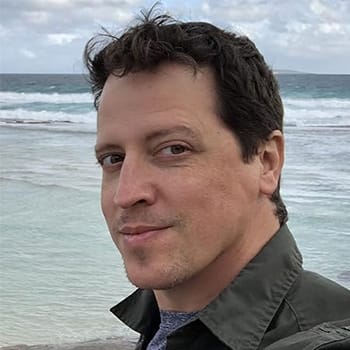
You might expect an expert from OpenAI to rely entirely on digital tools to learn faster. Andrew Mayne does the exact opposite.
Andrew is a true modern polymath:
And in this hope-inspiring set of conversations, this AI expert, innovator, magician, novelist and host of the OpenAI podcast shares his passion for memory techniques.
In addition to unfolding why practicing with older memory techniques still matters, he’s navigating the best of all possible worlds.
And he’s got me convinced that this combinatory approach is the best choice.
But never at the expense of preserving our age-old memorization techniques and learning tools.
Andrew’s exploration of AI and Memory Palace creation is nothing short of extraordinary, and just as thrilling as his novels given what he’s concluded so far.
So join in as we discuss the science behind why “easy” learning often fails.
And exactly how to build a bit of friction into your routine.
So that you retain more and enjoy new technologies without throwing the baby out with the bathwater.

Why AI Expert Andrew Mayne Uses “Analog” Memory (New Conversation)
Since our last discussion on the intersection of AI and Memory Palaces (see below), Andrew has continued to push the boundaries of how we learn in a digital age.
But in this new episode, we take a surprising turn.
We aren’t just talking about the future. We are talking about the tactics of the autodidact and polymath in the here and now.
Andrew reveals why, despite working at the cutting edge of OpenAI, he often chooses “analog” tools to train his brain.
I’m talking about tools like:
- Playing cards
- Physical journals
- Reading physical books
- Having lots of conversations
We dig deep into role of friction in developing new memories and the science behind why “easy” learning often fails, and how you can use tools like ChatGPT and other AI tools to test your memory without becoming dependent on them.
You’ll also discover why an app-based Cloze test did not work for Andrew.
Missed our first conversation?
In this original interview, we established the foundation as AI was unfolding in real time.
Part One: The Intersection of AI & The Ancient Art of Memory
Ready to explore how AI and Memory Palaces can work together to unlock sharper and longer-lasting memory?
Listen in as we explore:
- The essence of why the Memory Palace technique has stood the test of time.
- AI’s role in human memory: How artificial intelligence can possible enhance, refine, and possibly revolutionize how we use Memory Palaces today.
- Future Insights: Andrew’s positive vision for where modern tech might take us and his enthusiasm for preserving the ancient art of memory. And many other “old” artefacts of the human experience.
Whether you’re a student looking to ace your exams, a professional aiming to remember more in less time, or just someone fascinated by the intersection of technology, memory science and human potential, this discussion will be a point of inspiration as you continue to develop enhanced memory capabilities.
Here’s the video version of the discussion:

For More Andrew Mayne
If you’d like to learn more about Andrew and his incredible output, here is a link library for you to explore:
- Andrew’s homepage
- Andrew on X
- Andrew on Wikipedia
- Andrew’s incredible books on Amazon
- Andrew’s Penguin Live magic lecture
- Watch Andrew on the Youtube version of the OpenAI Podcast, where he interviews the world’s top minds shaping the future of artificial intelligence.
For a related podcast on ancient technologies and memory, check out my discussion with Lynne Kelly about The Knowledge Gene.
And to continue the theme of magic, see what you think when I try to use a magic trick by way of testing Nelson Dellis’ theory of remote viewing.
You might appreciate my thoughts on How to Approach Learning in the Age of AI as well as tutorials on becoming polymathic and autodidact.
Thanks for listening or watching and hope to hang out with you again soon on the Magnetic Memory Method Podcast!

 Anthony Metivier is the founder of the Magnetic Memory Method, a systematic, 21st century approach to memorizing foreign language vocabulary, names, music, poetry and more in ways that are easy, elegant, effective and fun.
Dr. Metivier holds a Ph.D. in Humanities from York University and has been featured in Forbes, Viva Magazine, Fluent in 3 Months, Daily Stoic, Learning How to Learn and he has delivered one of the most popular TEDx Talks on memory improvement.
His most popular books include, The Victorious Mind and…
Anthony Metivier is the founder of the Magnetic Memory Method, a systematic, 21st century approach to memorizing foreign language vocabulary, names, music, poetry and more in ways that are easy, elegant, effective and fun.
Dr. Metivier holds a Ph.D. in Humanities from York University and has been featured in Forbes, Viva Magazine, Fluent in 3 Months, Daily Stoic, Learning How to Learn and he has delivered one of the most popular TEDx Talks on memory improvement.
His most popular books include, The Victorious Mind and… 


4 Responses
Sir Anthony,
I’m deeply appreciative of your work and marketing efforts.
Can’t seem to get much time out of the daily responsibilities of job, family and household maintenance to deep dive into the many fascinating topics that penetrate my interests.
I’m always trying to grab tidbits of knowledge / information with the goal of internalizing and expanding my ability to relate to others and the universe from the sparks of expanding cognition.
Thank you!
Thanks, Kevin.
As I often say, once the memory techniques are in place, the rest is time management.
Do your family members have any interest in learning and memory?
I’ve seen a few people who have managed to get more study and practice time in by making it a family occasion. There are some older examples of that on the podcast with guests and hopefully more to come.
Great podcast… I learned from it about the benefit of carrying small notebooks to practice sketching memory palaces wherever I go. and the imagining an invisible hand touching the different “stops” in my memory palace. it adds a tactile level of interaction. GOOD STUFF!
The suspicion that synesthetic people often use mnemonic techniques sounds right. I thought my daughter was a virtual synesthetic…. but found she had created her own mnemonic “tricks”….She can memorize an 8-1/2 x 11 sheet of solid text in 1/2 hour and repeat it word-for-word.. but found she uses elaborative imagination and spaces… I didn’t teach her this and school didn’t teach her this…so don’t know where she stumbled on this… but kudo’s to her. It is classic mnemonic technique.
Thanks for sharing this, Peter.
Yes, I think there’s a world of study to be done on just how mnemonic or mnemonics-related the solutions kids come up with while learning is.
In fact, starting with adults, I have set up an experiment to test how well this might work through the power of mnemonic-based story.
Glad you found the episode useful and hope the next one is similarly so!