
Podcast: Download
Subscribe: Apple Podcasts | RSS
 Declarative memory is used when consciously recalling information, big or small, usually in a sustained way.
It’s also the type of memory you use every time you use memory techniques like the Memory Palace or basic mnemonics. That’s why these mental learning tools can sometimes feel effortful, especially when you’re new to using them.
But that’s also why the effort fades with practice.
So to give you a small sense of what declarative memory feels like, give this exercise a try:
What’s the name of your first friend in school? Can you think about a specific event from the time you spent together?
When I do this, my friend Ryan comes to mind. He was the first person to show me an American dollar, something that was unusual to see way up north where we lived in Canada.
These facts about what took place, where we were and my personal familiarity with the memory:
It all belongs to declarative memory. This is quite different from nondeclarative memory for reasons we’ll discuss on this page, updated for you on May 4, 2026 with more information and an audio podcast.
So if you’re ready to take a deep dive into the nature of declarative memory, the role it plays in human experience and how you can enjoy greater success when using memory techniques, I consider knowing terms like this part of the “owner’s manual of the mind and memory.”
Let’s get started!
What Is Declarative Memory?
Declarative memory is another term for explicit memory. It’s also sometimes called conscious memory.
Knowing this definition matters a great deal for your memory training because this kind of memory is responsible for every act of encoding, from assigning Memory Palaces to placing vivid associations that make reviewing what you’ve studied using a Memory Palace much easier.
William James first defined this type of memory back in 1890 when he wrote:
The knowledge of a former state of mind after it has already once dropped from consciousness; or rather it is the knowledge of an event, or fact, of which we have not been thinking, with the additional consciousness that we have thought or experienced it before.
Note the nuance here:
Declarative memory isn’t necessarily true. Sometimes we confabulate certain facts, which means that memories can get distorted.
Dr. Gary Small has discussed our memory as a kind of neighborhood in which parts of our memories travel from house to house, getting changed each and every time they travel.
Nonetheless, declarative memory is the conscious awareness of knowledge that something in the past happened to you. And more often than not, our declarative memories are accurate enough.
The Science of Declarative Memory
Scientists use the term encoding to describe how memories form in the first place. A declarative memory is better when the encoding is elaborate and deep. But all too often, our encoding is limited and superficial, which is why I have shared these elaborative encoding exercises with you.
In the absence of such exercises, a lot of the depth of encoding comes down to focused attention. If you’re not interested in something, you’re more likely to encode in a shallow way.
But when we’re interested in topics and having fun, encoding at a deep level tends to happen very quickly.
The Role of Declarative Memory Over Time
Once encoding has been accomplished, declarative memories must be stored for future access in long-term memory.
Once the encoding and storage stages are complete, scientists call the result an engram. This term literally refers to the sum total of all the changes in the brain from the moment of perception to the ushering of the information into storage.
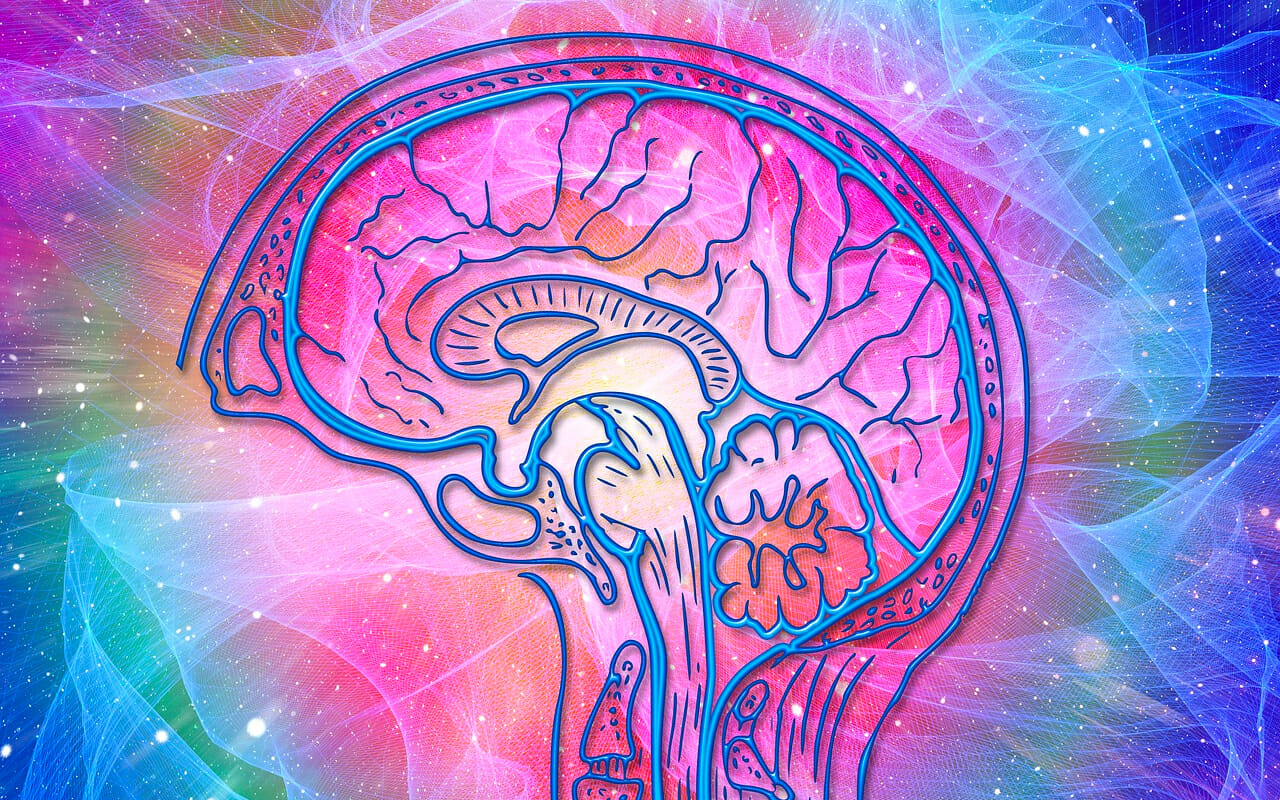
Engrams are distributed across the brain. Different brain regions seem to be specialized for particular kinds of storage to help with particular kinds of information retrieval.
Take chess openings, for example. William Chase and Herbert Simon asked chess players of varying levels of skill to analyze a chessboard featuring between 26-32 chess pieces arranged in actual configurations you might see in a game.
They found that Grandmasters vastly outperformed the analytical tasks they were given when looking at actual games.
However, when the scientists repeated the experiment with the pieces distributed randomly on the board, Grandmasters did no better than anyone else at recalling details of the chessboard. This is because the trained regions of their brains could not help them in this new context.
For this reason, when you wish to improve your working memory, it’s important to note that playing games might build you skills within the game environments. But those skills might not transfer much, and possibly not at all.
Declarative Memory Examples
Remember how I gave a declarative memory definition above by saying that it’s the conscious recall of memories in a sustained way?
This means that accessing the memory takes place over time, often substantial amounts of time.
Here are some examples:
One: Where You Were When Something Happened
I was in a cafeteria at York University when a friend called. He said, “Find a TV!”
“What’s going on?” I asked, but all he could do was repeat himself.
That was the morning of September 11, 2001. And when I finally found a television, I was just in time to see the second tower struck during the September 11 attacks.
In this sustained example of flashbulb memory, I’m drawing upon semantic facts and episodic memory. It’s an autobiographical memory too, and the common denominator amongst all of them is that I am consciously aware that all of the material is memory.
This way of looking at declarative memory matters for your memory training because flashbulb memories show you what deep encoding looks like when you experience it naturally.
That’s why mnemonist David Berglas refers to it in his excellent book, A Question of Memory, when he discusses “the Kennedy Effect.”
His suggestion is that whenever you memorize something, you try to make the associations you use as striking as what happened to JFK. But you’re generating this kind of association between what you want to memorize and episodes of such historical impact not for entertainment.
You’re doing it with a depth of purpose tailored towards creating recall. Using that level of emotional intensity is tremendously helpful for ensuring the precious information you want to remember sticks.
Two: Trivia
Who doesn’t love to play from home during an episode of Jeopardy?
As the answers appear on the screen, you get a great brain workout trying to arrive at the answer in the form of question.
This is all declarative memory due to your conscious engagement in the process. You’re not just passively trying to arrive at the answer. You’re actively searching your memory and trying to do so fast enough to beat the clock.
Now, this is not necessarily the same thing as sharing details about your favorite author, composer or artist during a conversation. Usually, there’s no pressure in such contexts.
How they do relate is that we usually don’t memorize such facts deliberately. Such facts enter your memory implicitly, a kind of memory we’ll talk about a little bit further on.
If you do want to deliberately memorize information for trivia night at the pub, however, here’s a tutorial on how to do it.

Three: Locations And Directions
Locations are related to trivia in some contexts. But more broadly, if someone asks you for directions, you’ll be drawing on your declarative memory to explain how a person can find the desire target.
This process will take place even if you have aphantasia, which is the lack of a mind’s eye. People with this condition can both give and follow directions.
That said, as science journalist Christopher Kemp has shown in Dark & Magical Places, not everyone has the same navigation abilities. It’s not entirely clear if the issues he outlines come down to declarative memory, but something called place cells are involved in navigational accuracy.
Assuming you don’t have navigation issues like Kemp has reported, locations you know give your declarative memory rich and reliable options to work with for memorizing information.
Four: Critical Thinking
Anytime you turn on your thinking engines, you’ll be drawing upon declarative memory.
General reasoning draws upon facts, as does specific, objective reasoning.
And whenever you’ve got your inner Sherlock running to deduce or induce conclusions, you’ll probably also be drawing upon facts you already know.
This is why memory training does far more than help you pass exams or recall names. The quality of your thinking depends on the quality of what you can retrieve, how accurately and how quickly.
In other words, you can only reason using accessible facts. If your encoding is shallow when trying to memorize information, those facts won’t be there when you need them.
To help you better understand this, think about the last time you tried to form an opinion during a discussion about something complicated. Your brain needed to pull together things you’d read, heard and experienced, all while weighing one piece of evidence against the other.
All of this activity drew upon your declarative memory and the quality of how it fed your reasoning was based on how much material your brain could access.
This is why I often say, “the more you learn the more you can learn.” You’re able to use the element of thinking and reasoning while using memory techniques, as described by the great memory teachers Peter of Ravenna, Jacobus Publicius and Giordano Bruno.
What’s the Difference Between Declarative and Nondeclarative Memory?
In brief, it comes down to your conscious intention to recall information. Whereas with implicit memory (also known as nondeclarative memory you’re not conscious of either learning or recalling, declarative memory involves awareness.
Larry R. Squire highlights another key difference in the Journal of Neuroscience. Your declarative memory can dictate how you describe your behavior in response to stimuli. As he explains it:
An aversive childhood event such as being knocked down by a large dog might lead to a stable declarative memory for the event itself as well as a long-lasting fear of dogs (a nondeclarative memory) that is experienced as a personality trait rather than as a memory.
In other words, our self-perception of early experiences guides how we describe their influence on their lives.
But the influence itself comes from an early, nondeclarative memory experience. Procedural memory can also play a role, such as constantly acting out a learned helplessness around dogs.
Why This Distinction Matters for Your Memory Training
Since most people read the Magnetic Memory Method blog or listen to my podcast to improve their memory, it will be helpful for you to understand how declarative memory is involved in using most of the techniques I share in my mnemonics dictionary and Magnetic Memory Method Masterclass.
Think about the last time you used a Memory Palace. (Or if the technique is new to you, check out my complete guide to using the Memory Palace technique).
When you select a station in a Memory Palace, you consciously choose it. Then, when placing a mnemonic association, you use mnemonic techniques to generate and elaborate it.
Every step requires your complete attention. And that’s an example of declarative memory doing the heavy lifting.
If it feels slow or awkward, that’s not because memory techniques don’t work. It’s just a lack of training and practice in using them.
Why Practice Will Always Remain Essential
When you use memory techniques frequently enough, you will eventually need to spend less conscious effort bringing Memory Palace stations to mind.
And the more familiarity you have with mnemonic tools like Memory Wheels, the Major System and a PAO System, your use of the techniques will happen faster.
Later, when you practice retrieval through spaced repetition, your memory will serve you the target information at a faster rate.
It might never feel completely effortless. But as procedural memory grows, using memory techniques will feel like riding a bike. You do have to rotate the pedals, but you don’t have to think about all the various operations that go into operating the bike and navigating it to reach a destination.
The more you use Memory Palaces while generating and placing associations, the more it will be just like riding a bike with a feeling of automaticity.
Mnemonic Encoding is Always Declarative
Every time I create a new association, whether for memorizing something in Latin, my new law school project, Sanskrit, Chinese or the poetry I memorize, I have to consciously draw upon parts of the mind that involve declarative memory.
And if you’re a medical student memorizing the cranial nerves, you can certainly use rote repetition. But that requires a lot of effort compared to using a Memory Palace paired with vivid associations.
That’s because when you revise the information you’ve placed, you’ll be drawing upon those associations, many of which will involve episodic and autobiographical memories. You’re exercising multiple levels, strengthening the memory from a number of angles.
Then, when you sit for an exam and face a question about the facial nerve, retrieval will have become procedural. And that will free up your mind to think about clinical applications rather than burning up cognitive resources just trying to remember basic anatomical names and facts.
So the next time your encoding feels clunky and taking too much deliberate effort, don’t worry. Part of what’s happening is just an effect of how memory works.
You’re actually drawing upon your declarative memory and it is doing its job relative to your study and practice of memory techniques. Chances are, you’ve just come across information that you’ve never tried to encode before and need a bit more time to think it through.
Keep studying memory techniques and you’ll get better and faster overall. And when the gears grind to a halt, you’ll know that you just have to keep moving. That’s what I’ve always done and it has helped me memorize far more than I ever thought possible.
How To Avoid The Corruption Of Your Declarative Memory
As you’ve discovered, this aspect of your memory is not bullet proof.
You can consciously feel that a memory is 100% accurate, but wind up recalling things that are either exaggerated or simply not true.
Fortunately, there are ways to fend this off from happening.
For one thing, you can see a lot of improvement simply by focusing on improving your sleep.
You can also use memory techniques. There are countless studies showing just how strong these methods are for improving your ability to recall information accurately. Mnemonology is one particularly good and scholarly book that makes these studies accessible to anyone.
Other options involve studying music, learning languages or learning to give speeches. You can also focus on preserving your non-declarative memory as an indirect approach.
If you’d like help in any of these areas, I suggest you start with my FREE Memory Improvement Kit:

It will help you commit anything you wish to memory.
And give your declarative memory a great workout too.
So what do you say?
Do you now understand this critical aspect of your memory?
Get out there and “declare” that you are a master of memory and put it to good use. It’s a powerful asset!