
Podcast: Download
Subscribe: Apple Podcasts | RSS
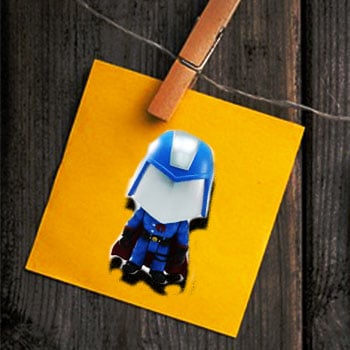 The pegword method is a simple memory technique for remembering lists of information.
Also commonly know as the peg system, this mnemonic method bridges information you already know with new data you want to master.
I’m talking about a wide variety of learning targets:
- Vocabulary
- Study keywords
- Names (people, countries, foods)
- To-do list items
- Historical dates
- Medical or legal terminology
- Computer programming documentation
- … and anything that can be organized into a list
I used this turbo-charged technique to help me earn my PhD at York University in Toronto. Then I used it help me learn German so I could lecture in the language while teaching at the University of Saarland.
I later used pegwords to pass level III in Mandarin, and still use it as part of studying a variety of languages and cultural details.
Plus, I was able to make use of it for my TEDx Talk, which has gained millions of views.
How does it work?
Well, there are a few variations to the pegword method, which essentially involves pairing information you don’t know with information that you already hold in memory. We’ll discuss the four most important approaches to using the technique on this page with some in-depth examples.

But first, this point is important:
Each pegword system involves three easy stages:
1) Setting up and remembering the system
2) Encoding new information with the system
3) Recalling the information by triggering the system
In the first stage, people learn a standard set of peg words. These “pegs” can be number-rhyme pairs or letters of the alphabet.
The Many Types of Peg System
There are different types of peg systems you can choose from. All of them use the same method: the use of a concrete object to represent each number. What’s different is how you choose the object.
We can divide these approaches into the following categories:
- The rhyming method
- The meaning method
- The alphabet method
- The look-alike method
Let’s talk about the rhyming pegs first:
1. The Number Rhyme Peg System
Some people call this approach “the One is a Gun” technique. Many people using this approach have a pre-memorized list like this:
- One is a gun
- Two is a shoe
- Three is a bee
- Four is a door
- Five is a hive
- Six is drum sticks
- Seven is Evan
- Eight is a gate
- Nine is wine
- Ten is a hen
- Eleven is heaven
As you can see, when using rhyming, you create pegs that rhyme with a number to create a pre-memorized list.
In the next stage, memorizers visualize the information they want to remember and mentally link it with the rhyming word.
A High Precision Tutorial On How To Combine Number Rhyme Pegs
with a Memory Palace
Ideally, you will avoid assigning your associations in the void of your mind.
Instead, I suggest you create them in a well-formed Memory Palace.
For example, if you have previously committed “two is a shoe” to memory, you can set a rule that every Magnetic Station in a Memory Palace features that shoe.
Then, when you meet a group of people and the second person tells you her name is Rose, you can instantly see a rose growing out of the shoe.

Of course, Rose gets special treatment in your Memory Palace after you’ve shot Paul McCartney in the chest on the first station of your Memory Palace.
This will help you remember that someone new goes by the name Paul.
On station three, you use the its peg to interact with an image for the next name, and so forth. This scenario is just one example, and very powerful when memorizing names at meetings or other events.
Powerful, isn‘t it?
It gets even better if you’re interested in number systems, but for now, let’s press on.
Case Study: Using the Peg System to Memorize Names at a Meeting
When I meet new people at meetings, I use pegs in combination with a variation of the Memory Palace technique called the method of loci.
Here’s an example of how this works based on a meeting from a few years back.
- 1 is a gun
- Memory Palace station: My bed.
- Target name: Kirsten.
- Associative-imagery: The gun shoots ridiculous pillows at the curtains where Kirsten is standing.
Notice the similarity between “Kirsten” and “curtains” in terms of sound. This is the Principle of Magnetic Compounding. Use it as much as you can and consult my free Magnetic Memory Method Dictionary of Mnemonics for more tactics like this.
- 2 is a shoe
- Memory Palace station: My desk.
- Target name: Amir.
- Associative-Imagery: Amir plays a drum kit made of mirrors using shoes instead of drum sticks.
Notice that the “mirror” contains the “mir’ sound of Amir. It is the most striking part of the name, so the image is centered on capturing that for decoding later.
- 3 is a bee
- Memory Palace station: The wall where my guitar rests.
- Target name: Phil.
I use multi-sensory aspects of my imagination to experience another person named Phil I know swatting at a bee.
Example of Adding the Principle of Compounding
To use the Principle of Compounding, I imagine him with a philosophy textbook while my new associate Phil puts a filter on his camera lens before shooting the action.
Here’s why this kind of compounding works:
To forget the memory, I am using a friend I already have named Phil, plus a book of philosophy.
I also imagine Phil putting a differently spelled but similar sounding filter on his camera.
To some people, this compounding procedure might sound like overkill.
However, I recommend that you practice getting good at it. It will make the difference between memorizing material effectively just some of the time and all of the time.
The Scientific Term For This Kind Of Mnemonic
Some researchers of memory and learning call the product of linking one word to another a composite image or picture.
In today’s example with Rose, I have brought together the peg, the given name and a part of a Memory Palace.
This process creates a singular, mental image that is easy to recall later – especially because I naturally made the image strange, vibrant and drew upon all the Magnetic Modes while creating it.
To put the process more simply, information like Rose‘s name gets ‘pegged’ to certain images. And as you‘ve seen, my preference is to also “peg” information to a Memory Palace at the same time. Everything is co-created in one fell swoop, as much as possible.
Why There’s No Need To Follow The Order
Here’s a very cool feature of this technique:
It is not dependent on retrieving the items you memorized in sequence.
For example, if you want Rose, you don’t have to start with the first piece of information and work your way through the whole sequence. You can access her name or any item on the list simply by thinking of the number rhyme.
To achieve this flexibility, initially, all you have to do is to prepare a list of peg words that can be easily retrieved and link them with other items.
How To Assign Your Pegs Without Having to “Learn” Them
If you’re using the number-rhyme system, it‘s really quite easy. Rhyming does most of the work.
You might run into some problems with the rhymes I gave you above without thinking about your choices, however.
Although all of the items that rhyme with the numbers make sense, not all of the example words I’ve given you are directly visible.
For example, what does heaven look like? Clouds? Angel wings? Fields of grass as shown in Gladiator as Maximus makes his way to Elysium?
Who can say?
And that lack of specificity can be a problem.
To fix it, take on extra step and image Adam touching God’s finger on the ceiling of the Sistine Chapel. Or an episode from a TV show like Highway to Heaven.
It’s also useful to personalize more concrete associations. For “3 is a bee,” for example, I think of the character voiced by Jerry Seinfeld in The Bee Movie.
Even though the rhyme is not particularly difficult to remember, when using Seinfeld’s bee to make highly memorable associations, it’s much more effective. He’s dynamic and funny, but a generic imagined bee with no particular identity doesn’t lend itself to success nearly as much.
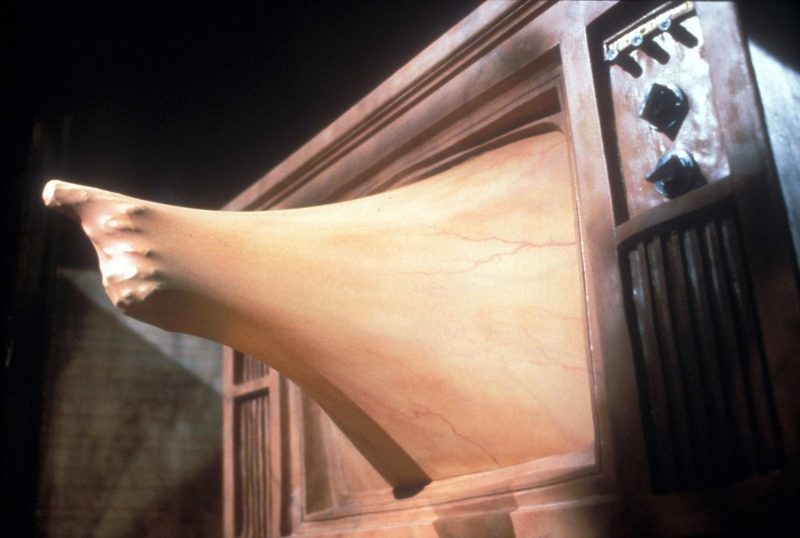
Here’s another example. For one, I don‘t use an abstract gun, but a very specific gun from the movie Videodrome.
For two, I don’t use just any old shoe. I use my favorite shoes from when I was a kid. (They had velcro pockets for holding coins.)

When it comes to my rhyme for seven, I use my friend Evan, based on a specific funny photo I took years ago ago.
It might take you a few minutes, or even a few hours over a weekend to land on the most specific options for each number rhyme. Rest assured, it will be worth the effort!
If you’re still struggling, you can adopt the Mind Mapping examples here for assigning your peg assocations. There’s always a way and now you have another tool in your toolbox.
How To Mix Your Pegs With The Major System
This method is useful for many things beyond remembering names, shopping lists and errands on your to-do list.
You can use it for remembering new concepts, foreign language vocabulary, ideas, dates, potentially for verse numbers and anything you organize in a linear manner, but that doesn’t necessarily require linear recall.
To remember a date like 1789, you use would use the Major Method or the Dominic System to create images for these numbers.
Then you would link the images to one of your pegs. If assigned to your sixth peg and you are using drum sticks, you might have Tucker Max (17) pounding on a viper (89) with the drum sticks.
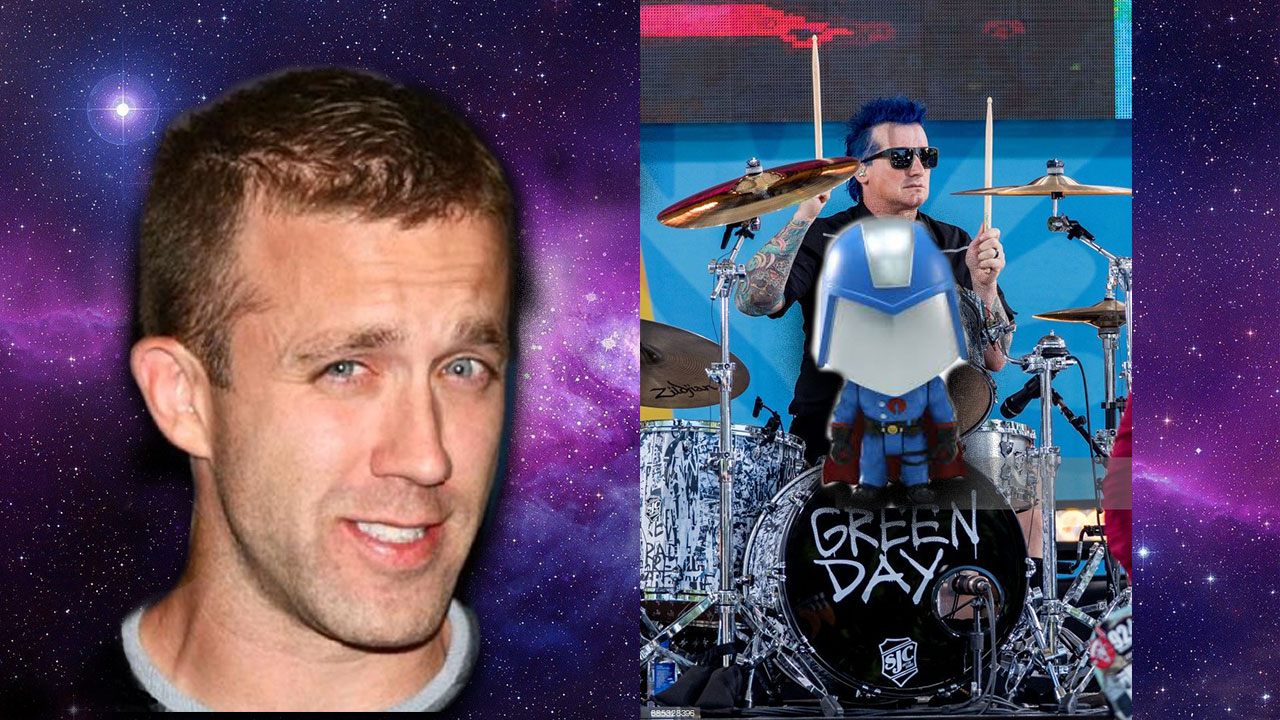
Because I focus on specificity, it’s not just any drum sticks, but the sticks used by the Green Day drummer. It’s not just any viper, but Cobra Commander from GI Joe.
I‘m giving you my specific mnemonic examples for a simple reason:
Making the images concrete and based on real things that have been interesting or important to me in life is part of what helps the memory techniques work better and faster.
You might never have heard of Green Day or played with GI Joe toys. But surely there is a drummer you find interesting and an appropriate image you can use for each of the digits from 00 to 99.
It’s really not rocket science. The peg word system just takes a small amount of focus and time after completing a memory course.
2. The Meaning Method
In the meaning method, you create pegs that help you recall the sound and meaning of the words you want to recall later.
For example, to remember the word ‘exploration’ with the rhyming pair (one is a gun), you can visualize ex-cops with guns patrolling an area where oil exploration is taking place.
Take the word “quadrangle,” to give you an additional example.
The most immediate and obvious association is a quad bike. Since a quadrangle has four sides and a quad bike has four wheels, it generally works to cover both sound and meaning.
This approach to pegword mnemonics becomes incredibly streamlined the more you practice. It’s great for language learning, medicine, law, philosophy and any learning area rich with semantic meaning. This method is best used with a Memory Palace.
There is another type of widely used peg system. It uses alphabet letters as pegs.
Let’s check it out:
3. The Alphabet Pegword Method
Although this technique is essentially a variation on the Number/Rhyme method, it gives you more pegs. You can use it to remember longer lists of items in a specific order.
True, it takes more time to learn than a number-based technique, but rest assured that some people love this approach so much, they have multiple alphabet lists. And having more than one list is one of the core teachings in M.A. Kohain’s underground memory improvement book, Mnemotechnics: The Art and Science of Memory Techniques.
How to Use the Alphabet Method
In this technique, you will associate objects or people based on each letter of the alphabet. Later, you will link these alphabet associations with information you want to memorize.
Please note how I am applying the rule of specificity to each of these examples:
A – Apple laptop (the one I‘m typing this article on)
B – Batman (Michael Keaton version)
C – Chocolate (My favorite kind)
D – Dracula (As played by Bela Lugosi)
E – Elephant (Edgar, who you may have seen on my YouTube channel)
F – Fish (I use Kami the fish)

G – Goat (I think of The Jesus Lizard album by this name)
H – House (The movie by this name and its poster)
I – Igloo (specifically the one Pingu built)
J – Jelly (as in the band, Green Jelly)
K – Kangaroo (Hippety Hopper from the Warner Bros. cartoons)
L – Lantern (from Green Lantern)
M – Mouse (Mickey Mouse)
N – Nose (as seen on Michelangelo‘s David)
O – Orange (A Clockwork Orange)
P – Pan (Peter Pan)
Q – Queen (The rock band)
R – Rat (Splinter from Ninja Turtles)
S – Shore (as in Pauley Shore)
T – Turkey (the country on a map)
U – Umbrella (in the hands of Chauncey Gardiner)
V – Van (the one from A-Team)
W – Wagon (Stagecoach, starring John Wayne)
X – Xylophone (I loved the one I had as a kid)
Y – Yarn (my mom knits)
Z – Zed (from Pulp Fiction)
Once you have associated your images with the letters, you will then peg them to the items you wish to remember. Suppose you have to remember the following list of 10 gift items.
- A watch
- A DVD of the TV show “Friends”
- Camera
- A shoulder bag
- A scarf
- Perfume
- A tennis racket
- A pen
- A tea set
- A dress
Next, you will mentally link these items with the images that represent the letters of the alphabet. I suggest you follow the order of letters. For example, the numeric equivalent of the alphabet, a, is 1; b is 2; c is 3, and so on.
Read the list and link them with the images described above, ideally in a Memory Palace. Notice how I am making each example dramatic, dynamic and either exaggerate through action or strange.
10 Mnemonic Examples For The Alphabet System
- A – Apple laptop: A watch: Think of Steve Jobs smashing your favorite watch (or a very expensive one) with a laptop.
- B – Batman: Imagine this iconic superhero using A DVD of the TV show “Friends” as a replacement weapon to his Batarang.
- C – Chocolate: Camera: Human-shaped chocolates are dancing seductively during a photo shoot. The camera nearly melts because it‘s so shy.
- D – Dracula: A shoulder bag: Dracula tries to suck blood from a shoulder bag.
- E – Elephant: A scarf: An elephant chewing on a scarf as if it were hay.
- F – Fish: Perfume: The fish is using the perfume like pepper spray to keep a shark away.
- G – Goat: A tennis racket: The Jesus Lizard album “Goat” enters a tennis court and interrupts the game. The tennis racket tries to scare it away by blasting it with music.
- H – House: A pen: You use a pen to sign the lease to your dream house… Except it‘s a haunted hose and eats the pen!
- I – Igloo: A tea set: You are enjoying a cup of warm tea with your family inside an igloo as Pingu crashes into it.
- J – (Green Jelly): A dress: The singer of this band spoils a dress you are about to buy by spreading it with a huge jelly stain.
Recalling the items is easy.
Just bring back the image you associated with each letter. With a bit of practice, you will become a pro.
Remember: You always have multiple chances to recall the target information:
1) You have both image you associated with the letter of the alphabet
2) You have the image for the letter of the alphabet
3) You have the interaction between the two taking place in a Memory Palace
4. The Look-Alike Method
Now, before we conclude, you might be wondering…
Where the heck does this clever memory technique come from?
The Number Shape Peg System
(Origins of the Peg Word System?)
Some people attribute the first peg system to Henry Herdson. He wrote instructions on mnemonics and memory back in the mid-1600s.
In Ars Memoriae (1651), Herdson suggested linking each digit from 0-9 with an object that resembles the number. I used this approach to great success to help students learn it in my second Memory Detective novel, Vitamin X.
Here’s a primer on how this incredibly simple, but powerful peg system works.
Examples Of The Number Shape Peg System
For example:
1 = candle
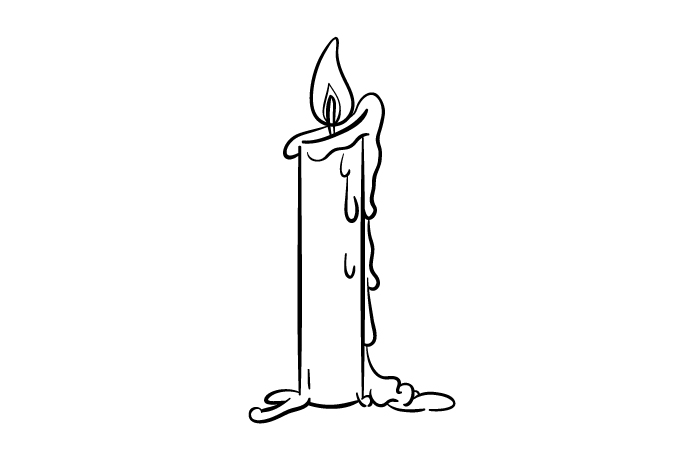
2 = duck
3 = moustache
4 = sailboat, and so on.
Herdson’s images don’t sound very specific.
But even if Herdson didn’t use the Magnetic Memory Method, I suggest that you do.
For example, I think of a candle I had burning when I nearly accidentally burned down the house. This specificity makes everything stronger when I use the candle to memorize numbers.
You can find more number image examples in the Magnetic Memory Method Course How to Memorize Math, Numbers, Simple Arithmetic and Equations.
00-99 Pegword Examples
My favorite tool when it comes to the peg word system is using the Major System to create words for all the two digits from 00-99.
There’s a fair amount nuance that goes into developing a system like this, and it’s all covered in the MMM Masterclass.
For your convenience, here are mine (keep in note that I sometimes have several Magnetic Images for each number and often make changes):
00 = Thomas Szasz
01 = Tragedy Mask
02 = Sun
03 = Sam
04 = Sartre
05 = Sal (from a movie)
06 = Sash
07 = Oliver Sacks
08 = Shiva
09 = Brad Zupp
10 = Don’t Tase Me Bro
11 = Toad
12 = Tin Tin
13 = Hoover Dam
14 = Tire (Michelin Man)
15 = Tail
16 = Dish
17 = Tucker Max
18 = TV
19 = Tape
20 = Nose
21 = Nut
22 = Nun
23 = Vietnam vet
24 = Narr (the German word for “fool”)
25 = Neil
26 = John Nash
27 = Nick Nolte
28 = Navy officer
29 = Jack Napier
30 = Mouse (Mickey)
31 = Mad Magazine mascot
32 = Man in black (Johnny Cash)
33 = Mime
34 = Mare
35 = Mailman
36 = Match (boxing match with Mike Tyson)
37 = Mack the Knife
38 = Max Maven
39 = Mop
40 = Rice (Condoleezza)
41 = Rat
42 = Ran (the samurai movie)
43 = Ram (Dodge truck)
44 = Roar (MGM lion)
45 = Rail
46 = Rashomon
47 = Rick
48 = Rover
49 = Rap band
50 = Lasso
51 = Latte
52 = Lion
53 = Lamb
54 = Lyre
55 = Lily
56 = Leash
57 = Loch Ness Monster
58 = Liv
59 = Lopez (Jennifer)
60 = Chucky Cheese
61 = Cheetah
62 = Chin
63 = Jim
64 = Jar
65 = Jail
66 = Josh
67 = Chucky
68 = Jeeves
69 = Jeep
70 = Cassie
71 = Cat
72 = Can
73 = Camera
74 = Car
75 = Cale (John)
76 = Cash
77 = Cake
78 = Cave
79 = Cape
80 = Phaser
81 = Fat
82 = Fan
83 = Farm
84 = Fire
85 = Foil
86 = Fish
87 = Fake (Orson Welles from a movie with this word in the title)
88 = Fife
89 = Viper
90 = Pease
91 = Pat
92 = Peter Pan
93 = Pam
94 = Pear
95 = Pail
96 = Patch
97 = Puck
98 = Pavel
99 = Pope
With each of these selections, I’ve taken time to make them specific rather than generic. For example, I use the generic word “pear” for 94, but push deep into my memory to find a specific pear-related memory. I came up with a memory of some fake fruit (long story).
All that matters is that you use images that are specific as possible, ideally ones connected to the memory of your life.
3 Ways To Practice The Pegword Method
Now that you know how to create a system of Magnetic Images using pegword mnemonics, you might be wondering how to practice this powerful memory technique.
Here are 3 ways:
1. Create some index cards for yourself.
You could draw shapes on them or do an entire 00-99 PAO. Shuffle the cards and test yourself. If you’re using an alphabet list, you’d need just 26 cards with each letter of the alphabet. Whatever you’re using, soon you’ll know them all by heart.
2. Software.
The International Association of Memory provides free memory training software.
I usually select “National Standard” and either vocabulary or numbers.
For numbers, I use the 00=99 PAO. For example, if the number string I’m given is 873028348, I will imagine Orson Welles in a fistfight with Mickey Mouse. The sun will leap from his head and burn up in the sun. Orwell’s Animal Farm will then try to escape from the Rover (a technology in The Prisoner TV series).
For words, you can rapidly draw from your alphabet list. For example, if you get a word like “atom,” you instantly have an apple from your list to work from.
It can be a bit counterintuitive at first, but the more you practice, you’ll find it’s fun, easy and you’ll rapidly grow your skills with mnemonics.
3. Everyday Life
We encounter numbers and words each and every day.
If someone introduces themselves, use your alphabet list to encode their name. If you hear a time or a price, use your 00-99 to draw upon an association that helps you remember the numbers.
It really is that easy and soon it will become a second-nature habit that you love.
Frequently Asked Questions About the Pegword Method (FAQ)
I’ve received many questions over the years and would like to share the most important with you, along with targeted answers as someone who has researched, used and taught memory techniques for decades.
If you don’t see your question addressed here, please feel free to post it below or use my contact page to get in touch.
Is there a difference between the “Peg System” and the “Pegword Method”?
No, these terms are used interchangeably.
And it’s easy to get confused because earlier memory instructors like Bruno Furst used the term “hooks,” which are also the same.
These names all refer to a mnemonic technique that provides a reliable mental structure for associating new data you don’t know with pre-selected mental content you do.
Which is better? The Peg System of the Method of Loci/Memory Palace technique?
Actually, if you think about it, Memory Palaces are a variation of the pegword method.
Years ago, one of the Magnetic Memory Method Podcast listeners sent me this email explaining his agreement with this observation:
I had used the peg system for 30 years before I started using the loci system. Once I started using the loci system I began to notice that there are actually two separate associations one makes with the loci system as contrasted with peg system.
One is the interaction with the item stored there at the locus. The other is the visual image of seeing the word one is trying to remember at the locus with no real interaction except visually being there. With the peg system in contrast there is only the interaction between the word one is trying to store in memory and the peg word for the numeral.
So in conclusion I think that loci system involves an extra association with essentially two chances to recall the word or image whereas the peg system only involves the actual interaction between the peg and the word to be recalled.
In sum, it’s not a question of which one is better. As I have tried to show in this tutorial, they can be used in combination to great effect.
Can I reuse the same pegs for different lists?
You can, but there’s a chance that you’ll experience what memory competitors call “ghosting.”
This means that if you memorize one item using your bee for the third item in a list, you might recall that earlier content. This paradoxically is both a mistake and not a mistake. It proves that the memory techniques work, but has led you to blur target information together or miscall it.
To avoid this issue you can:
- Wait for information to move into long-term memory or fade away before using the peg again
- Develop multiple kinds of pegs based on the variety provided on this page
- Place pegs in different Memory Palaces to keep them separat
How many pegs should I memorize?
In the Magnetic Memory Method, I advise that you draw upon information that is already in your memory when forging your pegs.
If you memorize a set from something like Bruno Furst’s Number Dictionary, you’re essentially creating a massive task that will take time.
Instead of memorizing someone else’s list, develop your own based on highly personal information. Even if this takes a bit longer, you’ll find that your pegwords work much better.
Aren’t pegword systems only good for lists?
This is a common objection, but as I cover in my complete tutorial about memorizing lists, everything we commit to memory involves some kind of list.
For example, when I memorized my TEDx Talk, the written version is a list of paragraphs. Each paragraph is a list of sentences. Each sentence is a list of words and each word is a list of letters.
One you realize this, you are free to not worry about the limitation, but see the constraint as highly productive.
However, people might still be concerned about language learning, especially grammar. Here again, you’re really looking at still learning information in order. So I recommend gathering a list of examples for various grammatical principles and memorizing them.
How Will You Use The Pegword Method?
As you can see, there are a lot of ways you can make pegs. You could use your favorite superheroes and then turn their bodies into Memory Palaces.
For example, Batman could be segmented into his head, shoulders, arms and legs.You could even have Batman interact with each and every image from your 00-99.
There’s no end to the pegs you can create. And never forget:
Every peg can be combined with the loci method and another pegword mnemonic for maximum effect.
So what do you say? Are you ready to create some pegs and memorize information?
If not and you’d like more help, please consider getting my free memory improvement course. It will teach you the ultimate pegword storage method, the Memory Palace technique. Here’s where to get started:


 Anthony Metivier is the founder of the Magnetic Memory Method, a systematic, 21st century approach to memorizing foreign language vocabulary, names, music, poetry and more in ways that are easy, elegant, effective and fun.
Dr. Metivier holds a Ph.D. in Humanities from York University and has been featured in Forbes, Viva Magazine, Fluent in 3 Months, Daily Stoic, Learning How to Learn and he has delivered one of the most popular TEDx Talks on memory improvement.
His most popular books include, The Victorious Mind and…
Anthony Metivier is the founder of the Magnetic Memory Method, a systematic, 21st century approach to memorizing foreign language vocabulary, names, music, poetry and more in ways that are easy, elegant, effective and fun.
Dr. Metivier holds a Ph.D. in Humanities from York University and has been featured in Forbes, Viva Magazine, Fluent in 3 Months, Daily Stoic, Learning How to Learn and he has delivered one of the most popular TEDx Talks on memory improvement.
His most popular books include, The Victorious Mind and… 



12 Responses
This sounds interesting to practice. My mother and I used to play around with words, linking with songs. We remember a song by connection or association of words. I will consider the Peg System to memorize information. Thanks.
Thanks, Maricela.
People who can memorize phrases could certainly use this technique to help trigger off each mnemonic chain. Thanks for raising the idea! 🙂
Hello, hope you are well. I know how to use the pegword method now.
My question is, can the pegword be used as a system? (Like how the PAO, major or dominick systems are?)?
For every number you remember the sound of the letters.
So by this logic you can even go up to 52 (number of a standard deck of cards).
So can this be a system?
The pegword method is a system. Arguably, 00-99 PAO is a variations on pegwords, but ultimately the earliest examples I’ve seen are the katapayadi and the gematria.
Alrighty!
I’ve decided that from this, the dominick and the major method…… the pegword method is my system of choice (following the sound of the letters).
Any objections?
No objections, but you might re-read the post and consider my work in this area more fully.
If memory serves, I continually repeat this quote on my podcast and videos:
“One is the most dangerous number in memory training.”
Limit yourself to one memory system at your own risk, but no objection from me when it comes to focusing on mastery of just one at a time.
So you can use major, dominick and pegword?
Is it advisable having more then one system?
I personally use 3 number systems. The Dominic isn’t one of them, however, though I would argue that it’s a variation on the pegword method.
Can I use this memory system in public speaking for recall my speech
Yes, this is part of the systems I used to memorize my TEDx Talk. It’s very powerful in combination with the Memory Palace technique.
So much rich material! Thank you for all the work you provide.
Thanks kindly for saying so, Patrick. I appreciate it very much.