Podcast: Download
Subscribe: Apple Podcasts | RSS
 Have you ever parked your car, walked away, and completely blanked on where you left it?
And yet… somehow you walked straight to it anyway?
When that happens, it might not be luck.
Rather, it could be your brain using what scientists now call “fuzzy memory.”
And this might be the most important discovery about short-term memory in the last 20 years.
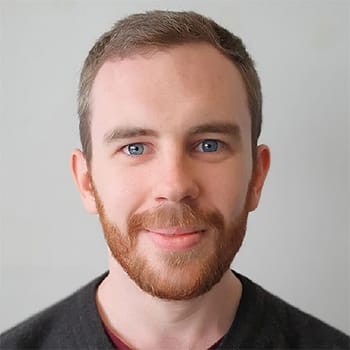
To learn more, I sat down with Dr. Paul M. Garrett, currently doing postdoctoral work at the University of Melbourne.
In addition to studying how your brain makes decisions when it’s uncertain, his recent article on The Conversation raised old and new questions related to how I think about forgetting, remembering, and every decision I make in between.
Here’s one aspect of Paul’s research that blew my mind:
The old theory said your brain has a fixed number of memory “slots.”
If something made it into a slot, you remembered it.
If it didn’t, it was gone.
But that theory is apparently wrong.
Rather, Paul’s research demonstrates that even memories you’d swear are completely gone still leave a faint signal in your brain, precise enough to push you toward the right answer without you even knowing why.
That “gut feeling” you get sometimes? That might literally be a fuzzy memory talking.
In this conversation we go deep on why your brain caps out at 3 to 4 items in working memory and what that actually means.
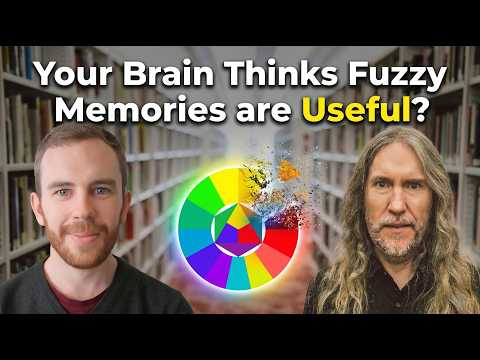
We also discuss why you remember better from a physical book than a screen (and the possible spatial memory scientific explanations behind it).
Next, we discuss:
- How trained motor skills get so deep into procedural memory that even ten years away can’t break their strength
- How marketers and salespeople exploit your decision boundaries using time pressure
- Why a tiny dose of Bayesian reasoning would make almost everyone a sharper thinker
- What new EEG research on voluntary decisions reveals about whether or not free will is real
- How to make memory science more accessible by finding good science popularizers
Paul and I had such a deep conversation that we kept going well past the formal interview.
That bonus discussion covers experimental design for mnemonic research, Giordano Bruno‘s 16th century memory seals, the neuroscience of pitch detection and white matter volume, music therapy for Alzheimer’s patients, and a lot more on the topic of how memory works.
You can access the full bonus conversation in the Magnetic Memory Method Masterclass. You’ll find it on the Bonus page.
More About Paul Garrett & His Research
To follow more from Paul, check out his:
- LinkedIn Profile
- Google Scholar page
- Profile on The Conversation
If Fuzzy Memory Fascinated You, Go Deeper With These Science-Related Episodes
Ready for more?
Check out my conversations with:
- Dr. David Reser and Tyson Yunkaporta about Aboriginal Memory Techniques
- Dr. Gary Small on science-backed ways to keep memory strong
- Dr. Christine Till on research into brain training with apps
Final Thought
Here’s the final thing (for now) that comes to mind about fuzzy memory:
If your brain is already doing this much work behind the scenes with zero memory improvement training, just imagine what it can do when you actually give it the right tools.
That’s what the Magnetic Memory Method is built for, and that’s why it’s based around the Memory Palace technique.
After all, many of us have been using locations we barely remember to memorize tons of information.
So if you’re not familiar with this approach, or you’re worried that you can’t remember places you remember enough to use the method of loci, complete this Complete Guide to the Memory Palace technique.
You might just be pleasantly surprised by just how much your fuzzy memories help you remember more than you ever imagined possible!

 Anthony Metivier is the founder of the Magnetic Memory Method, a systematic, 21st century approach to memorizing foreign language vocabulary, names, music, poetry and more in ways that are easy, elegant, effective and fun.
Dr. Metivier holds a Ph.D. in Humanities from York University and has been featured in Forbes, Viva Magazine, Fluent in 3 Months, Daily Stoic, Learning How to Learn and he has delivered one of the most popular TEDx Talks on memory improvement.
His most popular books include, The Victorious Mind and…
Anthony Metivier is the founder of the Magnetic Memory Method, a systematic, 21st century approach to memorizing foreign language vocabulary, names, music, poetry and more in ways that are easy, elegant, effective and fun.
Dr. Metivier holds a Ph.D. in Humanities from York University and has been featured in Forbes, Viva Magazine, Fluent in 3 Months, Daily Stoic, Learning How to Learn and he has delivered one of the most popular TEDx Talks on memory improvement.
His most popular books include, The Victorious Mind and…