
Podcast: Download
Subscribe: Apple Podcasts | RSS
Want to know how to memorize vocabulary in 30 seconds flat?
The process is as simple as transforming words and their meanings into dynamic associations.
Once that step is done, you “park” those associations in a Memory Palace.
Then, you stroll back along this simple mental journey on a set schedule to establish long-term retention.
That’s the entire method in a single breath that I’ve been teaching students for over fifteen years.
Of course, the magic to the method lies in the details, which I’ll unfold for you below.
All based on my experiences not only teaching memory techniques for vocabulary, but also using mnemonics to help me learn and lecture in German.
I’ve also memorized over 1700 words in Sanskrit, lots of interesting phrases in Latin and some of the most complex poetry in English I’ve ever read.
Below, you’ll find the exact, step-by-step system that has been tested in multiple languages, proven by science and refined by thousands of my students.
Ready?
Let’s dive in by having a look at this video featuring the habits of a Renaissance word fanatic who travelled the globe to share how he memorized vocabulary using an effective self-study approach that makes words stick in memory quickly:
How to Memorize Vocabulary Fast and Effectively (Backed by Science)
Now that you’ve seen the habits of the word-master Matteo Ricci, let’s dig into the details of how to absorb vocabulary with precision.
As we get started, please keep in mind that the exact language you’re tackling does not matter.
This fact is true because memory techniques predate the English language.
So whether you’re improving your mother tongue or learning a new language, the following approaches will help, especially when combined.
1. Mnemonic Devices for Memorizing Vocabulary (Starting with the Memory Palace Technique)
The Memory Palace technique is the most important mnemonic device for memorizing words. It is specifically useful for language learning, and has helped learners throughout history absorb vocabulary.
What is the Memory Palace technique and how does it work?
Memory Palaces help you learn by turning familiar locations into mental storage units.
In each spot in a home, office or other familiar place, you imagine vivid mental associations that help you recall the sound and meaning of words.
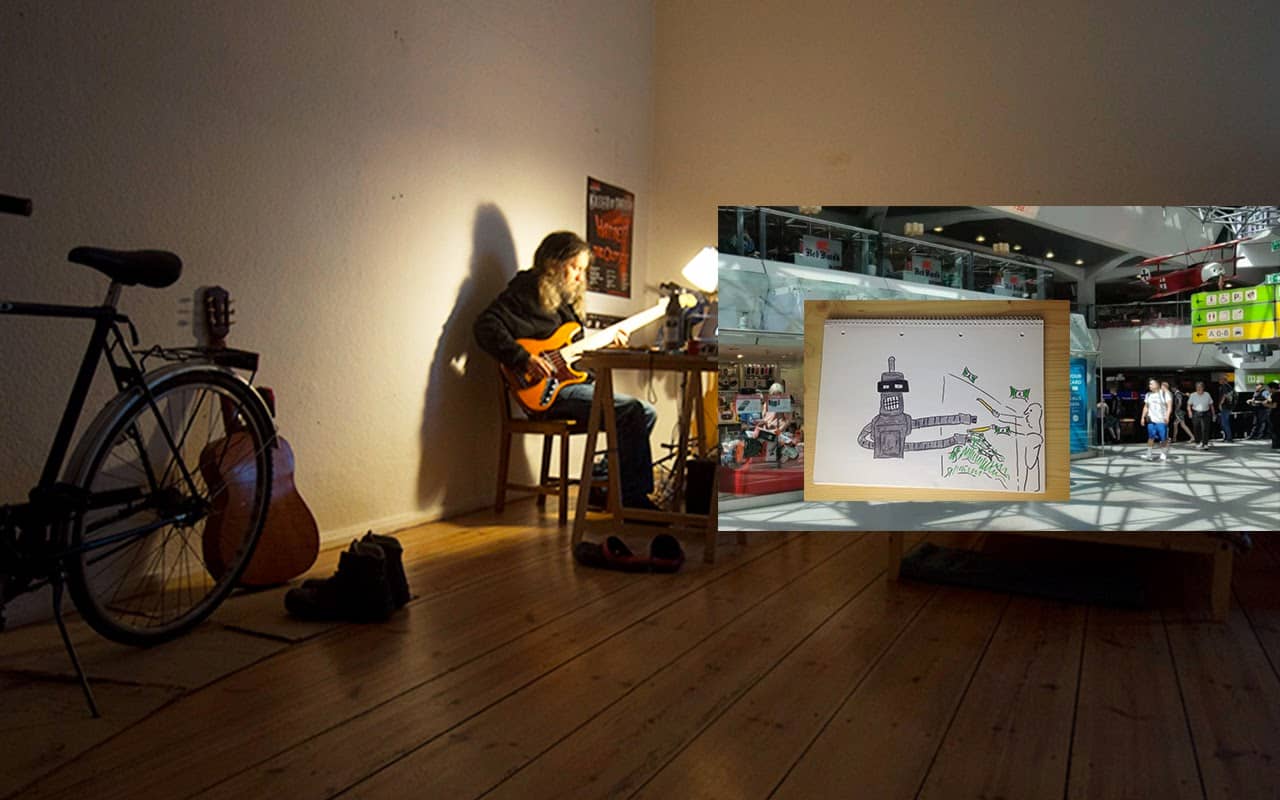
For example, to memorize the German word Bereich (area), I imagined Bender from Futurama with the composer Steve Reich inside Berlin’s Tegel airport.
This kind of association promotes rapid recall because Bender + Reich sound like Bereich.
As I formulated this association, I imagined these two familiar figures interacting in a location familiar to me and even drew a quick doodle to help lock it into the apartment I used as the Memory Palace.
The illustration below shows you where in the apartment I imagined this mnemonic scene unfolding:
If this process sounds a bit abstract, please don’t worry.
Just try to follow along.
Or, if you’re skeptical, check out this scientific study showing how using this technique helps support better memory.
A Detailed Mnemonic Example for a Useful Word to Know
The image above shows me at my desk, which is a station in this Berlin apartment Memory Palace.
Using the method of loci in combination with the pegword method to structure the choice of Bender and Steve Reich, I had not only the bed in this apartment on which to “place” associations.
I also had an alphabetic “toolbox” from which to draw multiple associations.
That’s what using the pegword method gives you.
Some people divide mnemonic pegs from Memory Palaces, but in reality they need to work together. Ideally, you’ll put them into practice with the other vocabulary memorization techniques we’re about to discuss.
Although these techniques aren’t magic, you’ll be surprised by how fast new words start to stick once you’re up and running.
2. Engage All Your Senses With Multisensory Learning Techniques for Vocabulary Recall
To get the most out of the Memory Palace approach, you need to treat the skills as much more than a visual memory technique.
You need to practice multisensory visualization.
Here’s how I approach this simple and fun learning approach:
When I memorize new words, I don’t just see the mnemonic association in my Memory Palaces.
I also imagine:
- Sounds
- Physical sensations
- Tastes
- Smells
- Concepts
- Emotions.
I even draw upon the sense of spatial location.
For example, when I memorized “expetendorum” in Latin, I imagined what it felt like to stand in front of a Pet Barn to recall the “pet” part of this phrase.
I felt the sun on my skin and imagined smelling the pet food.
If you don’t feel equipped yet for such mental experiences, these multi-sensory visualization exercises will strengthen multiple aspects of your imagination.
With so many of my students, the trick is to get them to move beyond trying to memorize vocabulary based solely on their “mind’s eye.”

3. Tap Into Context Using the Story Method for Vocabulary Memorization
Although I don’t always memorize vocabulary in phrases, it’s generally useful to do so.
Another way to add context to words that you’re learning is to add stories to them. There’s actually a mnemonic strategy called the story method.
For example, to memorize the word “expetendorum,” I not only used the Pet Barn as a Memory Palace.
I had a story in which an X-Man (Wolverine) with a ten of spades on his claws pounded the door while drinking rum. That little story gave the word a larger context and made it easier to memorize the entire phrase I found it in.
The “rum” part was a bit weak so I later improved it by thinking about The Shining, a movie which involves a character named Danny saying the iconic phrase, “Redrum.”
This additional mnemonic hook drew upon additional context and story that settled the word into long-term memory. For you, don’t worry about little errors here and there. Just use what you’ve already developed through association to compound.
4. Use Spaced Repetition Properly to Achieve Long-Term Vocabulary Retention
When learning vocabulary from a foreign language, it’s important to repeat the words frequently.
But not randomly.
When you use a process scientists call this process spaced repetition you can easily cut down on the amount of repetition you need.
As this study found, without using memory techniques, especially Memory Palaces to help rehearse the vocabulary you’re learning, you basically wind up with rote repetition.
Learning using memory techniques, however, always involves creative repetition. And there’s always a layer of challenge or what scientists call “desirable difficulty.”
In this study, for example, the researchers found that some level of challenge or difficulty increases conceptual understanding.
Since the definitions of many words can be quite abstract, that’s an additional win across the board.
5. Use Songs and Chants to Learn New Words Faster
I’ve memorized over 1700 Sanskrit words, a goal I’ve been able to push through largely thanks to chanting them to a bit of a tune.
It might sound silly, but it’s worked for thousands of years.
Anecdotally, my friend Luke Ranieri also used singing to help him memorize the first 100 lines of the Iliad in record time.
Just to drive the point home, you can also watch this video where I sang a Mandarin song I later performed at my wedding:
This song endeared me to my new family and my wife. But it also helped me learn a lot of vocabulary in Mandarin very quickly.
So, pick a song in any language, memorize it using a Memory Palace and before you know it, you’ll have an expanded vocabulary.
The more song lyrics you memorize, the more vocabulary you’ll be able to access from memory and recognize while reading, speaking, listening and writing.
6. Use Active Recall and Self-Testing for Language Learning
In addition to spaced repetition, it’s important to challenge yourself using tests. Scientists call this process active recall.
Let’s pretend we’re learning English and take the word “account” as an example.
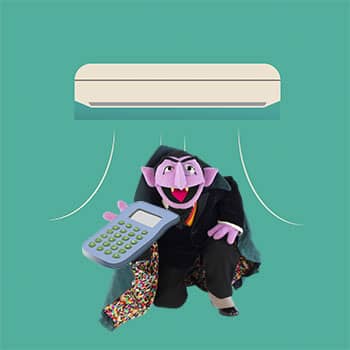
The first step is to select a Memory Palace. Then assign a mnemonic image. I grew up with Big Bird, Oscar the Grouch, and a host of other characters on the children’s show Sesame Street. So when I think of the word “account,” Count von Count immediately comes to mind.
But we have an additional “AC” to add to that word. So I think of an air conditioner falling out of a window onto the Count. Just like you see in the feature image at the top of this post.
To get the meaning into the image, this air conditioner also looks a fair amount like a calculator (the tool used by an accountant while engaged in the act of accounting).
This action and object-based visualization with a meaningful character from pop culture almost guarantees you’ll not forget that word.
To add self-testing, the process is easy.
Get out a pen and some paper.
Bring the Memory Palace to mind first, then the mnemonic image.
Finally, write down what you’ve memorized.
The Freedom Journal used for language learning will help because I’ve shown you how to combine it with a Memory Palace technique.
Gradually you will notice improvement, if not very quickly.
This specific process has been proven in studies like this one to help form memories faster and I used it a lot, especially for my Mandarin exam, where I also needed to know Chinese characters on top of sounds and meanings.

Cloze tests are another form of self-testing you can explore. I used the test you see above to help me remember Chinese vocabulary for my level III test in Mandarin.
Basically, cloze tests simply leave out a piece of information.
Whenever you self test using flashcards in the way we’re about to discuss, don’t include all of the answer on the back. Always leave an element out so that it’s like a puzzle you have to solve.
This simple omission creates a “desirable difficulty” that will help you memorize the sound and meaning of words much faster.
Not only that, but you’ll get more handwriting into the testing process. As this recent study shows, there is really no debate that including handwriting is key to memory formation, especially in our increasingly digital world.
7. Use these Tactics to Optimize Your Vocabulary Flashcards
A lot of people like to use Anki for learning vocabulary.
I’ve never found it that helpful, largely because it’s boring to me and feels like rote learning.
As an alternative, I like to create my own flashcards in ways that use the active recall process we just discussed.

Take the owl in the shoe above, for example.
I created it by hand to learn some cool slang in French.
Instead of repeating the same phrase over and over again, simply by creating the card and then looking at the card 3-4 times, the sound and meaning entered long-term memory much more effectively.
I know that it can seem like a lot of time spent on drawing using this approach. But as this study found, combining flashcards with the other methods discussed on this page, strengthens both memory and academic performance.
Personally, I wish I could have added self-created flashcards to my language learning process much sooner.
8. Stimulate Vocabulary Reinforcement Through this Kind of Reading
When I started learning German, I waited far too long to start reading books and articles.
This is a problem because reading is one of the best forms of spaced repetition for learning vocabulary that you can get.
To give you a concrete example of a strategy that helped me a ton, check this approach out:
I’m very interested in music. So when learning German, I found interviews with one of my favorite bands in this language.
Not only did this choice help me find interesting material to read about people and topics I actually care about. It also gave me examples of the kinds of vocabulary used by people in everyday speech who also care about similar things.
This makes interviews a somewhat better source of vocabulary than novels and books for kids. That’s because it leads you to directly being able to talk with your fellow adults using words and terms they’ll appreciate. Using vocabulary from books for children is unlikely to create rapport by contrast.
That said, language learning expert Olly Richards has recognized the dearth of good material for language learners to read. His story books for language learners are excellent and the vocabulary selections are geared to giving you words you actually need to progress in a language. And they repeat in just the right doses.
Other ways to read include using your Netflix settings while watching foreign language movies. I often re-watch my favorite movies with subtitles on in languages I want to learn, giving me lots of repeated exposure to core vocabulary.
It’s not exactly learning by osmosis, but close. And here’s another study showing the empirical research that optimizing memory happens a lot more reliably when you use multiple strategies and techniques in combination.
Troubleshooting Vocabulary Overwhelm
The first way to handle overwhelm is to face the facts:
Feeling overwhelmed is normal. There are thousands upon thousands of words to learn and it’s easy to feel daunted to the point of not even knowing where to start.
After all, there are well over a million words in the English language alone.
How could you even make a dent in this number, never mind if you are learning a second or third language?
Well, let me break the process down in simple terms.
1. Your goal is to memorize the sound and the meaning of one word at a time, typically just one definition at a time.
2. You can speed up the process by using a Memory Palace Network.
3. When you know how to navigate the Memory Palace Network well, you “encode” each word using Magnetic Mnemonic Imagery.
4. You use Recall Rehearsal to get the words into long-term memory.
5. You use the Big 5 of Learning to speed up the process and ensure longevity.

Ideally, you do all of the above in a variety of languages. That’s because bilingualism makes for a healthier brain.
Personally, I memorize vocabulary in Latin, Sanskrit, German and Chinese each and every week. I rotate between these languages partly because it’s fun, partly because I’m harnessing the power of interleaving as a memory technique.
Finally, it’s useful to spend some time learning about memory science.
When you understand even just a little about the difference between short-term and long-term memory, it makes it easier to grasp why and how the memory techniques you’re about to discover work. That way, you’ll be primed to embrace them more fully.
Frequently Asked Questions About How to Memorize Vocabulary Words Fast
Below are answers to some of the most common questions I’ve received over the years, both in response to my vocabulary learning books, my main language learning course and posts like this on the Magnetic Memory Method blog.
These insights will help you apply the methods you learned above.
Let’s dig in.
What is the fastest way to memorize vocabulary?
To reach the highest possible speed, you need to combine multiple systems.
You can read my free mnemonics dictionary for a full list, and from there, start developing the approach that works best for you.
Ultimately, you need a combination of memory techniques, testing and ongoing use of the words you commit to memory so they remain fresh.
Go for longevity and ongoing use and you’ll have momentum and consistency, which is even more valuable than speed in my view.
How does the Memory Palace technique help with vocabulary learning?
The main benefits are:
- You can use associations and have a point of reference that helps you find them, rather than just tossing them into the “void” of your imagination.
- Memory Palaces are fantastic for giving you a structured means of review. Spaced repetition is faster, easier and more effective.
- It allows for arranging words in optimal orders, such as alphabeticall, making list memorization simpler and more efficient.
- This technique is much more engaging. For many learners it feels like playing a game.
What is the best spaced repetition schedule for vocabulary?
Hermann Ebbinghaus set the best model when he first discovered spaced learning and the serial position effect near the end of the 1800s.
His approach involved personal experimentation that led to many studies that confirmed the power of spaced repetition.
However, the exact intervals that are going to work for you require some experimentation. That’s what Ebbinghaus did to find out his own personal “forgetting curve.”
So rather than looking for a magic number, I suggest you dive in and develop your own schedule by noticing when you’re sharpest during the day.
Observe other possible influences too. For example, I noticed many years ago that I memorize new words and Sanskrit phrases best before I eat breakfast.
This observation didn’t mean that I never memorized at any other time of day. It just helped me set a schedule that works very well in my case and was discovered through experimentation inspired by Ebbinghaus.
Should I use flashcards for vocabulary?
I believe so, yes, provided that you create them yourself.
Downloading a stack of cards created by someone else might help, but you’ll experience faster and deeper encoding if you create your own.
Consider including drawings and colors to create deeper engagement and reflection as you create them.
When learning a foreign language, should my mnemonics be based on my native language?
People often ask me whether they should first place a known word in a Memory Palace and then “point” to the foreign word from there.
In other words, they try to memorize a list of English words, then have them point to the target language word.
That’s almost always a mistake that chews up time and slows down your progress.
Here’s why:
You already know the word in your mother tongue. What you don’t know yet is the sound and meaning of the new word. So your mnemonic work should focus directly on that.
Use elaborative encoding to build mnemonic associations that capture:
- How the new word sounds
- What it means
- How it feels in use
Then place the associations in your Memory Palace, even if you need one for each syllable.
Following this process trains your brain to recall the foreign word itself. It’s much better than forcing you to translate through your native language every time. That will only slow your path to fluency and weaken long‑term retention.
Why Memorizing Vocabulary Is The Most Important Skill In The World
Memorizing vocabulary is not only the easiest skill, but it’s also the most important skill you’ll ever have. It’s also the path to start to remembering all kinds of other things.
Almost all of the most important information we use to survive is transmitted through words. They are the building blocks of all language and information.
If you’d like more help, please get my free course here:

It will help you master the Memory Palace technique and other approaches we discussed above.
Vocabulary is crucial and essential to improvement in all areas of life. Again, words are fundamental to success as a lifelong learner. Especially if you want to become a polymath (like I do).
The only catch is that to grow, you must have a solid foundation.
So now that you’ve got all these tips under your belt, please let me know:
What vocabulary are you going to memorize now that you know these memorization secrets?






21 Responses
Anthony Metivier’s article entitled “How to Memorize Vocabulary – A Step-By-Step Guide” is worthy of close scrutiny. The author offers a solid foundation to understanding and practicing valuable memorization skills.
Anthony describes the importance of planning, use of mnemonics, and context – these and several other principles are rarely taught in traditional language learning. The claim is made that memorizing vocabulary is the most important skill in the world.
Anthony supports this contention with the explanation: “Almost all of the most important information we use to survive is transmitted through words. They are the building blocks of all language and information.” The article merits study and indeed memorization of its life-enhancing skills.
Thanks for this comment, John.
Planning is indeed sadly absent from so much language learning instruction. Yet, it is easy and fun to do and primes the mind and memory for the encoding to come.
Thanks again and look forward to your next post on the MMM blog. 🙂
I’m Martin from Peru and I really appreciate what you do for all of us to improve our awesome tool we have “our memory”
Thanks a bunch It’s really really useful all these techniques to improve our memory.
I’m glad you found this useful, Martin. Thanks for taking a moment to let me know and look forward to your next comment on the blog!
Thanks, for the deep introduction to memorize vocabulary, Anthony!
I like that you are giving details about the words. (examples). I am curious about other vocabulary when i am reading the Toefl. In this group there are different people from other countries. Even right now i have enough to memorize when i get my goals of Health and life Insurance, Math, Pedagogy and the Toefl I want to get immersed in Hebrew, Sanskrit, …I want to get my Freedom Journal also.
Thanks for this, Maricela.
I understand just how much desire most of us have for multiple languages, so do enjoy the emotions around that.
From a learning and memory perspective, most of us are likely to get better results from focusing on one language first for a decent amount of time. Familiarity with that process then creates skills and decision parameters that make the next language easier – especially when you have a whole extra set of colors to paint with using mnemonics.
Thanks as ever for your comments on this blog and look forward to your next post!
Thanks for writing this informative guide! These resources are really helping me step up my language learning. Reading this has left me wondering something:
Is it possible to use the same location of the same memory palace to memorize multiple words in different languages? For instance, do you think it would be effective to put a Chinese word in my bedroom closet and a week later put a Spanish word in there as well, or would it be better to make separate memory palaces?
Thanks in advance for any thoughts on the matter!
Thanks for this question, Jeremy. I’m glad you’re finding these resources helpful.
It is entirely possible to memorize the vocabulary of more than one language on a station by station basis in a Memory Palace.
In your case, Spanish and Chinese are different enough that you should be able to do manage this without one image interfering with the other, provided you’ve gotten the first word into long term memory and you are skilled in dealing with “ghosting” and/or “The Ugly Sister Effect.”
(If you want to search Magnetic Memory Method + Ugly Sister Effect in Google, you’ll find a whole blog post about this issue on that page and podcast. There’s also an interesting discussion on that page you will likely benefit from.
The reason I’m not posting the link directly in this discussion for you is because we’ve been seeing a speed penalty when linking in the comments and don’t want to harm the performance of the site. I appreciate your understanding and for looking up that previous resource manually if you’re interested in learning about dealing with “ghosting.”)
About “better” questions, generally, I would say that for most people it is better to use separate Memory Palaces for a few reasons:
1. They don’t have to deal with intermediate issues like “ghosting.” It’s actually not a problem as you’ll learn from the other resource. But new people can experience it as a problem if they don’t see it for the memory triumph that it really is.
2. Creating multiple Memory Palaces is beneficial for helping unlock more spatial mapping skills, spatial memory, autobiographical memory, episodic memory, figural memory and other levels. Without enough Memory Palaces, it is unlikely for the full competence that anyone can achieve with these memory techniques to emerge.
3. The purpose of the Memory Palace is to have a “canvas” for both encoding and decoding, but especially decoding so that the information gets into long term memory as quickly, efficiently and thoroughly as possible.
Depending on your existing level of skill, it is completely possible that you really can hunt two rabbits at once and catch both. That’s up for each individual to decide.
I am currently memorizing two long form texts in the same Memory Palace as a means of stretching my skills. I was trying for 3 texts, but the challenge was too much, so I scaled back to two.
And that is my final point: You need to balance what I call the “Challenge-Frustration Curve.”
If you’re not being challenged, you won’t grow with these techniques. But if you get frustrated, you will understandably give up.
So always keep yourself challenged, but scale back from frustration until your skills can handle the higher levels of challenge.
And keep your outcome in mind.
If you really want to have the information you’re dealing with in your memory, then frustration is much less likely to arise because your strategy will be more precious to you. It’s the old Abraham Lincoln line:
“Give me six hours to chop down a tree and I will spend the first four sharpening the axe.”
The only point to add to this quote is that one should spend a bit of time fully deciding that they actually want to chop the tree in question down. A lot of people go after entire forests with dull axes before they’ve even properly assessed that they really want even the bark of one tree.
I hope these pointers help and look forward to your next post here on the blog soon! 🙂
Thanks for the reply! I think I’ll give using the same palace for Spanish and Chinese a shot, though I think I’ll use a different one for French due to its similarity, and I’ll share the French one with Russian words when I start learning it.
Do you think that organizing memory palaces by letter of the alphabet would be the best way to organize words? That would involve creating over 50 memory palaces, but I’m eager to do so if it would be a good memory technique.
Dive in an give it a shot.
If you use the Magnetic Memory Method and the principle of alphabetization along with the other tools we teach, you won’t need 50 Memory Palaces.
You will likely create many more than that after feeling the benefits of having them.
As for “the best way” and this being a “good” memory technique, here’s the reality:
The best way and the good way is the one you actually use to get results.
So many people hop around from technique to technique without giving any single one of them their due. It’s like flipping between piano, saxophone and sitar and then wondering why you’re not getting anywhere. But the “best” instrument that is “good” to play is the one you devote yourself to learning how to play.
It’s the same thing with memory techniques. When you devote yourself to one kind of memory instrument, learn its “keys” and play the “compositions” as described, you’ll develop mastery with it.
Then, it’s much easier to hop over to another instrument (or memory technique) and hit the ground running with it.
In sum, if you want to master memory techniques for language learning, pick one, learn it to the point that you can use it predictably, and then continue to study the other approaches out there to supplement your core skills.
Hope this helps!
Thanks for the reply! I think I’ll give using the same palace for Spanish and Chinese a shot, though I think I’ll use a different one for French due to its similarity, and I’ll share the French one with Russian words when I start learning it.
Do you think that organizing memory palaces by letter of the alphabet would be the best way to organize words? That would involve creating over 50 memory palaces between the two language sets, but I’m eager to do so if it would be a good memory technique.
That was really helpful.
I’m glad to hear that, Farzaneh. Thanks for letting me know!
These suggestions really are useful for learning new vocabulary. I’ve tried similar ways and it really works with both simple words and harder ones. Thanks.
Thanks for sharing your experience, Shery. It’s great to know that you’ve used similar approaches before.
I’ve been working on improving my vocabulary for the last two months. I found that it was difficult to begin, but once I started with these techniques, it became much easier.
That’s great, Bahar. Thanks for letting us know that this approach is working so well for you. Having a better vocabulary is a great way to get a better career, improve your professionalism and enjoy language so much more.
Ok ???? I’m going to take toefl and Cambridge English exams.
What do you suggest to do or read to memorise English structure and grammar for a test?
Waiting for your answer.
Thanks for stopping by to read this post.
I don’t recommend memorizing grammar as such, though you certainly can.
One way to do it is to identify a grammar rule you want to absorb.
Then, create a Memory Palace with enough space for ten or so examples of that rule in action.
Memorize those ten sentences using that Memory Palace. Then move on to the next grammar principle.
But overall, if you’re focused on memorizing vocabulary and getting lots of reading, writing, speaking and listening in, grammar is usually learned in the background.
However, I do appreciate that TOEFL is its own kettle of fish, so if I were in your position, memorizing examples of grammatical rules and principles is what I would do.
That was enlightening. Thank you for the article.
You’re welcome!