
Podcast: Download
Subscribe: Apple Podcasts | RSS
 If you want to know how to improve cognitive function, you probably already know the basics.
You need to eat well, get regular sleep, exercise consistently and maintain social connections.
That last point hits me hard because as someone who has taught memory improvement for fifteen years, I recently moved away from all my friends. And I’m definitely feeling the impact of that decision.
And we’re all facing the consequences of the decisions we make because everything influences the quality of our minds.
So if you’d like to know what I’m personally doing to maintain focus as I age while leading an unusually isolated life, today I’m sharing my research and experiences.
It’s a bit unique because I’m the author of multiple memory improvement books, an independent memory researcher and someone with a reputation to maintain in the field of mental performance.
And since we all need to preserve our reputations, how I’m tackling my own concentration, memory and focus challenges might help you along your own journey.
Let me share this proclamation loud and clear as we begin: Tackling challenges to my own concentration and focus is my passion.
And it has to be a passion and a mission because I intend to enjoy a very focused mind with strong recall abilities for as long as I possibly can.
Ready to explore some of the best, science-backed strategies that are helping me?
Let’s dive in!
What Is Cognitive Function? And How Does It Relate To Memory?
“Cognitive function” is a term used in a variety of fields, from memory science to Jungian psychology.
For Carl Jung, cognition boiled down to how your mind processes and experiences emotional feeling, intuition, a variety of sensations and thought.
When it comes to memory in the realm of learning, cognitive function specifically refers to:
- Attention and how you focus on information like hearing someone’s name
- Working memory so you can temporarily hold an instruction or phone number in mind
- Long-term memory for accessing facts like names and locations
- Processing speed for thinking efficiently
- Executive functions like planning or switching between tasks
- Holding focus during conversations or while studying
- Speaking languages
- Navigating a variety of places
Most importantly, cognitive function governs how we use memory techniques to remember things, specifically information related to data like numbers and information related to our professional work and studies.
Why Cognitive Function Slips (According To Science)
First things first: If you’re concerned about your memory, please see a doctor. Or, if you’re concerned for a loved one, assist them in doing so.
Generally, the reason most of us have issues is because we distract ourselves with multitasking.
Good recall begins with paying attention. But far too often we clutter our lives with social media, creating digital amnesia. This is a term that literally refers to Internet-induced forgetting.
The good news is that we can improve.
Like focusing on diet, exercise, sleep and socializing, paying attention is a behavior. This was a point made by memory expert David Berglas in A Question of Memory. He’s worth listening to because his memory stayed sharp up until a very old age indeed.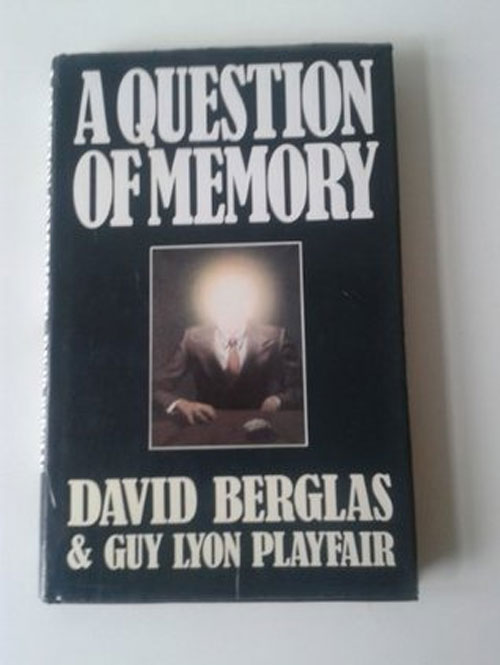
How do you turn paying attention into a behavior?
Start making an effort to remember names, for one thing. Yesterday at the bank I did just that, and the clerk delighted in covering up her name tag to test me several times.
You can also engage in activities like memorizing scripture. Or other forms of long-form verbatim memorization, like poetry.
For an inspiring outcome from one of my students who was recovering from cardiac arrest, check out the memory improvement case study and scripture demonstration provided by Matt Barclay.
There are a few more activities to consider that I’ll cover below, but let’s look at what happens to our brain cells next. It will provide more context to this mission-critical aspect of our mental lives and why maintaining memory is so valuable throughout life.
Cellular Aging
Judith Campisi was a pioneer in the field of cellular senescence. As one of her papers described this term, cellular senescence is “when bad things happen to good cells.”
It’s bad no matter where it happens in the body. But there are two ways it can affect memory:
- Reducing the functioning of your brain cells
- Creating pain and stress that distract you and reduce focus
If you find yourself dealing with cellular senescence, diet might help improve your cognition. This study found that adopting a ketogenic diet improved memory in aging mice.
Anecdotally, I’ve eaten either an entirely keto or near-keto diet for years. I have to regulary eat yogurt now, and that unfortunately causes some brain fog. But during the years I ate near-totally keto, I was sharper than I ever felt in my life.
Genetics
We often think that things are just the way that they are. Our genes above all cannot be changed.
Assuming this is true now, will it always be the case that we have to just deal with the cards we’ve been dealt in the game of life?
Scientists are hard at work answering this question.
One interesting study on animals has shown promise with respect to potentially treating neurocognitive deficits with gene therapy. In this case, spatial memory was studied in particular, and treated animals were able to navigate mazes better.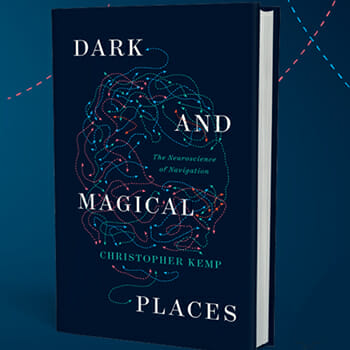
In humans, how we use memory to navigate space is only starting to be understood. The science writer Christopher Kemp wrote a lovely book on the topic and shared his findings on this episode of the Magnetic Memory Method Podcast.
Although it’s not entirely clear that Kemp’s personal struggles with navigation are genetic in nature, Dark and Magical Places is well worth reading because some scientists have shown a substantial relationship between place cells and memory. I’d be surprised if gene therapies didn’t emerge in the future that improve both spatial and other types of memory, giving them greater longevity in our lives.
Environmental Factors
One of the hardest things for many of us to change is our environmental conditions. As I mentioned, I moved away from the city and did not anticipate just how out of touch this would put me with my friends.
I also did not anticipate that it would be such a challenge to make new ones. It’s critical that I take care of this soon, however. As this study shows, poor social connections are a strong predictor of cognitive decline.
Another study found that people with stronger social networks have a lower mortality risk. The catch is that “naturally occurring social” relations are at the core of the benefit. Corny “interventions” by community groups or the recent explosion of rent-a-friend and rental family services don’t show much promise.
Quite the opposite, as this Afar story details. If it’s true that people work ten-hour days only to carry on eating and relaxing with their co-workers, that sounds like a very challenging environment to live in.
And that’s not to mention the possibility that worries over climate issues are causing anxiety-induced memory loss. If you’re struggling to think clearly and remember, you might want to think about how this kind of environmental issue might be affecting you. Research into eco-anxiety is underway at the Melbourne School of Psychological Sciences and likely to grow in importance as a field of therapy over the years to come.
How Memory Improvement Activities Can Improve Your Cognition (Even As You Age)
Now that we’ve covered some of the key reasons mental sharpness slips throughout our lives, let’s look at activities that will help restore and improve your cognitive function.
Obviously, diet and nutrition for cognitive enhancement are assumed. And again, please consult a doctor for advice that directly addresses your personal situation.
Likewise with the following activities. If you have doubts, always run each past a qualified professional before engaging in them.
Even though I engage in them myself, critical thinking remains important and I always encourage you to seek at least one professional opinion before taking any action.
One: Mindfulness And Meditation
I’m a strong proponent of meditation for concentration as a key activity for improving attention and memory.
Not only does my book, The Victorious Mind cover much of the key research on the benefits of meditation. I wrote it because combining meditation with memory training helped me in a variety of ways.
The key is to understand that there are many forms of meditation to explore. Not just sitting or chanting mantras.
For example, benefits of mindfulness on your cognitive function will likely start to flow for you through:
- Sitting meditation
- Walking meditation
- Breathing exercises
- Journaling for reflective thinking exercise
- Going on a retreat
- Practicing mindfulness while eating
- Yoga for concentration and memory
- Various practices that can help regulate your dopamine levels
Although studies like this one show that meditation can increase your working memory, there’s a catch. As these researchers recommend, meditation routines generally need to be systematized and conducted routinely.
I’ve certainly found that my own practices need to be consistent.
That’s why I optimize my environment to remind me of my meditation practice. I have my journal always in sight, the place I sit and the book of mantras I’m memorizing from.
Two: Have A Purpose As You Age
I know it sounds cliche.
But the findings of the Rush Memory and Aging Project demonstrate that having a goal linked to purpose is associated with lower incidences of Alzheimer’s Disease and related issues.
Interestingly, the study also demonstrated that “purpose in life was also associated with a reduced risk of incident disability and risk of death.”
I was fortunate to spend time speaking with the memory experts Tony Buzan and Harry Lorayne. They both were incredibly sharp when I met them, despite being in their seventies and eighties respectively.
Why?
It was not just the fact that they both engaged in regular memory training.
In my view, their strong sense of purpose was a huge part of it. Tony had the World Memory Championship he helped found, along with his work in mind mapping and his polymathic personality.
For his part, Lorayne wrote and published books and performed card magic almost until the end.
I myself have made teaching as a mnemonist and understanding as much as I can about memory science my purpose. It’s not clear yet that I’ll last as long as they did or make a similar mark.
That doesn’t matter nearly as much to me as enjoying the benefits that doing my best in this field brings. So your mission, if you choose to accept it, is to craft your own vision statement and work on your purpose. From there on in, it’s just a matter of consistent execution.
If you’d like some help with this piece of the puzzle, check out:
- My detailed training on crafting a vision statement
- The mind mapping for my business I did under Tony Buzan’s tutelage
Three: Engage in Regular Language Learning Activities
Another reason you might suffer cognitive decline stems from not taking on enough challenges that create mental stimulation.
Few activities offer more variety and challenge than learning a new language.
The problem is that many people cringe at the first sign of challenge. Yet, the challenge itself is what’s so helpful for restoring and maintaining cognitive function!
As part of my mission and purpose, I’ve created many tutorials on language learning that will help you. Many of these lessons are geared to reduce the challenges and speed up the process based on my personal experiences with applying memory techniques to language acquisition.
But that’s not to remove challenges altogether. In many ways, it’s more about keeping the challenges fun and eliminating the boredom of rote learning.
Quick Memory-Based Exercises That Restore Concentration
We’ve just covered three areas of activity to engage in over the long-term. They’re not quick fixes, but tactics and strategies to explore across a lifetime.
What about things you can do within a few minutes a day and get some benefit?
Well, as I talk about here, completely crossword puzzles likely isn’t one of them (though they can be fun). It also isn’t fiddling with online brain games (which have been shown not to work very well).
Instead, give these quick activities a try.
Four: Repeat Conversations Silently In Your Mind
I don’t know about you, but sometimes I get caught up in thinking about what I’m going to say next instead of focusing my mind on my conversation partner’s exact words.
To combat this, years ago I started repeating what people were telling me in my mind.
Memory expert Jim Samuels teaches something similar in his book, Re-Mind Yourself. It’s a quick exercise that focuses your mind and leads to remembering more from conversations.
You can also practice this repetition game while listening to podcasts or watching movies. It’s powerful.
Five: Kirtan Kriya
According to the Alzheimer’s Research & Prevention Foundation, just twelve minutes a day with this ancient concentration technique helps improve your memory while reducing stress.
Dr. Gary Weber teaches it in this video:

I’ve practiced it for years and it really helps. Usually I combine it with my walking meditation sessions.
Six: Incorporate Mnemonics Into Your Daily Life
Although it takes a bit of setup, applying mnemonics to everyday learning tasks is easy.
You can use them to remember appointments, where you parked and your shopping list.
Every time you do, you’re getting in a bit of cognitive exercise.
Seven: Listen Like An Audiophile
Music has become ubiquitous in our society. You almost can’t go anywhere without hearing it.
But that doesn’t mean it has to be background noise.
Pay attention deeply to the rhythms you hear. Repeat the melody in your mind.
When I do this, I find that my irritation with music I don’t want to hear goes away.
Even better, it connects me more deeply with music itself. And studies like this have shown that music is linked to memory in a variety of ways, including episodic memory, semantic memory and explicit and implicit memory. Just by listening to music in a serious way, you’re giving your memory a huge workout.
On another level, I try daily to listen seriously to music I’ve never heard before. Luckily, there are bloggers and vloggers who share their most recent acquisitions. Within seconds, I have them playing on Bandcamp or YouTube.
Then, the steps are simple:
- Close your eyes
- Listen deeply
- Imagine the different instruments (even if you don’t know what they are)
- Call back melodies later in the day to exercise your recall abilities
For an extra boost, read biographies about musicians. Go through their music in historical order. Read the assessments of professional critics about them during their era.
This simple act contextualizes the music and exercises your brain’s unique ability to make connections and expand with new learning.
If music isn’t your interest, you can do something similar by looking at and recalling art. Or even going to indoor or outdoor art galleries. I’ve got a whole tutorial on how to use art galleries as part of your lifelong memory improvement journey.
One simple exercise is to just think back to a painting or sculpture you’ve seen. In the feature image above, I’m standing under a sculpture in Brisbane, and I’ve combined it with the music exercise. I just asked what it reminded me of and thought instantly of the Canadian band Voivod, which I know from my reading has a relationship to Metallica.
Since the sculpture looks like a big M, I then turned it into a kind of virtual Memory Palace, a final type of mental exercise we’ll discuss briefly next.
Improving Cognitive Function Can Be Easy & Fun
As you’ve seen, there are simple ways to combat cognitive decline.
The trick is putting aside the time and being consistent about the activities. I’ve shared some of the strategies I’m using to keep my brain sharp, and you’re welcome to explore even more.
Keep in mind that consistency is helped by a variety of cognitive activities, not getting stuck in just one or two. There are also benefits to be had by rotating between several, especially those where learning is involved. This is shown by the principle scientists call interleaving.
But you know, my favorite tactic of all is to use my memory in a variety of ways. And for that, I like to have multiple Memory Palaces. These mnemonic tools are very old and really fun to use.
To learn more about how to incorporate them in your quest to improve your cognitive function, get my free memory improvement course:

It will give your brain a workout with four free videos and some worksheets you can complete.
If some of the steps you discover in that course present a challenge, now you know that this is a good thing.
Lean into it and enjoy the results that taking on challenges brings to the long-term sharpness of your mind.

 Anthony Metivier is the founder of the Magnetic Memory Method, a systematic, 21st century approach to memorizing foreign language vocabulary, names, music, poetry and more in ways that are easy, elegant, effective and fun.
Dr. Metivier holds a Ph.D. in Humanities from York University and has been featured in Forbes, Viva Magazine, Fluent in 3 Months, Daily Stoic, Learning How to Learn and he has delivered one of the most popular TEDx Talks on memory improvement.
His most popular books include, The Victorious Mind and…
Anthony Metivier is the founder of the Magnetic Memory Method, a systematic, 21st century approach to memorizing foreign language vocabulary, names, music, poetry and more in ways that are easy, elegant, effective and fun.
Dr. Metivier holds a Ph.D. in Humanities from York University and has been featured in Forbes, Viva Magazine, Fluent in 3 Months, Daily Stoic, Learning How to Learn and he has delivered one of the most popular TEDx Talks on memory improvement.
His most popular books include, The Victorious Mind and… 



4 Responses
As a Chronological Senior Citizen=I can personally attest to proven results. That’s why I continue to do some element of MMM daily for over 4 years and counting. I am going in to this section AGAIN within the entire MMM offerings.
Being a “Dinosaur” myself,= I use the letters “Double D’s “No Not That One!! “Dino The Dinosaur”
Seniors and ALL kids from 1-92 Should introduce themselves to both Dr Anthony Metivier and MMM Magnetic Memory Method.
Thanks as always for your interest and support, Bill.
May we all continue to grow together with these skills!
Anthony,
You are a gentleman and a scholar, my dear man! This whole talk has been a very kindly intended (and received) encouragement for stopping the fear and actuality of memory loss. So many gentle suggestions and practices to explore and incorporate in this battle against the Force of Forgetfulness! Thank you again. I am encouraged.
Patricia
Thank so much for your kind words, Patricia.
I look forward to your updates as we walk together on this path. There’s much to learn and explore as we all grow in memory and learning.