

Acoustic encoding is one of the ways we can represent information based on how it sounds.
And that’s great news if you use mnemonics.
After all, the more features you can associate with information, the more ways you have to work with it when you want to remember.
Sound can be especially useful when you’re memorizing names, vocabulary, conversations, speeches or anything else that has an auditory component.
On this page, I’ll show you how acoustic encoding relates to memory and, more importantly, how I’ve learned to make sound a deliberate part of the memory techniques I use and teach.
Ready?
Let’s dive in!
What Is Acoustic Encoding?
Acoustic encoding refers to representing information according to features of sound.
That might involve:
- How a word sounds
- Its rhythm
- Its pronunciation
- A rhyme
- A person’s tone of voice
- A sound you deliberately associate with something you want to remember
It’s useful to distinguish acoustic encoding from echoic memory.
Echoic memory refers to the very brief sensory persistence of sounds after you’ve heard them. Acoustic encoding, on the other hand, is useful to think about in terms of how sound features can become part of the way information is represented and remembered.
If you’re interested in the broader picture, I’ve covered the major types of memory separately.
For practical memory improvement, however, the important point is simple:
Just hearing something doesn’t guarantee you’ll remember it later.
If the information matters, you want to do something with it.
That’s where association, elaborative rehearsal and mnemonic encoding enter the picture.
How Acoustic Encoding Helps You Remember
Think about what happens when someone says something sarcastic.
You hear the words perfectly.
But if you miss the tone of voice, you can completely misunderstand what the person means.
This distinction matters because sound isn’t limited to the literal words people use.
Pitch, timing, rhythm, emphasis, pauses and other features can all provide information.
The same principle applies when you’re deliberately memorizing something.
If you only focus on the visual appearance of a word, name or concept, you’re leaving potentially useful associations on the table.
But when you deliberately add sound to a mnemonic image, you give yourself another feature to work with.
That’s one reason I recommend making your mnemonics multisensory whenever possible.
Let’s look at some practical ways to do that.
5 Ways To Use Acoustic Encoding For Better Memory
One: Pay More Attention To How Things Sound
A surprising amount of listening happens without much deliberate attention.
Someone hesitates.
Their voice rises.
They stretch a syllable.
They say “uhm,” grunt or make another sound that communicates something without forming a complete word.
When the meaning matters, pause and clarify rather than assuming you’ve understood correctly.

Here’s a quick example from my personal life.
My wife speaks Chinese and I’ve learned quite a bit of it.
There are sounds like “uhn” that can communicate agreement quite enthusiastically.
At first, I wasn’t even sure she was communicating something at all.
So I asked.
Once I understood what the sound meant, I became much better at recognizing it when I heard it again.
This kind of deliberate attention is especially useful if you want to remember conversations more accurately.
You’re not just listening for words.
You’re paying attention to the distinctive features that can help make an interaction more memorable.
Two: Add Sound To Your Mnemonic Images
This is where acoustic encoding becomes especially useful for deliberate memory training.
A lot of people start using memory techniques by creating visual associations.
That’s a good start.
But you don’t have to stop there.
When you create mnemonic images, ask yourself:
What does this association sound like?
- Maybe someone is screaming.
- Maybe a machine is grinding.
- Maybe your mnemonic character whispers the information.
- Maybe there’s a ridiculous explosion.
- Maybe the sound is completely impossible.
That’s fine.
The point is to make the association distinctive.
For example, suppose you’re memorizing something related to glycolysis.
Instead of placing a silent, one-dimensional image in your Memory Palace, give the scene sound.
- Have your mnemonic character grunt loudly.
- Hear something smashing against the wall.
- Imagine what it would feel like to make the sound yourself.
- You don’t need every association to become a Hollywood production.
But deliberately adding sound is one of the easiest ways to make a mnemonic association richer.
Three: Combine Sound With Your Memory Palace
The Memory Palace technique is often described visually.
But I’ve never believed it needs to be purely visual.
A Memory Palace gives you an organized series of locations.
At those locations, you can create associations involving:
- Sound
- Movement
- Touch
- Emotion
- Action
- Words
- Characters
- Images
This matters if you’re someone who doesn’t naturally visualize everything in vivid detail.
You don’t need photographic imagery.
What matters is creating associations distinctive enough to help you recall the information you’re studying.
Sound can be one of those distinctions.
If you’re memorizing a foreign word, for example, exaggerate its pronunciation mentally.
Break it into sound units.
Connect those sounds with familiar people, objects or actions.
Then place those associations along a Memory Palace journey.
That’s much closer to how I actually use mnemonic techniques than simply trying to “see” everything.
Four: Practice With Information That Depends On Sound
One of the best ways to become more attentive to sound is to learn information where sound matters.
Language learning is an obvious example.
When learning another language, you need to distinguish sounds that may not exist in your native language.
You also need to remember pronunciation.
That’s why I frequently use mnemonics when I want to memorize difficult vocabulary.
Instead of repeating a new word endlessly, I listen closely to its sound and look for familiar associations inside it.
Then I turn those associations into something memorable.
If you’re learning a language, you can go further by combining those sound-based associations with a Memory Palace for language learning.
Music provides another opportunity.
Learning melodies, rhythms, intervals, lyrics or other musical information requires you to make increasingly fine distinctions between sounds.
The specific activity isn’t as important as the principle:
Listen deliberately and give yourself opportunities to recall what you’ve heard.
Five: Read Aloud And Listen While You Read
I learned the value of this personally while I was at university.
I went through periods of clinical depression during those years and sometimes found it extremely difficult to concentrate on what I needed to read.
One thing I did was make recordings of myself reading.
Back then, I had to use micro cassettes.
Now you can do the same thing easily with a phone.
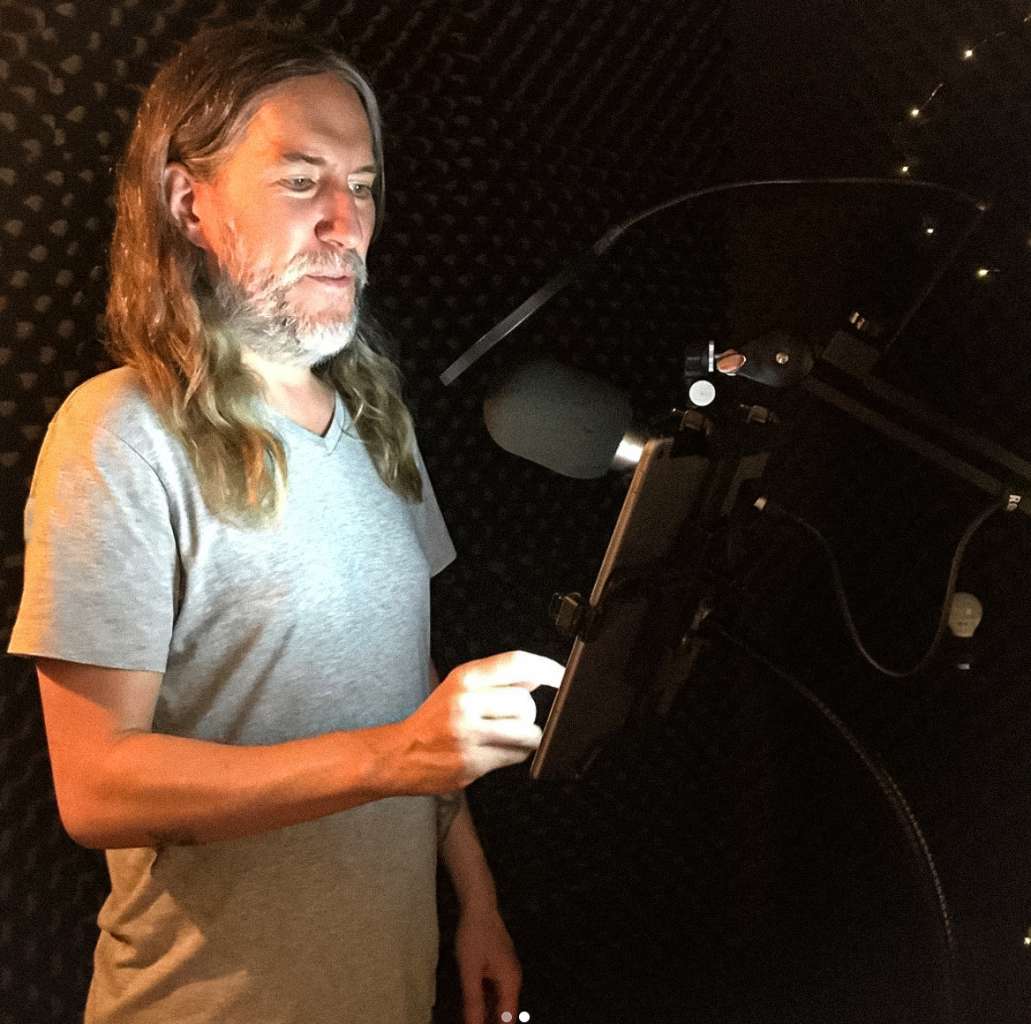
Recording material gave me another way to engage with what I needed to study.
I could listen back and, whenever possible, read along with the recording.
Some of my favorite memories from university involve sitting with a book in my lap and a narrator in my ears.
Hearing skilled narrators also made me notice aspects of literature I might otherwise have overlooked.
Their pacing, emphasis and interpretation brought another dimension to the text.
You can experiment with this yourself. Here’s how:
- Read an important passage aloud.
- Change your tone.
- Emphasize key words.
- Act parts of it out.
- Then put the material away and see what you can recall.
The goal isn’t simply to expose yourself to the information repeatedly.
It’s to interact with it in ways that make the material more distinctive.
Acoustic Encoding Q&A
Can Acoustic Encoding Improve Memory?
Acoustic encoding can give you another way to represent information you want to remember.
But I wouldn’t think of it as a standalone memory “hack.”
You’ll generally get more value by combining sound with other well-established learning activities, such as:
- Paying close attention
- Creating associations
- Organizing information
- Using mnemonic imagery
- Placing associations in a Memory Palace
- Recalling the information without looking at the answer
- Reviewing it again later
In other words, acoustic encoding becomes much more useful when it’s part of a complete memory practice.
That’s exactly what I teach when showing people how to use mnemonics rather than merely reading information and hoping it sticks.
What Can I Use Acoustic Encoding For?
Sound-based encoding can be especially useful when you’re learning:
- Names
- Foreign-language vocabulary
- Pronunciation
- Conversations
- Speeches
- Poetry
- Song lyrics
- Technical terminology
- Spoken information
You can also add sound to material that doesn’t arrive through your ears.
For example, you might be studying something completely visual from a textbook.
There’s nothing stopping you from turning the information into a mnemonic character who shouts, sings, crashes, whistles or makes another distinctive sound inside a Memory Palace.
That’s the real advantage.
You’re deliberately creating more memorable associations instead of relying on exposure alone.
Who Is Acoustic Encoding Best For?
Anyone can experiment with sound-based associations.
You certainly don’t have to consider yourself an “auditory learner.”
In fact, I wouldn’t worry about putting yourself into a learning-style category at all.
Instead, ask a more useful question:
What features can I add to this information that will make it easier for me to remember?
Sometimes sound will be one of them.
This approach is particularly useful for people who want to remember what they hear in conversations, learn languages or memorize material presented aloud.
Memory competitors also sometimes encounter information presented auditorily.
They can then transform what they hear into mnemonic associations, including imagery and Memory Palace locations.
That’s another good example of why “auditory” and “visual” memory don’t need to be treated like competing systems.
A skilled mnemonist can combine them.
How Long Does It Take To Get Better At Remembering What You Hear?
There’s no universal timeline.
It depends on what you’re trying to remember and how consistently you practice.
More importantly, don’t measure progress only by how much information you can listen to.
Measure whether you can retrieve it later.
That’s the test that matters.
For example, listen to a short passage.
Create associations for the important points.
Place those associations in a Memory Palace if appropriate.
Then try to recall the information without replaying the recording.
As you improve, increase the amount or complexity of information.
This turns listening into active memory practice instead of passive exposure.
What If I’m Having Serious Memory Problems?
The exercises on this page are for learning and mnemonic practice.
If you’re experiencing new, persistent or concerning memory problems, especially ones that interfere with everyday life, discussing them with a qualified health professional makes sense.
For ordinary learning and recall, however, there is plenty you can do by improving how deliberately you encode and retrieve information.
Your Next Step: Combine Sound With Proven Memory Techniques
Acoustic encoding isn’t something you need to study in isolation.
The useful question is:
How can I use sound to make the information I care about more memorable?
You might:
- Exaggerate the pronunciation of a new word.
- Make a mnemonic character raise their voice.
- Record yourself reading.
- Listen closely to the rhythm of someone’s name.
- Or combine all of the above inside a Memory Palace.
- That’s where sound becomes practical.
If you’d like to learn the complete process I use for combining association with Memory Palaces, get my FREE Memory Improvement Course.
Click the image below to sign up:

You’ll learn how to build and use Memory Palaces so that you can deliberately encode information instead of hoping repetition alone will make it stick.
And if language learning is one of your goals, start with my guide on how to memorize vocabulary.
The more skillfully you combine these elements, the less you’ll need to rely on hearing something over and over again and hoping you’ll remember it later.
So what do you say?
Are you ready to start putting sound to work for your memory?

 Anthony Metivier is the founder of the Magnetic Memory Method, a systematic, 21st century approach to memorizing foreign language vocabulary, names, music, poetry and more in ways that are easy, elegant, effective and fun.
Dr. Metivier holds a Ph.D. in Humanities from York University and has been featured in Forbes, Viva Magazine, Fluent in 3 Months, Daily Stoic, Learning How to Learn and he has delivered one of the most popular TEDx Talks on memory improvement.
His most popular books include, The Victorious Mind and…
Anthony Metivier is the founder of the Magnetic Memory Method, a systematic, 21st century approach to memorizing foreign language vocabulary, names, music, poetry and more in ways that are easy, elegant, effective and fun.
Dr. Metivier holds a Ph.D. in Humanities from York University and has been featured in Forbes, Viva Magazine, Fluent in 3 Months, Daily Stoic, Learning How to Learn and he has delivered one of the most popular TEDx Talks on memory improvement.
His most popular books include, The Victorious Mind and…