
 If you’ve got a script in hand and curtain call first thing tomorrow, you’re here because you want to know how to memorize a script fast.
Or you might have an audition tape due in less than 24 hours. In either case, you don’t have time for traditional rote memorization.
You need the same “Emergency Script Memory Protocol” you’ll discover on this page.
It will save you endless rehearsing by leaning heavily on spatial encoding.
By the time you finish this guide, you will stop trying to remember your lines.
You’ll start rapidly placing them in familiar locations and using fun and interesting mnemonic associations.
I used these exact spatial memory techniques to memorize my TEDx Talk and complex roles like Hieronimo in The Spanish Tragedy.
These techniques are powerful and I can’t wait to share them with you, so…
Lights, camera, memorize!
How to Memorize a Script Fast: 11 Proven Tips
As we go through these tips, there’s no special order to them. They’re all useful.
But even though it’s a nice thing to get all the tips working in conjunction to get the best possible results, here’s an important initial tip:
To truly memorize your first script over night, just get started with the one or two strategies that seem most doable to you right now.
That will keep you moving and make sure you start getting results, fast.
The first one is something everyone should have in their “Emergency Script Protocol.” It will ensure that you’re not falling into rote learning.
One: Pick One Line and Experiment with the ‘First Letter’ Technique
You’re going to learn extremely robust memory techniques later on in this guide.
But a simple way to get lines into memory is to get out a piece of paper and complete the following steps:
- Read the line
- Write out the first letter of each word in the line
- Walk away for a moment
- Come back and examine the initials
- Try and repeat back the words of the sentence
Here’s an example from Shakespeare’s Sonnet 59:
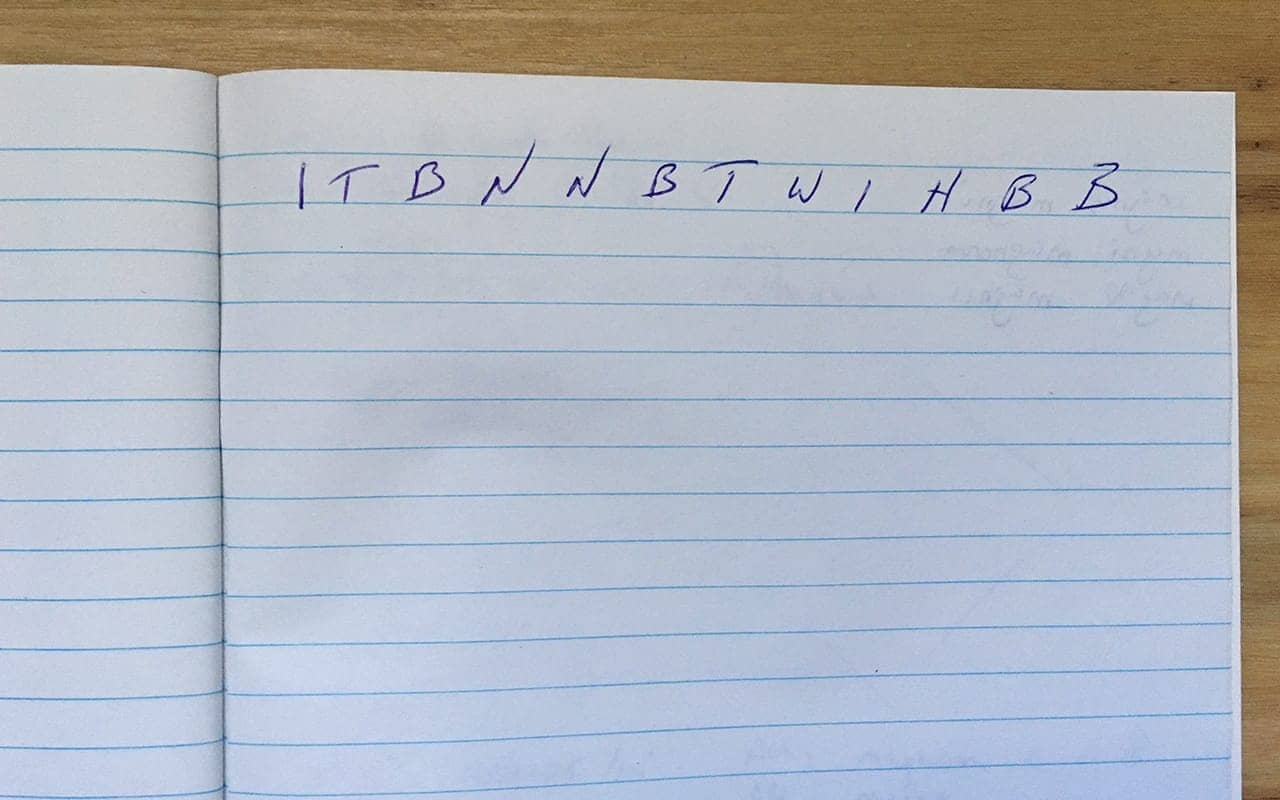
Those initials unfold into the line:
If there be nothing new, but that which is hath been before, how are our brains beguiled.
Please don’t underestimate this technique.
Although the string of letters you’ll produce look like gibberish, you’ll find that you can logically reconstruct the lines quite easily using them as a guide.
As this study on the effectiveness of “first letter mnemonics” found, the letters help your memory preserve the relative order of the words.
Because you’ll be partially guessing the first time you try to read back the exact words, your brain will benefit from what scientists call active recall. By testing your memory with a “desirable difficulty,” you’ll fast track your progress towards long-term retention.
Two: Start Mastering the Memory Palace Technique
Once you’re familiar with first letter mnemonics for learning a script overnight, you’ll want to start using the Memory Palace technique.
It works like this:
You pick a home or other building you’re familiar with, perhaps combining it with the journey method to use outdoor locations.
In your Memory Palace (or set of Memory Palaces), you’ll place mental, mnemonic images that help you remember the lines.
For The Spanish Tragedy, I used parts of York University in Toronto and the apartment I was living in.
One location I used at York University was the Absinthe Pub. Here’s a photograph:
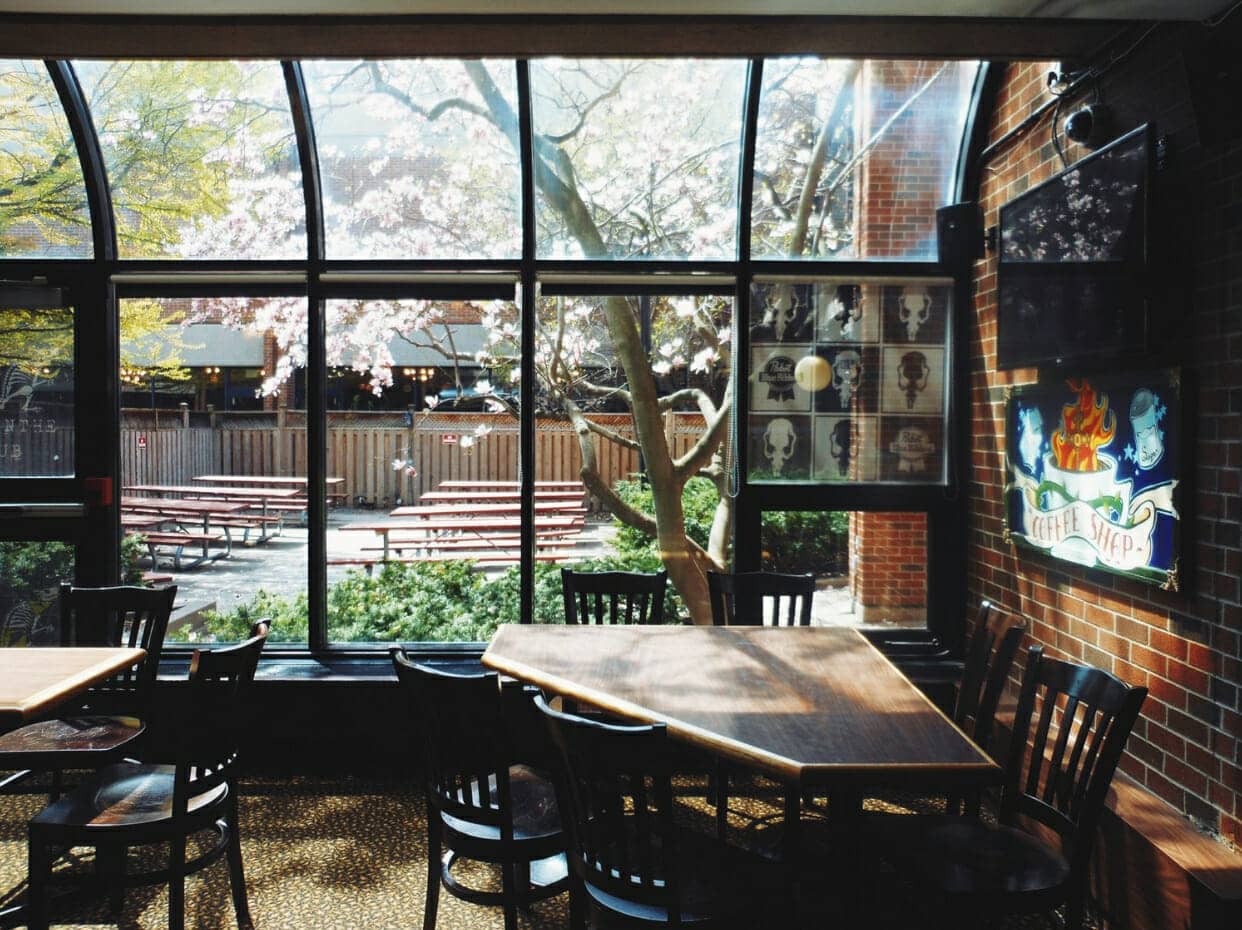
Now that you know the first letter mnemonic technique, you can combine it with your existing memory of a location like this pub.
Rather than just looking at your first letter mnemonics on the page, you can imagine each letter in the location.
For example, when I memorized a small part of Titus Andronicus as part of my analysis of Anthony Hopkins’ memory ritual, the line begins:
Why, I have not another tear to shed.
Placing the letter W paired with a mental image of William Shakespeare asking “Why?” in the corner now adds a spatial reference point.
It’s no longer a single letter that helps cue the word in the script. It’s a letter-based association.
You can then carry on by placing associations for each word:
- William asking Why? for Why in the first corner
- A floating eye on the wall
- William cutting something in “half” as a sound-association for “have
- Anthony Hopkins asking for “another” drink on a chair
- A tear dripping into his empty cup on the table
- A wood shed crumbling to dust on another chair
Although this process takes a bit more effort, the combination of associations with locations allows you to cue each word in a line from within your mind.
Practicing that as quickly as possible is essential. You can’t have a piece of paper on stage with you, after all.
It’s up to you to develop your own Memory Palaces, and it’s well-worth going through my full method of loci guide for more details on the specifics of where exactly to place your associations.
For a fuller discussion of how I memorized Shakespeare quickly and what I learned from testing Anthony Hopkins’ approach, you can also watch this video tutorial:
Three: Analyze The Lines And Identify Keywords
In the Titus Andronicus example above, I gave an image for each word.
But in many cases, you can let your brain fill-in-the-blanks on small, operator words like “if,” “he,” “them” etc.
To use this approach, you read your script and:
- Identify and isolate key words and ideas
- Associate them with images and locations in the Memory Palace
- Use Recall Rehearsal and active recall to develop retention quickly
Here’s a line from The Spanish Tragedy to show you what I mean:
What outcries pluck me from my naked bed,
And chill my throbbing heart with trembling fear,
Which never danger yet could daunt before?
The keywords I selected from this passage are:
- outcried
- pluck
- naked bed
- etc.
To do this yourself, look for words and images that aren’t operators or things like “he, she, it, me, them, they,” etc.
We’ll talk about what to do later if you struggle with those filler words, but to use the keyword method, focus almost entirely on nouns and adjectives.
Four: Amplify How You Assign Associations
To assign the kinds of associations I introduced above in your Memory Palaces, here’s one of my top recommendations for actors.
Create what we call “Celebrity Lists.” This skill is taught in-depth in the Magnetic Memory Method Masterclass.
Briefly, it works by having you assign highly familiar characters to each letter of the alphabet.
That way when you get to a word like “outcried,” you don’t have to think about what association you’re going to use.
For example, one of my ‘O’ associations is a school friend named Owen. I might also use the actor Owen Wilson.
Then it’s just a matter of placing your choice in the Memory Palace and imagining that person doing something that triggers the target word or words.
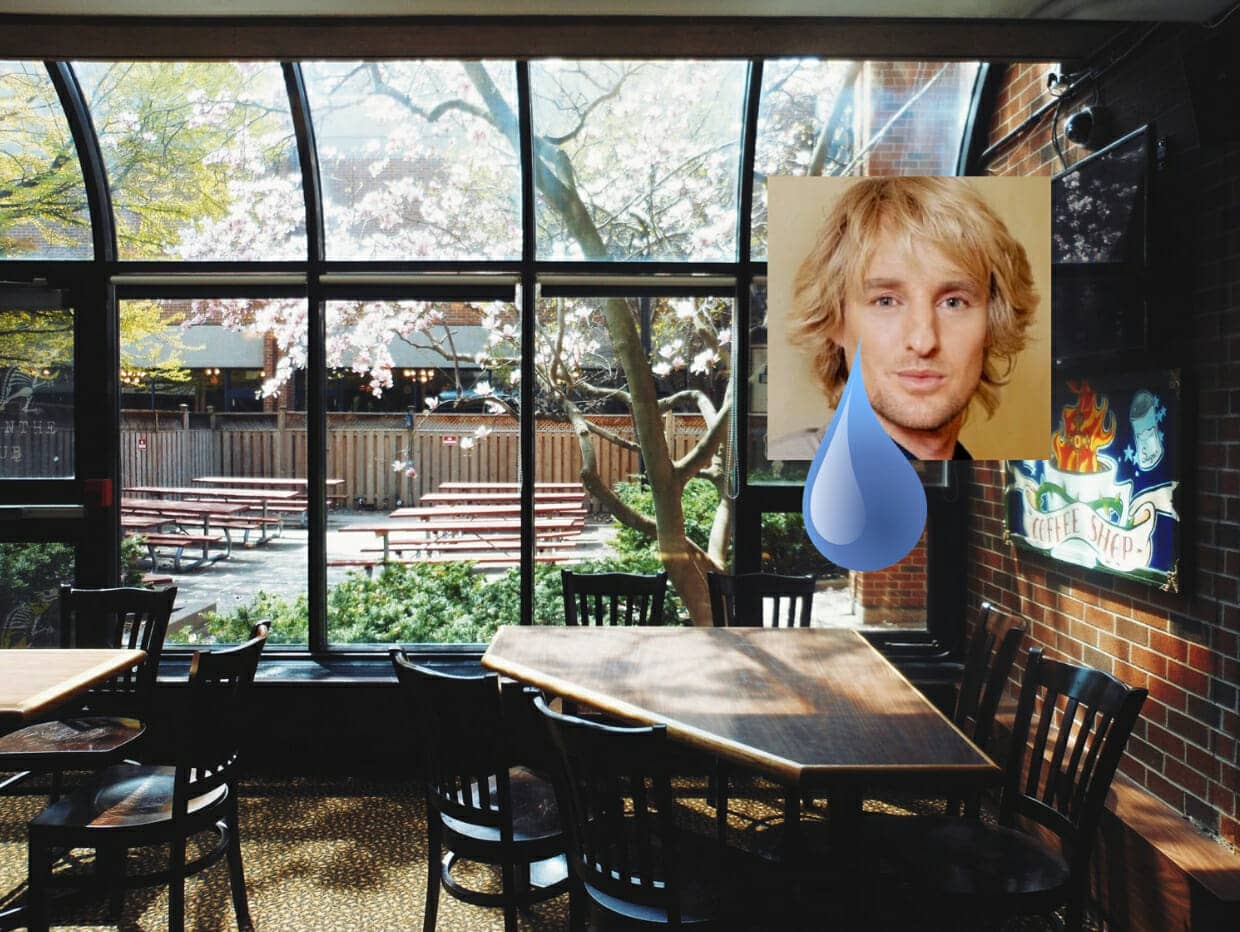
In the example above, Owen Wilson is shedding a tear on station one of the Absinthe Pub Memory Palace.
Add Peter Pan plucking at the tear and a bed to the Memory Palace and then relax.
Really imagine this mnemonic scene taking place in your familiar location. Then add the multisensory elements that are key to effective visualization.
And if you doubt that multisensory imagination is up to par, complete this visualization exercises designed for people who use memory techniques.
Five: Review Your Lines In A Wacky Way
As soon as you’ve encoded all of your lines, try recalling the lines in different orders.
For example, instead of just recalling the words from the beginning of a sentence to the end, use your Memory Palace to recite them in reverse order.
This technique might sound like the strangest thing in the world, but it’s called Recall Rehearsal. It’s very effective at both helping you master the Memory Palace technique and developing memories faster.
If you want to see an example, scroll up and watch my Anthony Hopkins case study video above. You’ll see me do it in front of a live audience.
Is reciting lines out of order challenging?
Yes, but that’s part of how the brain forms stronger connections. It’s the same testing-effect I mentioned above related to first letter mnemonics. But in this case, you’re using the procedure in a much more robust way.
And if you’d like to learn more about Recall Rehearsal, please feel free to consult my mnemonics dictionary. It discusses this process in-depth.
For the science behind why this kind of recall practice works, consult my full guide on spaced repetition.
Six: Practice Recalling Your Script While Walking
Memorizing obviously works best when you’re on your own and free from distractions.
But that doesn’t mean you have to be totally isolated.
Many of my memory projects have been completed in parks and while walking around.
Walking around is especially beneficial for recall practice, something I learned from speaking expert Thomas Krafft.
He was my speaking coach for my TEDx Talk and I’m sure glad he gave me that tip.
When I delivered the script, it felt like I had memorized it both in my mind and my body.

Another tip related to walking comes from the realm of memory tips from actors you’ll want to consult.
Chekov apparently taught that actors should assess whether characters are intellectual, emotional or impulsive.
Once you’ve decided, when an intellectual character walks, you lead with your head.
If you’re playing a more emotional character, you move around leading with your chest.
And for more impulsive and animalistic characters, you lead with your lower body.
I have found that coupling this analysis with walking while reciting makes scripts even easier to remember.
Seven: Memorize From Physical Printouts of Your Script
A lot of people are trying to memorize from digital and falling flat on their faces. It’s still not well-understood why people forget so much from digital, but the problem is real.
When you work from paper, your brain seems to map out the location of the information much better.
Plus, you get your hands involved. This is a point memory expert Tyson Yunkaporta has related to haptic memory.
Eight: Write Your Script From Memory
Yunkaporta’s views are supported by the research on handwriting, which shows that much more of the brain is activated when you read and write using physical paper.
Although it’s obvious you need as much speaking practice as you can get, don’t forget to produce your lines through your hands.
This memory-boosting activity is as simple as getting a paper and pen handy. Then spill out the entire script from memory.
You’ll exercise your memory, and also your focus and concentration.
And rest assured, I’ve done this myself. By writing out the lines I’ve spent time on memorizing, I’ve reduced the needed repetitions and increased my recall accuracy significantly.
Nine: Record Yourself
It’s important to get a sense of how you’re delivering your lines.
This is because exceptional acting isn’t merely about reciting lines. It’s about performing them and creating a convincing portrait of another person.
In other words, you don’t want to sound like you’re speaking from memory.
And this fact about the craft of acting means that you’re also interpreting the written word.
Mirrors can be helpful, but these days, just about everyone can record performances with a phone.
You can even compare your recording against a recording of another actor you found on YouTube.
As you review each performance, look for weak points in your pronunciation and swiftness of delivery relative to the tone and tenor of your interpretation.
You can then pop back into your Memory Palaces to make any adjustments that will help you refine your memory of the lines.

Ten: Let Go Of The Outcome
This tip might sound a little bit weird, but it’s helpful for getting into the zone.
Simply let your memory do the work.
Trust it.
Or as memory expert Ben Pridmore has said, have faith in your memory.
Provided you’ve put in the work, your rate of recall is going to be astonishingly high.
Some basic relaxation and meditation exercises will also help with adopting this attitude of putting in your best and letting go of the results.
Eleven: Keep Expanding Your Knowledge of Memory Techniques for Actors
Exception actors are essentially professional autodidacts.
As you develop your craft, you will want to keep exploring how memory techniques can support your acting career. Be sure to familiarize yourself with the widest possible range of memory techniques and build a professional library of mnemonic techniques.
You should also familiarize yourself with what other actors have said, such as my friend Mark Channon in his book related to memorizing lines for stage and screen.
You’ll also benefit by exploring more advanced techniques like the pegword method, Major System and the PAO System. These techniques are especially helpful when you have to remember numbers and exceptionally difficult words.
Powerful Truths About The Best Way To Memorize A Script
We’ve covered a lot of territory today, but here’s the most important point of all:
The best technique for memorizing scripts quickly is the one you’re actually going to use.
And not just use, but practice to the point that you can rely on it.
That way, when the opportunity to audition appears, you never have to get worried that you won’t be able to remember your lines.
To make sure you’re always bullet proof, the Memory Palace technique is without doubt the best option for just about every actor. It’s a spatial memory technique at its core and it lets you literally “write” on the “walls” of your mind.
If you want more information on how to make it work for you, grab my FREE Memory Improvement Kit now:

It will help you develop multiple Memory Palaces and learn more about how to create effective associative imagery.
So what do you say?
Are you ready to get that script memorized fast?
Make it happen!