
Podcast: Download
Subscribe: Apple Podcasts | RSS
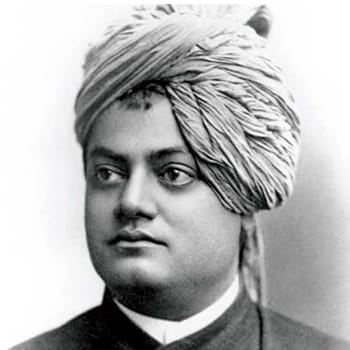 Can you memorize entire books by using your concentration alone?
Some people claim such retention is possible, and often point to figures like Swami Vivekananda.
Frankly, I’m skeptical.
Not because Vivekananda wasn’t smart, influential and an author of interesting works.
No, I’m skeptical and concerned because such claims are unlikely to be true.
And not only has no solid evidence been presented, but when myths about people who aren’t here to be tested, stories about them tend to grow larger with each retelling.
Plus, there is so much value to be had from real techniques that actually work.
True, there’s a bit of effort involved in learning and using mnemonic devices properly. For some people, lots of effort.
But you can still get there with proper training, steps you might never find if you’re lost in mythology and chasing after outcomes that were never true.
That’s why I want to respond in depth to this question from a reader of this website and fan of the Magnetic Memory Method Masterclass:
I like your MMM System, and I am learning and following it bit by bit.
But I have one doubt.
In India the Swami Vivekananda and other people read a book page by page without using any mnemonics techniques, and are still able to recall all of the concepts and vocabulary words.
Simply they say, and only by using concentration.
Which memory technique is this?
Is this better than mnemonics or journey system?
How do I develop this type of memory?
Thank you for your reply.
Quick answer:
Concentration certainly can assist memory when reading.
But reliable recall and verbatim memorization from books requires robust memory techniques for encoding and ample review.
I’ve done quite a bit of verbatim memorization and will share my process at the end of this post.
For now, let’s look deeper at the question of whether or not concentration will help with book memorization.
Can Concentration Alone Help You Memorize An Entire Book?
Assuming Vivekananda did this or anyone exists who has memorized any substantial amount of information through concentration alone, then I guess that’s the word you would use to describe this memory technique:
“Concentration.”
Guess what?
Concentration does work to help you form memories. It’s also a great way to connect new information to older information that you’ve already learned. But you have to concentrate on the right things, such as using a mnemonic linking method to connect the information in your mind.
As far as I’m aware, there’s only ever been one documented case of what people sometimes call “photo reading.” But it’s an episode from the history of memory science that should make us all skeptical. I cover it in my full breakdown of why photographic memory doesn’t exist.
Long story short, such claims involve people who are probably not being honest.
Why Extraordinary Claims About Memory Need Scientific Testing
Let me ask you this:
Do you really think such extraordinary claims about people reading one page or more of a book and repeating it perfectly would stand up to scrutiny through scientific testing?
Even if something like flashbulb memory were involved while reading (which is unlikely), the claims of being able to recall entire books remain dubious.
Part of the argument about concentration assisting memory does make sense, however.
Merely concentrating on a book does indeed help me personally learn and remember the material from it. But how exactly this increase would lead to memorization of the exact content without some kind of elaborative encoding in the mix is a mystery to me.
How I Use Memory Techniques While Studying Law
Frankly, I’ve dealt with lack of concentration often in my life. I’m dealing with it now as I go through law school and apply memory techniques to help me get through it. I reported this new study project recently in my law memorization announcement.
In order to reliably memorize the tons of material I’m currently facing, I’m once again using the textbook memorization system that helped me so much while getting my PhD in Humanities at York University many years ago.
You can learn all about the process in this detailed video tutorial:

Here’s the full written version of the video above on How to Memorize a Textbook if you prefer reading.
Quite frankly, there are so many advantages to this textbook method that I would sooner have people who are serious about learning take a few extra steps rather than experimenting with the claims of dead Swamis and their fans.
In the case of Vivekananda, he was called a srutidhara. This is a Sanskrit term used to describe an eidetic person. This condition is sometimes confused with, but is absolutely not the same as photographic memory.
Not only that, but eidetic memory has to do with visual memory, not the semantic memory involved in words on pages.
According to my research, eidetic memory has only been scientifically demonstrated as valid for a couple of minutes. And as the original study by Ralph Haber discusses, it’s a kind of recall practically unheard of in adults.
The Closest Case Still Involves Memory Techniques
If there is one interesting case, you’ll find it in the story of Solomon Shereshevsky. But even then, there’s evidence that the potent memory skills of this figure involved the use of mnemonics.
In any case, I suspect that many people can recite the gist of what they read on a page for a couple of minutes after placing a book aside.
It’s long-term retention that matters. And this means that even if you could work on developing an eidetic memory to visually recall a page, it’s unlikely to help with developing the strong memory skills that help you retain information for the long haul.
What Did Vivekananda Say About His Own Memory?
Of course, Vivekananda did not use either the term photographic memory or eidetic memory. A large part of how his memory was described comes from the diary of a disciple named Shri Sharat Chandra Chakravarty.
This disciple records the following statement from Vivekananda after being asked to explain how he quoted a variety of points from various texts:
Simply by the observance of strict Brahmacharya (continence) all learning can be mastered in a very short time.
Now, the fact that this quote comes from a diary doesn’t make it false.
But the text does not exactly say that Vivekananda recited anything verbatim. In fact, the diary recounts:
Disciple: Whatever you may say, sir, the manifestation of such superhuman power cannot be the result of mere Brahmacharya, something else there must be.
Swamiji did not say anything in reply.
Then Swamiji began to explain lucidly to the disciple the arguments and conclusions about the difficult points in all philosophies.
Notice that Vivekananda, referred to here as “Swamiji” declines to explain himself further, as if to let the disciple create an illusion in his own head.
A More Likely Explanation
As for recalling a few passages here and there, which is what the text says Vivekananda actually did, I regularly perform this skill myself and often cite the page numbers of various quotes during my live streams.
Do I use “continence” to do it?
Partly, yes, in the sense that brahmacharya means to control the senses and bring one’s conduct into accordance with basic ethics.
But I also use a PAO System to help me recall page numbers. It’s based on an ancient memory technique called the katapayadi, which Vivekananda almost certainly knew.
He also likely knew:
- Krama-pāṭha
- Jaṭā-pāṭha
- Ghana-pāṭha
These techniques are similar to the Recall Rehearsal process I’ll talk about in a bit more detail below. They help install lots of information in long-term memory that can lead to extraordinary results.
Above all, it’s important to understand how other people exaggerate things.
But unlike Vivekananda, when one of my private coaching clients exclaimed that I had spoken in eight languages in just fifteen minutes, I corrected him immediately.
I said, “I may well have quoted various lines in a handful of languages, and probably drew from four or five. But let’s not mistake knowing various quotes in various languages for speaking those languages.”
In other words, I did not sit in silence to bask in his praise or allow myths to grow. I nipped the false impression in the bud. Probably due to one of my biggest influences when I was younger.
Why We Must Debunk Extraordinary Claims About Memory
James Randi was a magician and professional skeptic who spent decades challenging people to demonstrate and validate their claims to have super powers of concentration.
He even offered a million-dollar prize if they could prove their claims true.
That’s a lot of coin, so it’s hard to believe that more people didn’t rush to get tested. Their absence says everything, don’t you think?
I’ve read that the Randi prize was eventually terminated following his death, but it’s still worth knowing about and considering for its decades-long promotion of critical thinking.
If we don’t promote critical thought ourselves, we risk having more and more gullible people roaming the earth.
And we wind up with people thinking that everything is about memory and not another very important ingredient.
Recall Without Understanding Is Not Enough
Being able to recall what you read is not just about retention. Parrots can retain and repeat, after all.
The results most people want involve (and should involve) developing deep understandings of written material. And content in any medium, for that matter.
This point is important because you want to turn raw information into knowledge that leads to wisdom. This was a point made by Thomas Aquinas that still holds true.
But to weave data and information into wisdom is likely only possible if you stop chasing after useless fantasies and worrying about which memory method or style is better than the others.
The only method that ultimately matters is the one that:
- You’ll actually use
- Gets you results reliably
But if concentration works on its own for some people without using any kind of mnemonic method, what can I say?
Rock and roll. Good for them and hurray.
Personally, I’ll stick with memory techniques that can be, have been and will continue to be tested by authentic memory champions and polymaths in the future.
With their level of skill in mind, let me give you a brief overview of how I suggest you go about tackling books.
A Practical Formula for Memorizing Key Content From Books
The path I suggest you follow is simple.
- Build at least one Memory Palace based on a familiar location
- Encode information inside of it using strongly elaborated mnemonic images
- Practice with material you care about in addition to books, such as poems, speeches, names and anything else you want to remember
- Recall the information using Recall Rehearsal (the Magnetic Memory Method term for a simple spaced repetition procedure that harnesses the power of the primacy effect and recency effect using serial positioning)
- Work on improving your selective attention skills
- Keep studying accelerated learning techniques for life
You might also find my walkthrough on memorizing Sanskrit phrases useful.
Apart from the passages from Shakespeare I shared in my Anthony Hopkins case study, memorizing verbatim from ancient Sanskrit books comprise the longest passages I’ve committed to memory. I’ve worked up to over 2000 words.
If you’d like similar results, the best place to start is with a proper understanding of Memory Palace development.
That’s why I created this free memory improvement course:

It walks you through the process step-by-step with tutorial videos and worksheets.
That way, you can stop wondering about whether memory techniques will work for you and start proving it to yourself with information you actually want to remember.
And real memory training will stop the temptations and seductions of myths. As interesting as these stories might be, if they can’t be reproduced, they don’t matter.

 Anthony Metivier is the founder of the Magnetic Memory Method, a systematic, 21st century approach to memorizing foreign language vocabulary, names, music, poetry and more in ways that are easy, elegant, effective and fun.
Dr. Metivier holds a Ph.D. in Humanities from York University and has been featured in Forbes, Viva Magazine, Fluent in 3 Months, Daily Stoic, Learning How to Learn and he has delivered one of the most popular TEDx Talks on memory improvement.
His most popular books include, The Victorious Mind and…
Anthony Metivier is the founder of the Magnetic Memory Method, a systematic, 21st century approach to memorizing foreign language vocabulary, names, music, poetry and more in ways that are easy, elegant, effective and fun.
Dr. Metivier holds a Ph.D. in Humanities from York University and has been featured in Forbes, Viva Magazine, Fluent in 3 Months, Daily Stoic, Learning How to Learn and he has delivered one of the most popular TEDx Talks on memory improvement.
His most popular books include, The Victorious Mind and… 


35 Responses
Sir, these aren’t any “woo-woo claims”, Swami Vivekananda was actually able to recall everything he read because of his intense focus and concentration. If you don’t believe in it, at least don’t disrespect him. Google him and you’ll know what kind of a man he was.
Thanks for this!
I apologize for any confusion. I don’t mean any disrespect. It’s only that, as Christopher Hitchens once put it, ‘That which can be asserted without evidence, can be dismissed without evidence.’
Please feel free to share the most relevant links that you think best characterize Swami Vivekananda if you like. 🙂
Swami vivekananda was a common men ,but his love towards knowledge developed him a skill of memorising through meditation and concentration , it takes 12 year of practice , i think we don’t have that much time , giving 6 hours daily in meditation, and yoga,
Swami Vivekananda used his knowledge in society welfare,
Let’s just get inspired by him,
Nothing more than that.
Thanks for this, Ayush.
In all honesty, I get inspired by demonstrable results. Nothing more than that.
To some extent,I agree with you.But you feel sad that you don’t have photographic memory,don’t you?I wish you hadn’t been so critical of Swami Vivekanand.
Thanks for your comment, Sunny.
I personally would not want to have a photographic memory, even if it were possible. As you can see when you visit my podcast and article on the topic, the closest thing to it has been quite torturous for one individual. I suspect it would be for many of us, though I did see a documentary that I’ll be talking about sometime soon where an individual with the condition has done quite well and seems not to have been bothered at all.
About Swami Vivekanand, if you reread my comments, I think you’ll find that I haven’t been critical of him at all. I’m critical the claims being made about his memory and I’ve asked for meaningful evidence to back them up. I would ask this of anyone making such claims in accordance with the principles of basic science. If more of us would do the same, I think our world would be profoundly different – and much better. 🙂
How can i memorize those engineering formulas and equations?i cant link them on my memory place
Thanks for this question. To begin memorizing formulas, it’s important to know the Major Method (sometimes call the Major System). If you visit that page, you’ll get a primer on how to use the technique. From there you can add in other elements of formulas using standard visual association as discussed in this episode of my podcast and many others.
Hope this helps! 🙂
Hi there,
It feels good to see someone shedding light on such a great topic for the young people to achieve success in life. I appreciate the way you use logic and conclusive evidence in order to believe something.
Believe me, If you read, even a bit about Swami Vivekananda, you would come to know how logical the person was. He was very proud of his scientific knowledge and the advancement of science in the 19th century until he met Sri Sri Ramakrishna Paramahansa, the 19th century mystic, who showed him the whole universe by touching him, and helped him to see god (Absolute).
Vivekananda was an avid reader in a wide range of subjects, including philosophy, religion, history, social science, art and literature. He used to study the works of David Hume, Immanuel Kant, Johann Gottlieb Fichte, Baruch Spinoza, Georg W. F. Hegel, Arthur Schopenhauer, Auguste Comte, John Stuart Mill and Charles Darwin.
Once, at the age of 9, he was going through a book written by Kant in his father’s library room, while his father’s friend came to visit his father relating to a case in Calcutta High Court, where his father was a famous attorney in. By looking at the small boy reading Kant’s thick book, he laughed and said to Vivekananda’s father, what is the little boy reading? How shall he understand Kant’s works at such a small age? He then called Naren (Vivekananda’s original name was Narendra) close to him and asked, “what do you understand from it?” Naren replied, “Everything!”, he then asked random questions from the book and to his bewilderment, Naren replied everything word to word, letter to letter and also described the meanings of his work with the most efflorescence. That was him.
There are many more examples of his amazing power of mind which crossed the limits of simple reasoning.
Here is one – https://www.swamivivekanandaquotes.org/2014/05/swami-vivekanandas-reading-speed-and-memory-power.html
He talked about the duality of this universe in 1893 at World Parliament of Religions, Chicago, which he asked the world famous scientist Nikola Tesla (Read here – https://www.teslasociety.com/tesla_and_swami.htm) to prove through his mathematics, but Tesla failed due to some reason but, finally, Einstein proved a decade later by his famous papers on ‘Theory of Relativity’ and ‘String Theory’, which slapped the prior extremely orthodox scientific society of the world and helped science to become unorthodox and open minded.
And, if you want to understand the heart and soul of India and where humans come from and why do they come and where do they go, read “RAJA YOGA” By Swami Vivekananda, it’s one of the best written form of absolute.
There are things in this universe where logic and reasoning cannot follow, since they are Absolute and not Dual in nature, anything which is Absolute cannot be a compound. Logic and reasoning are the properties of duality and they have their authority only in the realm of dualism, i.e, when we’re in our body in this world. Nikola Tesla’s world staggering innovation of ‘FREE ENERGY’ is nothing but tapping a very very minute portion of energy from the Absolute to the Dual, just like picking up a bucket of water from an ocean.
Do read the book I suggested, it’ll not only widen your horizons of knowledge at par, but also make you more enlightened.
Best,
Aakash Basu.
Thanks for this, Aakash. I appreciate your enthusiasm for this figure and I’m sure you’re correct that the universe contains things outside of human logic and our ability to reason.
However, since we cannot memorize those evasive things, I think we’ll need to turn our attention to information we can perceive and memorize. 😉
As for science becoming open-minded, science exists throughout history because people were open minded. You mentioned Kant, for example, and he is an example from philosophy of the power of open-mindedness. Bacon, Descartes and countless other figures exist in the scientific and philosophical genealogy that made Einstein’s discoveries possible.
So does it really make sense to attribute so much responsibility for open-mindedness to this one figure? That sounds a bit like guru worship and we have yet to see anything in this discussion that demonstrates the central claims about Swami Vivekananda’s memory abilities, namely the ability to memorize massive amounts of text without using memory techniques. My mind is wide-open to it, but the likelihood is minimal.
More importantly, we need to address the question: If he could do it, how can we do it too? Since Einstein and other scientists used the scientific method and philosophers used the tools of philosophy, we can “reverse engineer” their intellectual feats.
If this person had photographic memory, then it was probably not eidetic memory, but hyperthymestic syndrome. It is very rare, but a strong possibility. I believe there are only two living people who currently have come forward and had their situations scientifically documented. One has suffered a great deal from the condition, the other not. But the extent to which either can memorize entire textbooks without the use of mnemonics, I do not know.
It’s an interesting topic, however, and I appreciate you taking the time to share this information about Swami Vivekananda and his life. If you know anything further that we can use to understand how the memory feats were performed so we can find some substantial takeaways, please feel free to post them. 🙂
There is a fine line between faith and reason.
(I’m sure you’ll still talk about evidence)
There are certain things which we need to believe. the universe is infinite, scientists gave the proposition and we believed. there are infinite galaxies, we haven’t seen them but still we believe.
Talking about swami Vivekananda, I’m not going to judge you on the basis of your views. I’m sure you’re a good intellect. If you read the book “Raja Yoga” you’ll learn the real nature of mind.
All this world is nothing but a mere manifestation of mind. if you close your eyes this world ceases to exist for you visually. and when you close all your senses the world is no longer there ‘for you’.
Reason to the limit until you gain complete knowledge.
The only true evidence you’ll ever get is when you try to find it yourself, when you put all your energy to gain the knowledge.
PS: I’m influenced by Swami Vivekananda but each and every word of my comment is not influenced by the emotion of anger and jealous.
Interesting thoughts, Manpreet. Thanks for sharing! 🙂
Dear Sir,
How can I try and remember little details just like Sherlock Holmes?
I still haven’t gotten into the Sherlock Holmes stories as much as I’d like to, Priyesh.
For now, I can only suggest that you work to improve your concentration and creativity. The entire Magnetic Memory Method website is devoted to just that. Having and using a Memory Palace will help a great deal.
Enjoy and feel free to post more specific questions as you explore this site and implement the many techniques we discuss. 🙂
I am school student how can i remember my whole book by reading just one time…..
How can memories whole book with little details by reading in one time…..
I’m not sure I would recommend reading any book just once. But the closest tutorial I’ve got for you that will serve you for life is called How To (Reasonably) Memorize A Textbook. Give it a try and I’m confident you’ll find great success! 🙂
I’m very angry because of what u have said about swami vivekananda.He had a great photographic memory by which he can memorize any book in less time.But you have said about memory place and mnemonics, they can’t work even 10-30 percent to memorize a book in less time.swami vivekananda had a photographic memory.Now I will tell you how swami vivekananda had got this memory.It is only because of meditation.Meditation is a key to success in different way that u and we will remember him or her up to this world exist.But it is not the technique of mnemonics or memory palace. please know before you make the people know
I’m glad you mention meditation, Nandakishor. It’s an important tool for memory improvement, as discussed at length all across this site. How to Improve Memory and Concentration Buddha Style is a great post to check out for more information about it.
But beware: It uses scientific data, not blind faith, to support the claim that meditation helps improve memory. But I’m confident that if you’ll bring memory techniques and meditation together for yourself, you’ll find yourself having something even better than photographic memory. 🙂
hello…..first know what kind of man was swami vivekanada. if u dont know about him i will send the link to read about him.By using memory palace and mnemonics we can’t read and remember the whole book.It is worse actually.There is another trick to remember a whole book.That is photographic memory.If u don’t know this i will send the link then u read it.But what are these waste,useless tricks.First u learn after that make others learn.If u don’t know how to develop photographic memory I will tell about that with out 0.0000000000000000001 percent.
Please do feel free to post all you know about photographic memory. And if you’d like, I’ll arrange a committee of scientists and any experts you would like to invite to test your abilities with photographic memory.
But until you can bring this Swami into the present via a time machine or some other device for similar testing, you’re making claims based on faith, not evidence. I suggest you learn the tools of skepticism as soon as possible.
And if you’re ready to give “memory tricks” an honest try, I think you’ll be amazed by what they can do for you. 🙂
I am sorry to send worse messages to you because when I read this, I just went into an anger mood.It is your great mistake that by using mnemonics we can’t remember or memorize a book.Iam not nandakishor. I am ramakrishna(son of nandakishor) from India. I am studying 10th, just 14 years old.
I would like to ask what you have said about bringing together meditation and memory techniques.I didn’t understood that point.
I am very curious, I am waiting for your reply with mobile number please.
I am so happy to learn that you are such an inquisitive mind at such a young age. That is great, Ramakrishna.
I’d suggest downloading and listening to the audio that comes with the meditation post. It may help you to hear me discussing it as a supplement to the English text.
In the meantime, I hope you can find peace in your heart and come to understand my message better. I am precisely saying that you can use memory techniques to memorize books and do not need woo-woo and fantasy concepts like photographic memory slowing you down. All the scientific and athletic evidence in the world is at your fingertips when it comes to demonstrating and validating what memory techniques can do for people.
But the evidence about this Swami who had created so much anger? So far it is just hearsay and speculation. You can do better than that and I’m confident that with study and application, you will. Have fun and never forget these 7 Eternal Laws of Memory Improvement.
They will serve you well as you explore! 🙂
Sir,
Thank you. But I am somewhat poor in english. I didn’t understood anything from the reply. I understood only 1st paragraph. Can you please please please please please explain it again without any hard words like inquisitive etc.
Thanks for this, Ramakrishna.
It’s true that I sometimes use more sophisticated English – especially on the older posts on this site. You do seem to have understood enough to interact quite well with this material on this page, however. I’m quite sure the more recent posts I’ve pointed to you are easier to understand and there are many good dictionaries online for looking up words like “inquisitive.”
And when you’re using memory techniques, you’ll find it really use to remember words and their definitions too. I’ll be delighted and honored if you use this site as a source of vocabulary and wish you and your memory many good things. 🙂
Hello Sir,
I admire you for sharing these techniques for all of us here to accomplish things by memorizing. These are very effective. I read your posts and try to follow them a lot. These make it very easier for me to remember things.
But in the context here by saying as “these swamis/people”, it hurts. I consider Swami Vivekananda as my Guru. Since his teachings have improved my lifestyle and helped me get over my tedious day to day chores.
When somebody says me that what I claim is false, is like denying your memory techniques without trying them.
Swami Vivekananda has worked a lot for the upliftment of society. People follow Shri Swami Vivekananda and his teachings. Since they are really very logical. It is not just about his memory. I believe that you might not be knowing about him before getting into this. He is an ideal for plenty of people here in India and all over world where he has worked.
Manpreet Singh in his comment has shared excellent thoughts worth thinking about. What say?
It’s great that you’ve got someone you admire who has helped you, Atul.
I suggest you re-read what I’ve said carefully. I don’t believe I’ve said that anything is false. What I’ve said is that there is an underwhelming lack of evidence that supports the claims being made by certain participants in this discussion.
If someone can produce a book that describes Swami Vivekananda’s mnemonic process, I will gladly take a look at it and possibly explore his techniques. But it is a matter of great confusion to mix whatever great things he may have done with anecdotal reports about his memory. If you’re going to claim that this person is “really very logical,” then stand up for logic and use its tools to examine your claims and all claims being made here about this person’s memory.
If you’re really interested in logic, then it shouldn’t cause any hurt. And if any pain does occur, it will be the healing pain of leaving other styles of thinking behind. 🙂
Unfortunately i do not have evidences to show you about his memory techniques. Swami Vivekananda said that to do anything effectively is by doing it with great concentration. I am sure there might be certain ways of that too. It requires time and practice for achieving anything. Everyone will agree to this. Anyway, let’s take good things and make life simple and easy. Keep posting. Thanks! 🙂
He has not been alone in teaching concentration – it’s been a topic for thousands of years.
I recently wrote about 2 ways you can create more concentration myself. 🙂
Respected sir,
The primary source of this power which has been mocked upon in the article is the practice of BRAHMACHARYA..Now the biggest problem with the western thinkers is that they don’t know anything about” brahmacharya”..and i guess no body in the west is even interested in knowing it….There are still lots of people who practice it albeit without making noise…i suggest you to practice it and get your answers rendered to you by youself.
and yes it is possible and indeed possible..
Thanks for mentioning Brahmacharya, Akarsh.
In what way do you feel this concept will help people memorize books page by page?
so, Sir, what these techniques used by derren brown how would I improve them, what are their methods to memorize the book in 20 minutes master.Derren brown use these techniques. use techniques.how this can be improved
Please read Derren Brown’s Tricks of the Mind for the information he teaches.
As a supplement to this page, you can implement the technique I offer on How to Memorize a Textbook.
Enjoy implementing the process! 🙂
Many Indian yogis are known to have had unusual memories which have been documented since ancient times.
Swami Vivekananda was a yogi who lived in the t late 19th century and was no ordinary human being. From his works and works of those who have had direct contacts with him, it can be said that he was in deep Samadhi at all times. His birth was a mission and he had realized the truth. His only aim was to create spiritual awakening in the society amongst the mass.
Scientific advancements can never give you liberation or emancipation, which can come only through stead fast devotion, concentration ,faith and perseverance . According to Hindu philosophy this mind, which is only an illusion repeatedly gets attached to this illusory world –maya- ,creates bondages and comes back to the material world to undergo pain and pleasure according to its karma.
So detachment alone can come to your rescue .Like how a dreamer in his dreams associates himself with every object and feels real, on waking up has no attachment to any of his dream memories/objects as he knows that it was just a dream i.e only illusions of the mind,the same way the jivatma, on realizing its true nature needs no further proof or evidences to make it understand that everything in the physical plane was meant to pass by and has no real existence.
When a soul reaches this stage it identifies itself with the supreme truth, where the past, present and future all exist at the same time and same place, technically incorrect to say so as they cant be described by words .It cannot be proven using anything in the material world. It’s beyond time and space, which an ordinary mind cannot comprehend. So its just the truth that he sees, and the past is as clear as the present and future. To understand this one has to go beyond the realms of the material world.
Interesting thoughts, Shiram. Thanks for sharing them!