
 Speed reading books are a dime a dozen. But are any of them any good?
Sadly, in most cases the answer is a resounding “no.”
The majority get lost in readily debunked nonsense, “hacks” that usually wind up harming comprehension.
And finding any gems within these pseudoscientific books that you can actually use to increase your reading speed while also maintaining comprehension is extremely rare.
On this page, I’m going to fix this problem by sharing three speed reading books that do contain information you can put into use immediately.
Without sacrificing your comprehension.
Now, you might be wondering… what’s my proof that I read a lot? And at speed?
Well, I’ve not only written multiple bestselling books based on intensive research. I also have a PhD, two MAs and a BA in English Lit. On top of that, I podcast and vlog almost weekly and constantly share in-depth views on my reading.
So when it comes to reading fast and remembering more, I’ve been around the block and have the street credentials to show for my own reading skills.
But enough about me.
If you want to legitimately speed read books, the useful aspects of the guides I’m about to share all include scientifically verified techniques I’ve personally tested.
So with all that in mind, let’s get started!
Why Most Speed Reading Books Fail You
Some of the key issues in the speed reading world boil down to activities that might make you move faster through books. But not without sacrificing the two most important reasons you read: comprehension and retention.
This negative outcome happens because almost every speed reading book overemphasizes:
- Reducing (or stopping) subvocalization
- Gimmicky activities related to “eye-fixation”
- Unrealistic claims about pacing through books that are disconnected from actually understanding what you read
What Research Actually Says About Speed Reading
A lot of time has been spent by speed reading authors on eye memovement.
But if you look at this summary of 20 years of research, the speed gains you’re looking for are not in working on your eye movements.
Your best path to speeding up centers on improving your perceptive abilities and overall cognitive processing.
This is why I’ve chosen the books I’m recommending on this page. They largely avoid pseudoscience and give you tips that help in the mission critical areas scientists have identified.
Why My Top 3 Recommendations Are the Exception
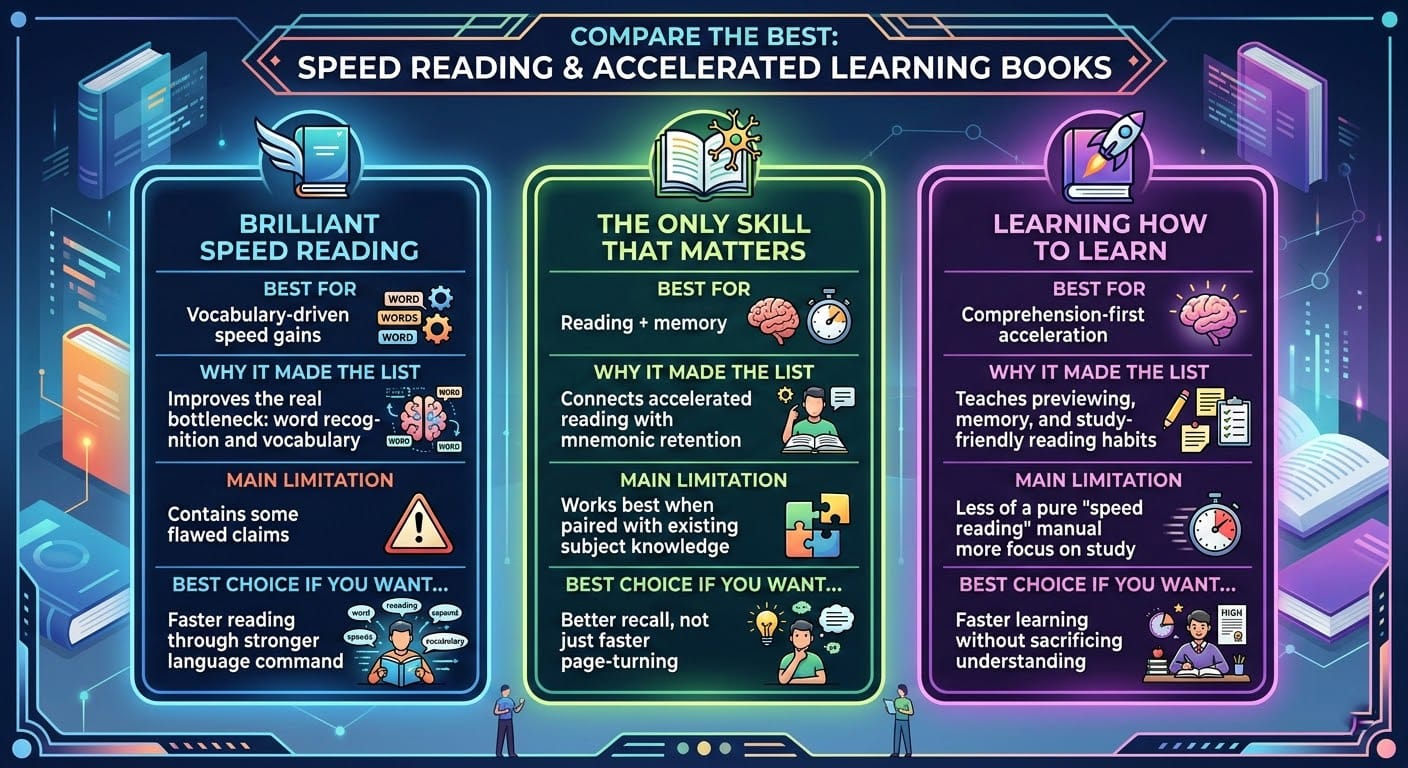
As you can see, the books I’ve picked include suggestions that can reliably increase reading speed without harming either retention or comprehension.
That’s because these books focus on:
- Vocabulary improvement and growth
- Building your pattern recognition through subject familiarization
- Memory skills that boost retention so that you can better comprehend your reading
Let’s have a look at each winning recommendation and why they’re worth your attention.
The 3 Best Speed Reading Books On The Market
1. Brilliant Speed Reading (Best for Vocabulary-Driven Velocity)
Although this book is flawed and contains some claims that don’t stand up to scientific scrutiny, Brilliant Speed Reading is still my top book on the topic.
Here’s why:
Phil Chambers nails the ultimate truth that most people who want better reading speeds need to discover:
If you want to improve your reading speed, you must increase your vocabulary.
Why?
Because not understanding words will always slow you down. But the more words you understand at a glance, the faster you can read without interruption.
When you can do that, you can more readily use the most valuable tactics covered in my free guide to the best active reading strategies.
But there’s another feature that makes Chambers’ book so good.
It outperforms every other speed reading book I’ve seen because Chambers includes a number of suggested vocabulary lists.
They’re not just lists either. Each collection helps you think about language itself while improving your vocabulary.
You could get a similar effect from reading Norman Lewis’ famous Word Power Made Easy, but that book doesn’t include information on using mnemonics.
Chambers does.
Other great aspects of Chambers’ book include:
- Scientifically valid suggestions for developing review patterns
- Information about speed reading competitions
- Examples of different kinds of reading, like court judgments and scientific papers
- Basic training on mind mapping and its benefits for learning and memory
Although I have criticisms of some of this book, it’s great overall and Phil Chambers really knows his stuff.
I also strongly recommend his book, 101 Top Tips for Better Mind Maps. Mind mapping might not improve your average reading speed directly, but it can boost your comprehension in a streamlined manner.
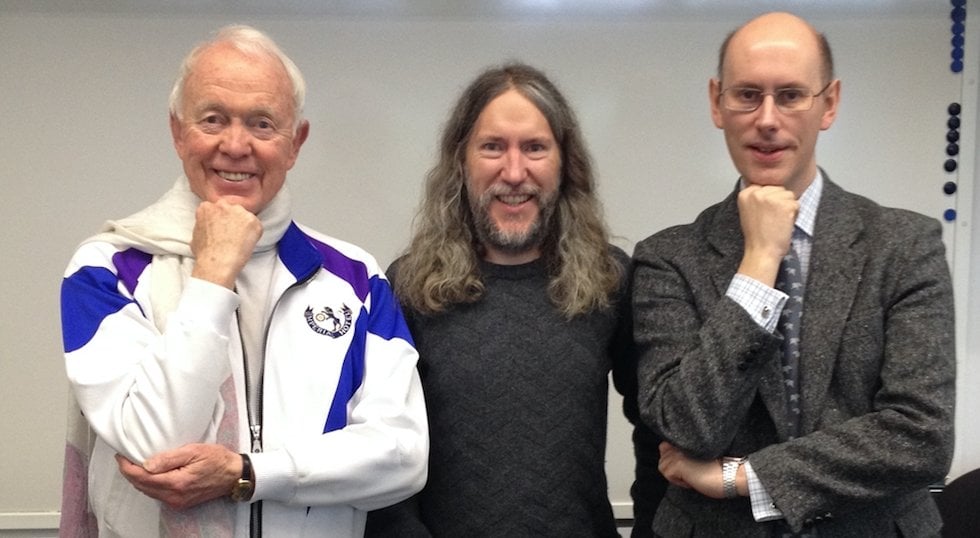
I also recommend Chambers’ book How to Train Your Memory. It is excellent.
2. The Only Skill That Matters (Best For Combining Reading Tactics with Mnemonics)
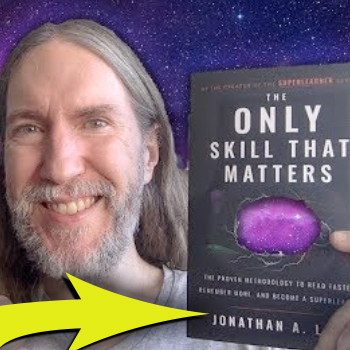
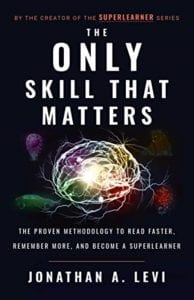
Jonathan Levi is the author of The Only Skill that Matters.
And he is well known for demonstrating his speed reading skills.
In fact, he possesses a super power with reading that I’ve seen play out before my very eyes.
His ability to read quickly and synthesize a lot of information that leads to powerful decisions is stunning. 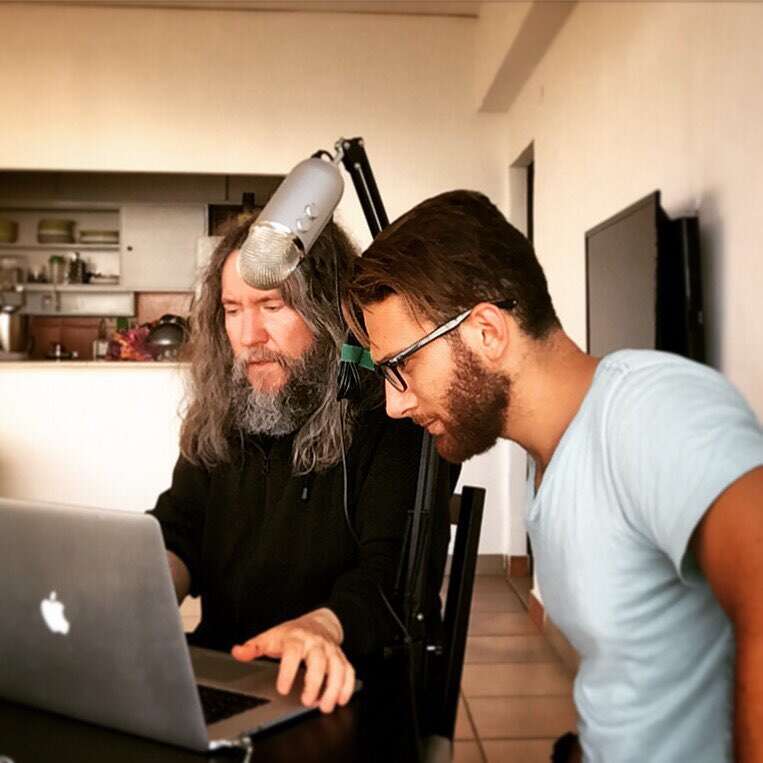
Jonathan is especially good at using his speed reading tactics while scouring information online. As you can see in the picture above, we worked together on some research leading to positive benefits I share in The Victorious Mind.
The best part of The Only Skill that Matters is how Jonathan combines reading skills with the most valuable memory techniques. This aspect of his teaching is key.
According to Jonathan, accelerated reading skills without mnemonics is no skill at all.
In fact, what does it matter if you’re reading a million miles an hour if you can’t remember any of it?
The strength of The Only Skill That Matters goes beyond this critical point, however. You’ll also learn:
- The power of “reauthoring” books by reading them out of order
- How to use reading for problem solving
- How to grow your knowledge base rapidly so you can be a better leader
Even if you’re not a “leader” in the business or institutional sense of the term, you will always need to lead yourself better.
And that’s where Jonathan has helped me very much by giving me a rapid analysis of health information I desperately needed to lead my own life better.
The story is quite personal, but I share all the details here:

Here’s the important point to understand about developing the skills as Jonathan teaches them:
Jonathan’s demonstration of reading quickly was within a field he already had familiarity with over several years of study.
Just as you need to develop your vocabulary to read quickly, expanding your competence within specific fields of knowledge also improves speed. This outcome happens thanks to heightening your “pattern recognition.”
Instead of getting hung up on new concepts and slowing down, you see connections faster. This effect allows for developing conclusions faster and enabling you to read more based on preexisting connections in your mind.
Building upon your existing competence while expanding your knowledge as you work on skills that help you study faster that many people fail to discuss. Please put some time into the concept of existing competence. It will serve you very well.
3. Learning How to Learn (Best for Comprehension-First Acceleration)
Although better known for the Coursera video program of the same title, Learning How to Learn is also available as a book. Frankly, I think the book is much better than the course.
Why?
First, the main traditional speed reading technique in this book has been changed from “priming.” In this case, the authors call the process “taking a picture walk.” More on that skill in a moment.
Second, I love how often the authors manage to slip in cool memory advice.

Take the name Sejnowski, for example.
By the time you hear about Terrence Sejnowski’s incredible journey to becoming a memory expert and brain scientist who directs the Computational Neurobiology Laboratory, you’ve also learned how to memorize his name.
That’s because the book gives you an extra little tip on how to break the name down so that you can memorize it with greater ease. There are oodles of mnemonic examples like this throughout the book that make it easy and fun to read. 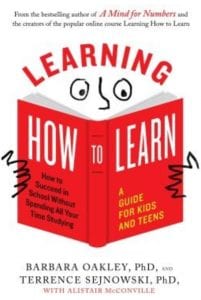
I also really like how Barbara Oakley and Terrrence Sejnowkski used footnotes to enhance the reading experience.
This feature helps preserve a tradition in book publishing that is sadly becoming less common. I suppose some people might feel like they break the flow of your reading, but there’s actually a lot of genius to this form of information display.
For example, we know that if you want to memorize fast, it’s important to take frequent breaks when we’re reading. I’ve often thought that it’s precisely because I regularly pause to read the footnotes that I got through a lot of my university reading so fast.
It’s not exactly right to say that footnotes speed up your progress in terms of linear time, but they provide a combination of mental relief from focusing so hard while at the same time supplementing your knowledge too.
Beautifully Illustrated to Help You Understand the Science of Learning
Likewise, Learning How to Learn is packed with illustrations. They supplement what you’re reading and access a different part of your attention so that you experience multiple levels of processing.
And all the illustrations come in handy too because you’ll learn to take a picture walk.
Finally, it’s fun how Learning How to Learn teaches you memory techniques through the eyes of a great memory athlete and memory author like Nelson Dellis.
Even though he and I have spent a fair amount of time chatting both on and off the Magnetic Memory Method Podcast, I still learned a ton by reading about how he operates his mind.
Overall, you’ll learn about everything from performing better on tests to how you can rig your brain to earn you more free time to the secrets of turning your home into a mental notepad.

You’ll learn how to escape “zombie mode” when you need more brain power and discover why you can relax when your mind wanders.
Mind wandering is actually a great part of the learning process. Yet, sadly, so many people punish themselves unnecessarily when it happens. That’s just one more reason why Learning How to Learn is highly recommended.
For more about Barbara Oakley’s work, listen to our interview.
Reading For Speed Vs. Reading For Memory
As you can see, I’ve privileged books on speed reading that are scientific and focus on combining skills that matter.
In other words, reading faster can never be about speed on its own. If you learn how to stop subvocalizing, you might gain a marginal speed gain, but what would it matter? This impossible technique requires so much focus just to fail at it, that it will be nearly impossible to remember more.
On that note, a “runner up” book I’d recommend is Ultralearning, by Scott Young. It gives you a holistic understanding of how to master new skills quickly. It’s great because it helps you properly place where reading belongs in your skill stack.

It also helps you develop familiarity with an entire field much faster. Beside developing your vocabulary, that is the second best way to read faster.
This approach works due to the “short cuts” pattern recognition allows many readers. When you know where someone is going with an argument, you can more legitimately skim or scan the text without losing too much detail.
That said, keep in mind that experts get that way because they focus on the granular details. That’s why skimming vs scanning should be applied only very strategically.
So if you’re looking for the absolute best speed reading books on the market, my final suggestion is to broaden your horizons.
Instead of plumbing through scientifically invalid books that use flashy marketing to grab your interest, find authors who have achieved what you want in terms of knowledge.
You might be surprised by how these people speed read books, and massively boost your performance as a result.
Best Speed Reading Books FAQ
I regularly receive questions about comprehension and speed reading books.
Let me know share with you the most common questions and the answers I regularly give. If you have questions I haven’t answered, feel free to get in touch using my contact page.
Do speed reading books actually work?
There certainly some ideas that speed reading books contain that will help you improve your average reading speed.
These including concepts like priming and interleaving.
These processes are not exclusive to speed reading, however.
Can you read faster without losing comprehension?
Yes, provided your pattern recognition is strong within the field or category you’re scanning through.
It’s important to keep in mind this point, however:
Experts regularly read books in detail to scrutinize the nuances. Very few people can spot these when using the kinds of tactics taught in most speed reading books.
Why are most speed reading books pseudoscientific?
Many of the eye-movement techniques promote guessing, rather than anything like analytical reading. And when you aren’t reading analytically, you can’t apply analytical thinking skills either.
It’s important to note that few authors in this area hold any kind of degree or specialization in the functioning of the human eye.
Likewise, they often misunderstand subvocalization because they have no specialization in the area. This study debunks the claims speed reading authors make about subvocalization.
When I was struggling in grad school and first learning how to improve memory for studying, I often read aloud to help both speed up and make sure understanding was in place.
I have also demonstrated in my Anthony Hopkins’ memory ritual case study how important vocalizing was for understanding passages in Shakespeare.
In sum, anyone telling you that you can comprehend efficiently without using tools like vocalization and subvocalization hasn’t done their research.
Why isn’t Tony Buzan on this list?
Don’t get me wrong. I’m a huge fan of Tony Buzan. I’ve even seen him speed read my own writing!

But as interesting as Buzan’s The Speed Reading Book is, I ultimately feel that Chambers’ entry is better for the reasons listed above:
Again, Chambers’ book enables you to build your vocabulary, which for most readers is the best shot they’ve got at genuine improvement.
Remember: Vocabulary development is not so much about speeding up as it is removing the obstacles that slow many readers down. (You can remove the other major barrier now by applying these reading comprehension strategies.)
Are speed reading tactics better for nonfiction than fiction?
The answer depends on your goal.
If you just want to know the gist of a story and aren’t facing an exam, there’s no moral reason why you should read a novel thoroughly.
However, if you want to remember a story in the depth I discuss in this tutorial, you’ll need to read carefully.
Likewise with facts from non-fiction books.
If you just need the broad overview and a few key points, speed reading tactics might help. But I’m not sure that you’ll wind up with the professional kind of mind and memory it takes to compete in today’s world.
What matters most for faster reading: vocabulary, pattern recognition or skills with memory techniques?
The key is to combine all three of these skills together.
That way, you’ll enjoy growth as a reader and thinker.
And you’ll get more out of other guides that can improve your reading experience, such as those covered on my list of preferred books on learning.
But if I had to choose one area that does provide the biggest gains overall, it would be memory. That’s because memory techniques lead to stronger pattern recognition.
If you’d like help with your memory, consider signing up for me free memory improvement course:

You’ll enjoy four video tutorials with worksheets that help you master the most important memory technique of all:
So what do you say?
Are you ready to check out these three powerful speed reading books?
Give them the time they’re worth and soon you’ll find yourself reading with authentic momentum.
And with well-formed goals that make you a better learner, thinker and producer across the span of your life.

 Anthony Metivier is the founder of the Magnetic Memory Method, a systematic, 21st century approach to memorizing foreign language vocabulary, names, music, poetry and more in ways that are easy, elegant, effective and fun.
Dr. Metivier holds a Ph.D. in Humanities from York University and has been featured in Forbes, Viva Magazine, Fluent in 3 Months, Daily Stoic, Learning How to Learn and he has delivered one of the most popular TEDx Talks on memory improvement.
His most popular books include, The Victorious Mind and…
Anthony Metivier is the founder of the Magnetic Memory Method, a systematic, 21st century approach to memorizing foreign language vocabulary, names, music, poetry and more in ways that are easy, elegant, effective and fun.
Dr. Metivier holds a Ph.D. in Humanities from York University and has been featured in Forbes, Viva Magazine, Fluent in 3 Months, Daily Stoic, Learning How to Learn and he has delivered one of the most popular TEDx Talks on memory improvement.
His most popular books include, The Victorious Mind and… 



6 Responses
Do you have a pointer to the chapter or section where The Only Skill that Matters talks about what you called “reauthoring?” I’ve read the book but don’t recall reading anything by that name but was curious about it.
Thanks for this, Brant.
I don’t have a direct reference because I made this term up to interpret my understanding of what Jonathan is talking about. It’s something like “advanced priming.”
If you watch the full live stream replay where I talk about the book, you’ll glean more of what I mean.
Anything else I can do to help you out?
Thanks. He does talk about pre-reading in some priming for learning sections along with techniques like SQ3R (survey, question, read, recall, review). Maybe it’s in that area you came upon the idea you are talking about. I’ll have to watch your video and see if that gives some more context.
Following those steps is indeed what I think of as “reauthoring” a book, provided a written summary and discussion are also in the mix. After all… why read books you aren’t going to discuss?
I like these books. I tried IELTS two times and my score was below my expectations. I want to know what is my problem. Is it my level of English, reading speed or comprehension of vocabulary. I just need recommendations on how can I detect my weakness? And why is reading my lowest skill among the English compentency skills?
Thanks for stopping by.
What is the specific breakdown of your IELTS scores?
It’s difficult to generalize and likely wouldn’t be very helpful.
But with more information, I might be able to make some suggestions.
Also, how often do you read and what kind of material do you read?
How much listening, speaking and writing practice do you get in?