
Podcast: Download
Subscribe: Apple Podcasts | RSS
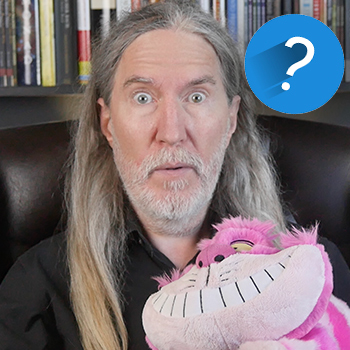 One of the most common pieces of advice in memory training is to make your mnemonic images vivid, bizarre, exaggerated, and emotionally striking.
For beginners, that advice is usually good.
If you are trying to remember something and you turn it into a giant, exploding, screaming, fluorescent image, you are probably going to remember it more easily than if you create a dull, abstract association.
But vividness by itself is not enough.
I have had plenty of mnemonic images fail even when I could clearly visualize them. In my experience, the problem usually comes down to one of three things:
- The Memory Palace journey itself was not solid enough.
- I did not build the image systematically.
- I got busy and failed to complete my first reviews soon enough.
As a result, recall was either not as strong as desired or failed completely.
When this happens, people often assume the solution is to make the image even crazier.
Sometimes that works. But usually? The real problem is somewhere else.
Start With the Memory Palace, Not the Image
Before blaming your mnemonic image, I would first check the Memory Palace journey itself. Ask the following questions:
- Is the journey actually based in memory or did you use an imaginary Memory Palace?
- Can you mentally travel through the locations without hesitation?
- Do the loci appear in a clear and reliable order?
- Can you tell immediately what comes before and after each location?
- Did you draw your Memory Palace first?
These question are crucial because if your underlying journey is shaky, even an excellent mnemonic image can become difficult to retrieve.
This is because each Memory Palace is a retrieval structure. Whenever you lack certainly with the structure, you risk failure. Even if you have encoded the information perfectly well.
In sum, before adding more explosions, strange animals, celebrities, or exaggerated actions, make sure the journey is stable.
Expand Vividness With a System
The second problem I have encountered is creating mnemonic images without applying a consistent model.
I use a framework I call KAVE COGS.
It stands for:
- Kinesthetic
- Auditory
- Visual
- Emotional
- Conceptual
- Olfactory
- Gustatory
- Spatial
To be clear, not every mnemonic must contain an elaborate example of all eight elements. The point is to stop treating “make it vivid” as a vague instruction.
KAVE COGS gives you a troubleshooting checklist. If an image is weak, you can examine it and ask what is missing.
- Can I feel movement?
- Can I hear something?
- Is the visual component clear?
- Is there any emotional charge?
- Does the association make conceptual sense to me?
- Can I introduce smell or taste?
- Is the action happening in a clear spatial relationship to the location in my Memory Palace?
Questions like these give you something concrete to work with, but without some kind of model, you risk making what you believe is a vivid image, but still create an association that is surprisingly thin.
They may see something clearly but not hear it, feel it, interact with it, or connect it strongly enough to the information they actually want to retrieve.
Of course, you do not have to use KAVE COGS.
You could invent your own association model and use it systematically. Andy system consistently applied will be better than simply telling yourself to “make the image memorable.”
My Usufruct Mnemonic Shows How Problems Can Happen
A recent example for me was the legal term “usufruct.”
My image involved a U.S. flag in the hands of John Frusciante from the Red Hot Chili Peppers. The association felt like it was going to work because there was plenty enough phonetic connection for me.
This is the auditory element of KAVE COGS and to be clear, here’s the breakdown:
- “U.S. flag” opened op the word.
- Frusciante gave me a familiar sound pattern that connected, at least partially, with the rest of “usufruct.”
Clearly this is not a perfect phonetic conversion. But it doesn’t need to be. My familiarity with John Frusciante should have done the work.
But because I stopped there, I wound up needing to go back.
A Vivid Image Can Still Be a Bad Cue
Another reason vivid mnemonic images fail during the memory recall and retrieval process is that remembering the image is not the same as remembering what the image represents.
In other words, you cook up an extraordinary scene and remember it perfectly.
But when you return to it later, you ask: “What was that supposed to mean?”
The mnemonic image has become memorable in its own right, but it has failed as a retrieval cue.
That is why elaborating each association with the multi-sensory power of KAVE COGS matters just as much as the vividness.
Reviews Matter More Than People Want Them To
Another failure point in my own practice has nothing to do with image quality.
Sometimes I simply get busy. As a result, I do not perform the first reviews soon enough.
Too much delay can ruin an otherwise strong mnemonic.
People on forums sometimes talk about memory techniques as though a sufficiently vivid image eliminates the need for reviews, but my experience does not support that.
Good encoding helps enormously, but only if the timing of your first attempts at retrieval are timed soon enough to reinforce the path between the location, the image, and the target information.
If too much time passes before I revisit something, I may discover that an image I thought was perfectly clear has already weakened.
Again, the wrong response would be to conclude automatically that the original image was insufficiently bizarre. The image may have been fine.
So I always consider if the real problem is how much time you left between your initial encoding and your first retrieval attempt. Your review schedule may have been the problem.
How to Troubleshoot a Failing Mnemonic
If someone told me, “I make vivid images, but they still don’t stick,” I would not immediately tell them to make the images more ridiculous.
I would troubleshoot the system in this order:
- Check the Memory Palace Journey
- Make sure the locations themselves are completely familiar.
- Travel through them without the mnemonic material.
- If you cannot move smoothly from one locus to the next, strengthen the journey first.
- Check the Association
- Ask whether the image actually points back to the information.
Apply KAVE COGS or Another Consistent Model
Once you’re gone through these steps, you can examine the components of your association. Ask questions like:
- What can you see?
- What can you hear?
- What can you feel?
- What emotion is involved?
- What conceptual connection are you making?
- What can you smell or taste?
- How does the image interact spatially with the location?
You’ll might discover that what seemed like a powerful mnemonic was relying almost entirely on one sensory channel.
Unfortunately, many people who would otherwise do quite well with mnemonics lose out because they focus on visual memory techniques only.
Make Your Own Mnemonic Model
KAVE COGS works for me because it forces me to think beyond simple visualization.
But you may prefer another framework that doesn’t involve the V for Visual category at all.
By making your own repeatable model, you can stop wondering why your results vary.
The odd time you run into issues like I did with “usufruct,” you’ll know exactly whey and quickly be able to fix it. This is the key if you want to memorize things fast.
If you need more help, go through my free Memory Improvement Course:

It covers the crucial Memory Palace technique that you must get right for predictable success.
In sum, failure really isn’t failure at all.
When a mnemonic goes awry, it gives you something to diagnose.
This opportunity means that you do not need to conclude that your memory is weak, that Memory Palaces do not work, or that you simply are not “visual enough.”
Instead, do what we’ve discussed today and ask:
- Is the Memory Palace journey solid?
- Does the image actually point back to the information?
- Have you used enough of KAVE COGS to make the association robust?
- Did you review it soon enough?
And most importantly: did you test the mnemonic by actually recalling from it?
Treat everything that happens in your memory practice as feedback, both the wins and the failures. Then make the necessary changes.
That is how Memory Palace books, courses and articles like this transform from a collection of tricks you collect into a skillset you can trust.

 Anthony Metivier is the founder of the Magnetic Memory Method, a systematic, 21st century approach to memorizing foreign language vocabulary, names, music, poetry and more in ways that are easy, elegant, effective and fun.
Dr. Metivier holds a Ph.D. in Humanities from York University and has been featured in Forbes, Viva Magazine, Fluent in 3 Months, Daily Stoic, Learning How to Learn and he has delivered one of the most popular TEDx Talks on memory improvement.
His most popular books include, The Victorious Mind and…
Anthony Metivier is the founder of the Magnetic Memory Method, a systematic, 21st century approach to memorizing foreign language vocabulary, names, music, poetry and more in ways that are easy, elegant, effective and fun.
Dr. Metivier holds a Ph.D. in Humanities from York University and has been featured in Forbes, Viva Magazine, Fluent in 3 Months, Daily Stoic, Learning How to Learn and he has delivered one of the most popular TEDx Talks on memory improvement.
His most popular books include, The Victorious Mind and…