Podcast: Download
Subscribe: Apple Podcasts | RSS
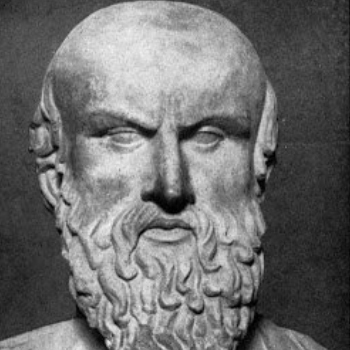 Memory aids and training techniques like the Memory Palace or Method of Loci don’t materialize out of thin air.
But were they really the brainchild (pun intended) of Simonides of Ceos?
And was Simonides really the father of the Art of Memory and the mnemonic strategies people still use today?
Let’s dive deep into who Simonides of Ceos was and the secret lessons about the Memory Palace no one else seems to have explored… not even Frances Yates, in her famed book, The Art of Memory.
On this page, we’ll clean up the misperceptions and improve how you use memory techniques to retain anything you want to learn.
That includes your studies, your performance at work and your everyday satisfaction with life.
And when you get it right, the story of Simonides will also help you improve the lives of others.
What Is Simonides’ Memory Palace?
Simonides’ Memory Palace refers to the legendary origin story of the method of loci.
After a banquet hall collapsed, Simonides helped identify the victims by remembering where each guest had been sitting.
This story shows how observation, order, location and the use of mnemonic associations support recall.
But that’s only scratching the surface of the story.
Simonides was a very interesting figure and we can learn a lot more about how to use the technique by digging deeper into who he was and how the technique came into existence.
Who Was Simonides of Ceos?
The poet and famous lyricist Simonides of Ceos was a prominent member of the Greek society in the 5th century. He was often called ‘honey-tongued’ by his many admirers, especially after reciting his famous lyrics and poems.
And in many ways, he was an epic learner with a “mercenary” quality about him. I use that word because he was the first poet to charge money for his writing and recitation.
But he was also quite self-directed in how he learned things, as I discuss in this video:

One of the best books I’ve read about Simonides is called Economy of the Unlost by Anne Carson.
According to Carson, Simonides was interested in more than just memorizing his own poetry and songs.
She claims that he was the first to suggest that artists sign their works, ostensibly so we could remember who created them.
That said, he was apparently greedy and more than a little vain. As Carson writes:
“As to memory, I say nobody can equal Simonides!” said Simonides at the age of eighty.
The poet does not just use memory, he embodies it… His memory construct, unlike later mnemotechnic methods, is not artificial:
Simonides had sat in the room that becomes his theater of memory, he ate dinner amidst the data.
This poet is someone caught between two worlds, remembering both. His flame in every grain. For him, memory is both commodity and gift, both wage and grace.
How the First Memory Palace Was Born
During the 6th century BCE, Simonides of Ceos was hired by a wealthy man named Scopas to give a speech and recite poetry at a banquet before a group of distinguished guests in a large and impressive building.
After concluding his presentation, Simonides thanked Castor and Pollux, two mythical boxers who represented heroism.
This is not a throwaway reference. Because both Castor and Pollux were given immortality by Zeus, they appear in the story as symbols of the enduring power of memory.
When Simonides asked Scopas to pay him his fee, the host expressed annoyance that Simonides thanked gods instead of him.
“Go ask Castor and Pollux to pay you,” Scopas replied.
At that moment, a servant arrived to tell Simonides that two men were outside and asking for him.
“I’ll get back to this matter of the fee in a moment,” Simonides assured Scopas before exiting the building. After a short walk, he spotted two men on horses. They beckoned Simonides over.
“Closer please,” they said.
As Simonides approached them, he recognized the two men as none other than Castor and Pollux themselves.
Next, without warning, the building Simonides had just left collapses and everyone inside dies.
Later, as the dust from this shocking event settles, Simonides used his memory to help the authorities identify all the bodies so they could be properly buried by the mourning families, survivors who would never have experienced closure otherwise.
Exactly How Simonides Remembered the Names of the Victims
Simonides recalled where each person was sitting by drawing upon his memory of the seating arrangement in the banquet hall.
The process of following a journey in your mind came to be called the method of loci because loci is plural for location.
Later, probably due to the influence of St. Augustine, the term Memory Palace came into use.
Centuries later still, Sherlock Holmes fans popularized the term “Mind Palace.”
I personally prefer the term Memory Palace because it puts the focus on memory. If you’d like to learn how to use them for memorizing much more than names, check out my complete guide to the Memory Palace technique.
For now, there’s more we can learn from the story of Simonides.
Let’s go further.
The Art of Preparation
Even before recalling the locations of the guests before the collapse, Simonides was prepared.
He’d already primed his memory to observe, place and then recall each person.
In other words, as Yates points out, the first step Simonides took was to imprint the location itself in his mind before attempting to memorize anything.
And that’s what all the most successful memory students do:
Creation your Memory Palaces before you need them. Even if that means doing it within seconds after entering a room where you’re going to give a presentation.
I do this every time I go to events and demonstrate the techniques I use to to remember names.
This simple step is so important because without visually noting where the guests were seated at the banquet, Simonides would not have been able to recall their exact locations or identify the bodies.
Likewise, if I don’t have a point of reference before memorizing names, I won’t do nearly as well. It pays to take a second to note the shape of the room before memorizing a single name.
Exaggeration is Key
One reason the story of Simonides has stood the test of time is that it contains exaggerated and dramatic action. Each of the Magnetic Modes are accounted for when you feel the building crumbling to the ground.
What are the Magnetic Modes?
They are a form of mnemonic imagery that you can learn how to rapidly apply to anything you want to memorize by reading my free mnemonics dictionary.
You can practice right now by thinking about the story of Simonides itself:
Imagine hearing the rumble in your ears as the banquet hall crashes down. Even if you don’t see pictures in your mind, you probably have an idea of what a collapsing building looks like.
Add Emotions
Next, feel an emotion related to the event. Even if you have never lost a loved one in an event like this, you probably have a flashbulb memory of when a famous building like the World Trade Center was destroyed.
As the mnemonist David Berglas pointed out in A Question of Memory, you want to create what he called the “Kennedy Effect.”
That’s because emotions easily lodge information in memory very deeply when something majestic is lost. And the tale of Simonides contains not just the lost of a building. It also speaks about people squabbling over fees.
There’s even an element of poetic justice when Simonides not only walks away unscathed. He also lives on to be the hero who established the Memory Palace technique.
Build in Tastes & Smells
When you let your imagination do its work, you can almost taste and smell the food and wine at the banquet hall.
Likewise, you can imagine smelling and tasting the dust coming up from the rubble after the building’s collapse.
Use Your Mental Ears
Even without seeing a picture of where the attendees were sitting, you can imagine the sounds of plates clinking and people chattering as they sat around Simonides at their tables.
You can also imagine hearing Simonides’ voice and how his footwear scuffed the floor as he moved from the interior of the building to the outside.
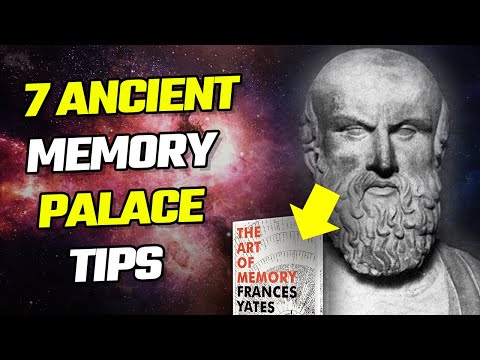
For more on how these suggestions work, check out this full tutorial based around lessons drawn from Simonides:
The Most Important Lesson I’ve Learned from Simonides
Although Anne Carson has outlined many less than friendly aspects of Simonides’ character, it’s important to recognize that when the situation required it, Simonides did not use his memory to impress people or win a competition.
He used his memory to reduce the suffering of his fellow human beings.
Without the help of his extraordinary memory, the families of the victims would never have identified their loved ones.
That means no proper burials, something that was as important in Ancient Greek culture as it is now. If not more so.
I believe that this story changes the true value of the Memory Palace technique.
Yes, you can use it to pass exams, learn languages, give a speech from memory, or remember names at events.
But at its core, this practice makes you more useful to the people in your community, your family and your friends.
The sharper your memory, the more present you’ll be at dinner parties too. Or in any conversation. And being more present is really the ultimate gift you can give the world.
And that means being more reliable in your personal and professional life. You’ll almost automatically serve others at a higher level simply because better memory makes it impossible not to be more useful.
If you’d like to start building your first Memory Palace using the Magnetic Memory Method I’ve been teaching for over fifteen years, I have a free course that walks you through it step by step.
Just click the image below to register:

It’s the same foundational training thousands of students have used to go from “I understand the basic concept” to actually practicing this important memory technique daily.
So what do you say?
If I’ve done nothing else, I hope you’re convinced by Simonides’ story that you can train your memory well enough to help both yourself and others.
And when you do, you’ll also become the stuff of legend.

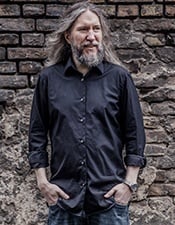 Anthony Metivier is the founder of the Magnetic Memory Method, a systematic, 21st century approach to memorizing foreign language vocabulary, names, music, poetry and more in ways that are easy, elegant, effective and fun.
Dr. Metivier holds a Ph.D. in Humanities from York University and has been featured in Forbes, Viva Magazine, Fluent in 3 Months, Daily Stoic, Learning How to Learn and he has delivered one of the most popular TEDx Talks on memory improvement.
His most popular books include, The Victorious Mind and…
Anthony Metivier is the founder of the Magnetic Memory Method, a systematic, 21st century approach to memorizing foreign language vocabulary, names, music, poetry and more in ways that are easy, elegant, effective and fun.
Dr. Metivier holds a Ph.D. in Humanities from York University and has been featured in Forbes, Viva Magazine, Fluent in 3 Months, Daily Stoic, Learning How to Learn and he has delivered one of the most popular TEDx Talks on memory improvement.
His most popular books include, The Victorious Mind and…