
Podcast: Download
Subscribe: Apple Podcasts | RSS
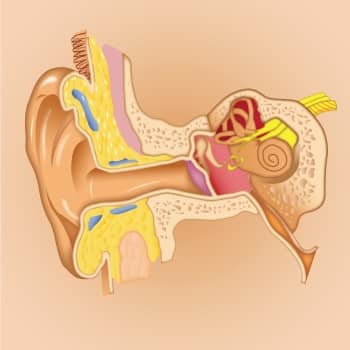 When you have to memorize the names of hundreds of bones and muscles, usually in complex Latin terms, you don’t want to spend hours fiddling with boring and ineffective flashcards. You just want to know how to memorize anatomy in a way that works.
And you want to learn without rote repetition burning you out.
When you learn the dedicated Memory Palace strategy I’ll teach you on this page, you’ll soon discover that the learning process doesn’t have to be hard.
In fact, you’ll see me absorbing anatomy quickly in the same way I’ve used and taught thousands of students who have used the process to pass their medical exams.
I’ll also help you skip the problems others run into when they aren’t taught the Memory Palace technique correctly.
Ready to skip the stress of forgetting anatomy with detailed examples?
Let’s dive in.
What Is A Memory Palace & How Does It Apply To Anatomy?
The Memory Palace technique allows you to “offload” difficult information onto locations by creating journeys. You can use a familiar location like your home, school, a church, museum or any building on a university campus.
If you’ve heard of the technique before, you might have worried that you don’t have enough places for the massive amounts of information involved in learning anatomy.
Please put this worry aside. I’ve got countless Memory Palace ideas you can use.
In some cases, you can even use your body. For example, watch me memorize the carpal bones using my wrist as a Memory Palace in this video tutorial:
If you’d like another example of using the body as a Memory Palace, here’s a guide to memorizing the ulna and radius.
Proof It Works: How Alex Mullen Aced Med School
You don’t have to take my word for how helpful these techniques can be when you’re studying all aspects of medicine.
In addition to interviewing successful nursing students, I’ve had the distinct pleasure of interviewing Alex Mullen on the Magnetic Memory Method Podcast.
In addition to winning the World Memory Championship three times, he successfully completed his medical training and now practices medicine.
Although Mullen has told me he incorporate some flashcard practice and used Anki to a certain extent, strategic Memory Palace use was important to his success.
And the key for my own students in med school is to use Memory Palaces in combination with other anatomy mnemonics and a principle called spaced repetition.
4 Steps to Creating Your First Memory Palace For Anatomy
Once you’ve decided on a location or area of your body, here’s what to do next:
One: Create a Linear Journey
As you can see in my carpal bone tutorial video above, I didn’t randomly memorize the carpal bones. I deliberately used the journey method to follow a logical path.
This won’t always work when using the body Memory Palace technique, which is why you want to make sure your anatomy Memory Palaces are well-formed.
As a general rule, start at the dead end of the location and move yourself towards an exit. Like this:

Because this Memory Palace example starts in the corner of a master bedroom and moves through the apartment to the doorway and ultimately the landing, there’s no confusion while using the Memory Palace.
Two: Associate Each Anatomical Term with A Highly “Magnetic” Association
The next step involves assigning what I call Magnetic Imagery.
What is Magnetic Imagery? It’s my preferred term for mnemonic image.
It’s incredibly easy, so let me show you how how it works.
How to Memorize the Auditory Ossicles (Case Study)
Let’s say you needed to memorize the “malleus” for the hammer bone in the ear.
In one corner of a room you’ve prepared as a Memory Palace, you can begin to imagine the actor Malcolm McDowell wrestling with an eel while smashing the Toys R Us logo into the eel using a plastic toy “hammer”…
Like I’ve illustrated for you in this image:

Here’s why this form of association works:
Malcolm + eel + hammer + Toys R Us logo = Malleus and hammer.
How do you rapidly come up with sound and spelling-based associations like this?
I suggest you go through my tutorial on the pegword method. You’ll complete a simple exercise where you write down a famous figure for each letter of the alphabet.
Please make sure you actually write them down. This will start to train your procedural memory so you can look at any term and connect it with a dynamic figure.
Three: Exaggerate Your Associations
Associations work well, but in order to make them truly “sticky” in your Memory Palaces for anatomy, you need to do what scientists call elaborative encoding.
Basically, you take each association and mentally make them:
- Bright
- Vibrant
- Dynamic
- Big
- Colorful
- Crazy
- Strange
- Emotional
- Physical
- Animated
- Forceful
- Loud
- Rhyming
- Punning
Four: Use Recall Rehearsal
Recall Rehearsal is an advanced form of spaced repetition based on principles taught by Aristotle and later codified in memory science by Hermann Ebbinghaus. He’s the guy who identified the forgetting curve.
To beat forgetting anatomical terms after establishing them in your Memory Palaces, revisit them using patterns that maximize the primacy and recency effect.
As I teach my students in the Magnetic Memory Method Masterclass, these patterns involve traveling your Memory Palaces and triggering your associations:
- Forward
- Backward
- From the middle to the end
- From the middle to the beginning
- Skipping the stations
This process will give recency and primacy to each station.
If you’ve done a good job of elaborating your associations, the Von Restorff Effect will make them seem to leap out at you. I sometimes call this the “rubberneck effect” because you cannot help but start decoding the associations.
How To Know How Many Memory Palaces You Need
One problem learners face is working out just how many Memory Palaces they will need.
For starters, I suggest that you develop at least one Memory Palace for every letter of the alphabet. That way you don’t have to think at all when you start to study something.
For example, look at this list:
- Inner Ear (I Memory Palace)
- Middle Ear (M Memory Palace)
- Outer Ear (O Memory Palace)
- Nose (N Memory Palace)
- Throat (T Memory Palace)
- Mouth (M Memory Palace)
- Skull (S Memory Palace)
If you have the entire alphabet worked out, you’ll always have at least one Memory Palace to draw upon.
From there, you just need to understand something suggested to me by Tony Buzan, legendary author of The Memory Book:
“The rules will set you free.”
Today, I’ve suggested a number of rules, and when you follow them, you’ll have an easier time getting anatomical terms and their locations into long-term memory.
It’s really easy and thanks to following these simple rules, you’ll enjoy the process each and every time you sit down to study.
If you need more help understanding Memory Palace creation as you work on improving your memory ability, consider reading the second edition of my book, How to Learn and Memorize Medical Terminology.
And, if you’d like a free course that takes you deeper into the Memory Palace technique, grab my free course:

It gives you four video lessons and three worksheets with even more examples.
As you can probably tell, I’m passionate about helping medical students. If you’d like more information on just how successful you can become, check out some of my student testimonials. This one from Dr. Joe Riffe is one of my favorites:
If you’d like results like that, the specific memory techniques you’ve discovered today will help, whether it’s for the tarsal bones or any other aspect of medical terminology.
I’m here to help!






6 Responses
Hello there Anthony,! Thank you for excellent episode! I look forward to next episode aleady!
Some of my thoughts about style…
When going impromptu:
A method I use sometimes , is to lump together bits of information (keywords) into a “linked list” (similarity to computer science that has this basic datatype . Meaning that a keyword is linked to one or two other keys. The ends only links to its keys besides them. 🙂
Then later on, if needeed I hook the list keys into a palace which has a design suiting m use case.
Also if this linked list of keys(associations) need to be easily accessible by will, I prepend the linked list with an anchor association which is a context driven asdociation that lets me “find” the list more easily in the flow of thoughts. This buys me more time to design the method of loci design and hook the list onto it.
The above linked list can be elaborated into a tree , by allowing each key(association) to link to more than two other keys. In such cases I tend to want to have a strongcontext anchor and associate the tree , and layer on hook onto a suiting method of loci object.
This may suit some , and some not.
I use flashcards a lot , but not in the same way as people not using a mnemonic framework. I first memorize the key(s) , have them on their loci in the palace ( I see very little use going onto glashcards practise with linked lists) before using flashcards (ankidroid actually most of times). WHY ??? Because the skillset can be increased into a spontaneus reflective level way quicker. It helps you (if you prepare the mnemonics BEFORE) to habitually practise retention and speed (not necessarily in a stressful way of course;)..
Take care
Great pointers, Pelle. These are much appreciated and there is certainly much layering that can take place.
As one of the members of my Secret MMM Mastermind group pointed out:
“One thing I might add is that the spatial orientation also matters. What touches what, where a vessel or muscle starts and ends.”
As you note, some things suit some people, other things not. In all cases, memory techniques create a skill set in which the more you learn, the more you can learn and the connections themselves provide more raw material for making even more connections. 🙂
Do you have any ideas for memorizing sheet music for the piano? I’ve been playing for many years and still a slave to sheet music. Thanks for any advice. Tamie
I do indeed, Tamie, and thank you for asking.
What would you say you struggle with the most? Remembering chords or melodies? Have you had any experience with mnemonics before?
In addition to this discussion on music mnemonics and the resources linked to on that page (do check the comments section), there’s an FAQ section in the Magnetic Memory Method Masterclass with a training about memorizing piano music and the option of personalized training if needed.
It all boils down to whether or not you wish to use mnemonics as part of the process. The other way is straight up dedicated practice, which is discussed on the other resources to which I’ve linked.
I hope you find them useful and look forward to your next post on the site.
Hello. I am 44, and I am trying to find ways to help me keep up with the other students in my anatomy and physiology class. I assumed since I had worked in medical field, I would have no problem passing the class. I was so wrong. I am struggling and frustrated. I was reading about your Magnetic Memory Method, and thought I would reach out. Do you have any suggestions as where to start?
Thanks for stopping by, Regina.
The key for all of my medical students so far has been to combine the five main mnemonic systems. This is what the Magnetic Memory Method teaches with lots of examples.
In fact, I’m about to upload several sessions with one of my most successful med students who recently passed anaesthesiology exams to upgrade his skills.
Even without his examples from prepping for the exam, everything you need is in the program to develop these systems.
I would suggest starting with the free course on this site. If the approach suits you, the full program will help even further.
Alternatives are my book on memorizing medical terminology and one-on-one training. I sometimes also open up my monthly group training program for people who have gone through the free course.
Please let me know if you have any further questions and I’ll get back to you a.s.a.p.