
 You want to know how to improve reading skills.
But what does “better at reading” actually mean?
Maybe you want to understand difficult books more easily.
Perhaps you’d like to remember more of what you read.
Or you might simply want to finish more books without losing focus.
These are different goals.
Understanding that different readers desire different outcomes is very important to your success in reading.
For one thing, comparing yourself with other readers often creates more confusion than clarity. You rarely know what they’re reading, why they’re reading it or how much they remember.
I know this because I’ve spent decades reading intensively. Both on my own and in collaboration with many other kinds of readers.
For example, I earned my PhD in Humanities after working through hundreds of difficult books and articles. I’ve also spent more than a decade as a professor and many years discussing books on this blog, my podcast and YouTube channel.
Along the way, I learned that strong reading involves much more than moving your eyes across words quickly.
A good reader can get through texts that need to be read despite their difficulty. More importantly, a skilled reader is able to understand, remember and use what matters from the books they tackle.
So if you’d like to improve your reading skills without falling for shortcuts, let’s dig in.
What Does It Mean to Improve Your Reading Skills?
Before choosing a reading strategy, decide what “better” means for you.
For example, your reading goal and path to improvement might involve:
- Understanding difficult texts
- Improving reading comprehension
- Recognizing words and concepts faster
- Expanding your vocabulary
- Reading for longer without losing focus
- Remembering more of what you read
- Making connections between different books
- Using what you’ve learned in conversation, writing or work
Reading for pleasure counts too. In fact, I’ve had to work on making sure I read for pleasure more than once in my life because it’s easy to fall into a grind and focus only on plowing through difficult books as if it were some kind of conquest.
And keep in mind that someone who enjoys fifty novels in a year without remembering much is not automatically a weaker reader than someone who carefully studies fifteen difficult books.
Likewise, memorizing information from a smaller number of books does not guarantee that you’ll use what you’ve absorbed.
And this is why having a goal matters. If you don’t know why you’re seeking improvement and what you want to have happen after applying various reading strategies, you’ll struggle to know if you’ve actually gotten anywhere.
This point is also key:
Comprehension combined with memory are closely related to most reading improvement outcomes. After all, recognizing words is of limited value if their meaning disappears moments later.
That’s one reason I teach memory techniques as part of becoming a better reader and overall learner.
Reading, after all, only provides you with access to information.
But memory allows you to access that information later so you can compare, connect and use it.
Can’t Figure Out a Goal? Just Reading More Works Too.
Here’s another encouraging point.
Literacy researcher Linda Gambrell and her colleagues have discussed how reading itself can increase the motivation to read.
In other words, getting more reading experience can help create the desire for still more reading.
But quantity alone isn’t going to be enough for most of us.
So let’s look at how to make our reading practice count.
How to Improve Reading Skills: 8 Strategies That Work
1. Decide Why You’re Reading
The same reading strategy does not suit every book.
A novel you’re reading for pleasure requires a different approach from a philosophy book you’re studying for an exam.
Likewise, a scientific paper calls for different levels of attention than a newspaper article.
Before starting, ask two simple questions:
- What am I reading?
- Why am I reading it?
Those questions influence everything that follows.
During my university years, I also learned that reading about interpretation itself can make you a stronger reader.
P. D. Juhl’s Interpretation: An Essay in the Philosophy of Literary Criticism was particularly important for me.
That’s because Juhl gets you thinking about whether there can even be a correct interpretation. He then provides a way of thinking about interpretations in sets or categories.
His approach to interpretation helped me move beyond the idea that interpretation has to collapse into endless relativism (which was a popular theme while I was in university).
Instead, I discovered that I could ask better questions while reading that led to an improved experience before and after.
I’m talking about questions like:
- What kind of interpretation am I dealing with?
- Which evidence supports it?
- What other interpretations belong in the same category?
This kind of questioning improves the experience of reading immediately.
For one things, you stop merely absorbing sentences. Instead, you become more aware of what your mind is doing with them.
I. A. Richards’ How to Read a Page also helped me tremendously. Personally, I found it more useful than Mortimer Adler’s better-known How to Read a Book.
I’m not necessarily suggesting you read either of these books. I’m just sharing a few titles that have had a deep impact on me.
The larger lesson I’m trying to share is that reading about interpretation can improve the act of reading itself. And there are lots of books and videos about interpretation to choose from if you decide to pursue this particular strategy.
2. Learn to Decode Words and Expand Your Vocabulary
Reading involves decoding.
That’s why continually increasing your vocabulary matters so much.
When an important word is unfamiliar, the problem isn’t always solved by encountering it repeatedly.
Sure, sometimes you’ll eventually figure out what it means.
But often you’re better off deliberately learning and committing unfamiliar or vague words to memory as soon as possible.

That’s why I often recommend learning how to memorize vocabulary when important terminology keeps slowing you down.
Doing so brings reading and memory start together. And once a word enters long-term memory, you no longer have to decode it from scratch each time.
Instead, recognition becomes faster.
Meaning also becomes easier to access.
As a result, you give your attention more room for the larger argument. And more space for connections to form.
3. Build Tolerance for Difficult Books
Many years ago, I started Douglas Hofstadter’s Gödel, Escher, Bach.
Then I hit the first puzzle.
I couldn’t solve it.
So, as I shared in this video, I quit reading it.

That was a mistake.
Years later, I returned to the book with much more experience behind me. By then, I’d learned something that younger me did not understand.
Temporary confusion doesn’t mean you’re incapable of understanding.
And sometimes understanding is delayed.
I had also developed much more confidence through memory training. For example, I memorized thousands of words of Sanskrit while trying to understand difficult philosophical ideas.
That experience taught me to trust the learning process.
Concepts involving duality and nonduality once seemed incredibly difficult. Eventually, however, they became much easier to recognize across thinkers ranging from Plato to Derrida.
The same lesson applies to difficult books.
Confusion is not necessarily a stop sign. Sometimes it’s simply part of the scenery.
That’s why I’m cautious about blanket advice telling people to abandon books whenever they stop enjoying them.
Of course, some books aren’t worth finishing.
Still, before quitting a book, I encourage you to ask yourself why you want to quit.
Is the book genuinely useless to you?
Or is the challenge of getting through it exercising precisely the reading skill you need to strengthen?
Developing tolerance for difficult material can improve your reading far more than constantly searching for easier material.
4. Stop Assuming Every Book Must Be Read in Order
Persistence does not mean reading mechanically from page one to the end.
Graduate school taught me to read more flexibly.
I sometimes call my approach “rhizomatic” reading.
To understand this concept, think of a root system rather than a top-down tree or linear railway track.
I move forwards, backwards and sideways through a book. Sometimes I’ll read the conclusion first or inspect the bibliography.
At other times, I’ll follow a footnote sends me into a completely different text before I return to the original book.
Ultimately, I usually read books that are important to my goals in their entirety.
But what I’m suggesting is that forcing yourself through challenging books linearly isn’t always necessary.
I experienced this recently while reading George Orwell’s Homage to Catalonia.
The beginning wasn’t holding my attention, so I jumped ahead.
Soon, I found passages in the middle that renewed my interest. Then, returning to the opening chapters suddenly felt different because I had more context.
Then I explored the appendixes and discovered still more information about how my edition had been arranged.
What I’m describing is not careless skimming.
Instead, you’re strategically increasing context so that comprehension has a chance to catch up.
For a deeper look at changing your reading rate without sacrificing understanding, see my guide on how to read faster.
5. Read Difficult Passages Out Loud
When a sentence refuses to make sense, try reading it aloud.
I originally learned the value of this approach partly through music.
For years, I played with highly trained musicians. Some of the passages I needed to perform involved difficult rhythms.
One principle the drummer shared with me helped enormously:
If you can sing it, you can play it.
Once I vocalized a challenging musical line, it became easier to reproduce on the instrument.
I’ve noticed something similar while studying difficult prose.
Graduate school constantly confronted me with long sentences I needed to understand for field exams.
Rather than silently rereading them forever, I read them aloud.
Hearing the syntax in my own voice added another layer of processing.
Even today, I sometimes recite Shakespeare aloud before I feel I’ve fully understood a passage.
Research into what psychologists call the “production effect” also supports using vocalization as a memory strategy. One useful overview is this discussion of how reading aloud can strengthen memory.
Sound itself matters during reading too. Researchers have long studied how phonetic processing, including the processing of vowel sounds, contributes to reading.
You don’t need to read every book aloud.
Use vocalization when a difficult passage deserves more attention.
This technique can also engage acoustic encoding, giving important information another pathway into memory.
6. Use Multiple Forms of Media When They Help
Reading ability doesn’t develop in isolation from other forms of learning.
During one of my most difficult periods at university, I sometimes combined physical books with audiobooks.
Back then, finding an audiobook wasn’t as simple as tapping the download button on your phone.

Many times I had to ride my bike between libraries in Toronto looking for what I needed. I even did this during winter and transit strikes.
And because audiobooks often came in large cases filled with cassette tapes, I sometimes couldn’t fit them into my backpack. I had to carry them under my arm.
Why did I go through so much bother?
It was because I had a lot of difficult books to get through and was not going to give up. When I could find the books in audio format, they became much easier to get through when I combined listening with the physical text.
The narrator helped maintain my attention and keep my eyes focused on even the most difficult passages.
This experience taught me not to isolate reading from other media. Rather, it’s very valuable to combine media.
Conversation with other people helps too.
As does writing about what you read.
Later in this article, we’ll look at why producing written summaries can strengthen both comprehension and memory.
If attention is the main problem you’re facing, my guide on how to focus on reading goes deeper into that specific skill.
7. Take Moveable Notes Instead of Copying the Book
Many readers take notes in a linear fashion.
Essentially, they copy one book into another.
Occasionally, that approach makes sense.
Most of the time, I prefer something more flexible.
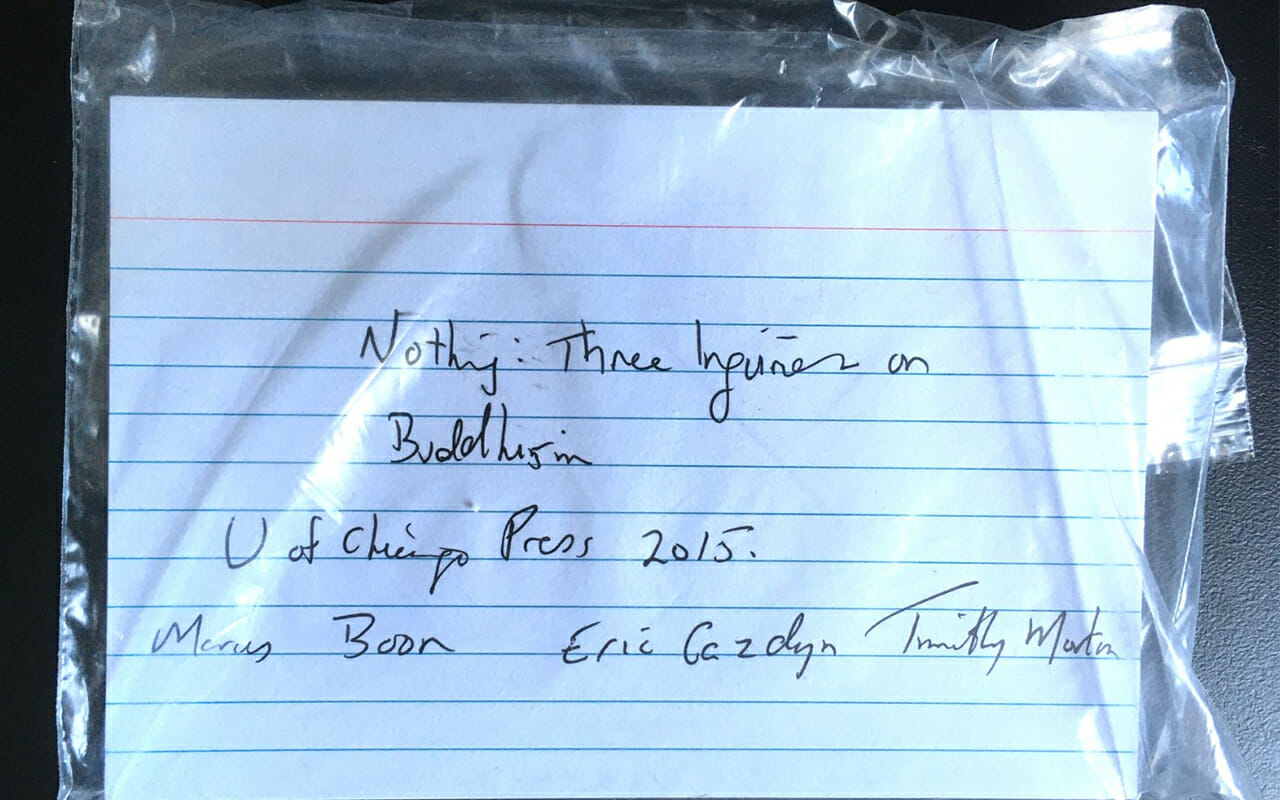
My note-taking strategies often involve short, moveable notes.
Over the years, I’ve used:
- Zettelkasten
- Magnetic Flashcards
- Mind mapping
Using index cards for taking very short notes has been particularly useful.
For example, a card can contain a keyword, page number, question or short statement.
The best part about using index cards is that you can physically rearrange them on a desk or pin them to a board in different configurations.
This freedom makes relationships between ideas much easier to spot and explore further.
My reliance on index cards also came from practical experience.
During my university years, laptops were heavy. Reliable cloud backups weren’t available either.
And my professors told horror stories about students losing hard drives and months of research.
I took those warnings seriously.
Paper was lighter, dependable and easy to carry into libraries.
Even today, I still write many notes by hand.
And although technology has changed and enabled cloud backups as we write, my appreciation for putting ideas through my own handwriting has not. It’s a very effective comprehension and memory strategy.
8. Retrieve, Remember and Use What You Read
This final strategy is where reading improvement and memory improvement really come together.
Don’t let rereading become your only form of review.
Deliberately retrieve information.
One of my best lessons in retrieval practice after reading came from a directed reading course with Professor Katie Anderson.
I was studying how technologies used in movies wind up reflected in their themes. The project involved at least thirty books and articles.
For each source, I had to produce a summary of at least 250 words.
Usually, I wrote the summary by hand first.
Then I typed it.
The process forced me to decide what mattered.
It also exposed gaps in my understanding.
More importantly, I noticed that I remembered surprisingly granular details.
Connections between books also became easier to see.
Those connections eventually generated testable insights. The project led to a paper I presented at a conference at Western University in London, Ontario.
I can still access many of those memories today.
Retrieval practice explains part of why this approach works. Instead of merely exposing yourself to the information again, you try to produce it from memory.
Afterward, check the original.
It’s a simple process that tells you what stuck.
It also reveals what you misunderstood.
If understanding and remembering is your main goal, I have an entire tutorial on how to remember what you read.
However, reading skill can go even further.
You can also deliberately memorize selected information from books.
How Memory Techniques Can Make You a Better Reader
You do not need to memorize every sentence.
In fact, trying to remember everything would probably interfere with reading.
Instead, choose information that deserves reliable recall.
Useful candidates include:
- Important vocabulary
- Author names
- Book titles
- Definitions
- Core concepts
- Key quotations
- Occasional verbatim passages
Consider the word isomorphism in Gödel, Escher, Bach.
Once that term becomes part of memory, an entire world starts opening.
You can recognize isomorphic relationships elsewhere in Hofstadter’s book.
Later, similar patterns can appear in completely different areas of study.
That’s what I mean by creating connective webbing in the mind.
The more useful concepts you remember, the more hooks you have for understanding new ones.
This is why improving your memory can improve your reading.
Use Mnemonic Images to Make Important Ideas Memorable
When a concept matters, you can deliberately encode it.
One option involves creating mnemonic images.
Instead of hoping an abstract term will stick, connect it with something concrete and memorable.
That doesn’t replace understanding.
Rather, the mnemonic gives you reliable access to the term so you can keep thinking about it.
If the information is important enough, that access can greatly increase the number of connections you notice later.
Use a Memory Palace for Selected Reading Material
For larger amounts of important information, I often use the Memory Palace technique.
During my PhD, for example, I needed to keep track of philosophers, books and concepts for field exams.
Memory Palaces helped me organize selected details.
Notice the word “selected.”
You don’t want to convert every page into a mnemonic exercise.
Instead, read first.
Take useful notes.
Decide what deserves long-term retention.
Then bring in memory techniques where they add value.
That sequence keeps memory training in service of reading rather than allowing it to interrupt the experience.
Use Spaced Repetition After Retrieval
Once you’ve learned something important, revisit it intelligently.
Spaced repetition can help you schedule those encounters over time.
However, don’t confuse recognition with recall.
Simply looking at a term repeatedly can create the illusion that you know it.
Testing yourself is stronger.
By testing, I mean that you should try recalling the idea first.
Next, check your accuracy.
After that, test again both to help establish stronger recall and ensure accuracy.
This combination of encoding, retrieval and review is central to moving important information toward long-term memory.
Try This Reading Exercise Today
You don’t need a complicated system to start improving.
For your next reading session, bring a small stack of index cards.
As you read, jot down keywords and short quotes.
Include page numbers so you can track your way back to the book when necessary.
Avoid copying entire paragraphs. The goal here is not to spend tons of time copying out long passages.
Once your reading session ends, close the book.
Then take a blank piece of paper and write a short summary from memory.
Next, reproduce as many of they keyword you noted as you can. And write out any quotes in your own words.
Only after you’ve finished should you look back at the text.
Now compare your test against the source material for accuracy and depth of understanding.
- What did you remember?
- Which ideas did you forget?
- Did you misunderstand anything?
Then do this again as part of your regular reading routine.
This exercise is valuable because it combines reading, attention, note-taking, retrieval and memory training in one loop. You will soon start to experience substantial improvement.
Improve Reading Comprehension With Active Strategies
Reading comprehension deserves special attention because many people use “reading better” to mean “understanding more.”
Several practical strategies can help.
For example:
- Ask questions while reading
- Predict what the author may say next
- Monitor your understanding
- Summarize key points from memory
- Stay flexible when the text becomes difficult
- Visualize what you’re reading when appropriate
- Explain difficult ideas in simpler language
I sometimes use a modified Feynman Technique for the last strategy.
If comprehension is your main concern, see my complete list of reading comprehension strategies.
Again, however, comprehension becomes more valuable when you can recall enough of the material to use it later.
That’s why reading and memory belong together.
How to Read Longer Without Burning Out
Better reading skills also require endurance.
You can build it.
One method I use is creating personal semesters.
I choose a topic and commit to studying it for roughly three months.
This practice recreates some of the structure I experienced at university.
It also keeps my attention on a meaningful cluster of ideas long enough for connections to form.
Another option is interleaving. In brief, it involves changing what you’re reading ever 15-20 minutes.
Rather than exhausting yourself on one topic, rotate between related books or subjects.
As you go through the switching process:
- Ask how one author relates to another.
- Look for contradictions.
- Notice recurring concepts.
Doing this will help strengthen your recall because you’re adding more associations to the information.
Do You Really Need to Become a Faster Reader?
Not necessarily.
Reading speed matters in some situations.
However, reading faster isn’t automatically a sign that you’re reading better.
Personally, I’ve never believed the more extreme claims made by speed-reading promoters, especially ideas about eliminating subvocalization as though inner speech were simply a defect.
As I’ve discussed before, being a slow reader isn’t automatically a problem either.
The real question is whether your pace suits your purpose.
Sometimes you’ll want a quick overview.
At other times, skimming and scanning can help you locate information.
But understanding a difficult philosophical argument may require not only slow reading, but multiple passes over the same passages.
So don’t chase reading speed as an isolated number.
Aim for flexible reading.
How to Tell If Your Reading Skills Are Improving
How many books you get through is one way of potentially measuring whether or not your reading skills are improving.
But I can’t recommend making book counts your only metric.
Rather, strive to experience all of these signs:
- Difficult books feel less intimidating
- Unfamiliar words become easier to learn
- Concentration lasts longer
- Important details remain accessible after reading
- Summaries become easier to produce
- Connections between books appear more often
- Ideas show up naturally during conversations
- Knowledge from reading gets applied in real life
My final suggested sign that you are improving as a reader matters enormously.
Reading is not merely about consumption.
It’s about using what you learn. To do that, you can:
- Write about it.
- Discuss it with other people.
- Record a video.
- Keep a private journal.
- Apply an idea from a nonfiction book.
Even fiction gives you material for reflection, interpretation and conversation.
Years of discussing books publicly changed the way I read.
Now I naturally notice ideas that deserve further thought, application or sharing.
In that sense, becoming an active producer can make you a more attentive reader.
Improving Your Reading Skills Also Means Improving Your Memory
Reading more remains one of the best ways to get better at reading.
But as we’ve discussed, sheer volume isn’t the whole story. You also need to:
- Build your vocabulary.
- Learn to tolerate difficulty.
- Read flexibly.
- Sound difficult passages out loud when it helps.
- Take moveable notes.
- Practice retrieving important ideas through your own writing and discussions with others.
Most importantly, practice remembering enough of what matters to connect one book with the next.
If you’d like to build these skills further and take them beyond reading, continue with my guide on how to remember things.
Then learn more about the core memory techniques that you can apply selectively to your reading.
Remember, you don’t need to remember everything.
You need enough useful knowledge in memory for new ideas to have something to connect with.
If you’d like more help learning the process, you can also sign up for my free memory improvement course:

And above all, keep reading.
Not because finishing more books automatically makes you smarter.
Keep reading because every serious encounter with a text gives you another opportunity to understand, remember, connect and use the information to create worthwhile outcomes.

 Anthony Metivier is the founder of the Magnetic Memory Method, a systematic, 21st century approach to memorizing foreign language vocabulary, names, music, poetry and more in ways that are easy, elegant, effective and fun.
Dr. Metivier holds a Ph.D. in Humanities from York University and has been featured in Forbes, Viva Magazine, Fluent in 3 Months, Daily Stoic, Learning How to Learn and he has delivered one of the most popular TEDx Talks on memory improvement.
His most popular books include, The Victorious Mind and…
Anthony Metivier is the founder of the Magnetic Memory Method, a systematic, 21st century approach to memorizing foreign language vocabulary, names, music, poetry and more in ways that are easy, elegant, effective and fun.
Dr. Metivier holds a Ph.D. in Humanities from York University and has been featured in Forbes, Viva Magazine, Fluent in 3 Months, Daily Stoic, Learning How to Learn and he has delivered one of the most popular TEDx Talks on memory improvement.
His most popular books include, The Victorious Mind and…