
Podcast: Download
Subscribe: Apple Podcasts | RSS
 You can readily expand your mind by improving your ability to encode new information, retain it and retrieve it quickly.
That means you don’t have to unlock some supposedly unused region of your brain. You just need to practice paying attention to information, absorbing it in deeper ways and practicing remembering it intentionally.
I’ve been doing this for years as a memory expert who regularly takes on hard learning projects. Sometimes easier ones too.
As a result, I have increased my mental skills and pushed the limits beyond how much I thought my brain could learn.
For example, in addition to starting my own business, I’ve expanded into other areas beyond writing books, blogging and running a YouTube channel.
But I had to engage in the activities I’m about to share with you on this page.
Go through them all and you’ll almost certainly enjoy the benefits of an expanded brain. For example, you’ll likely be able to:
- Remember more
- Make better decisions
- Think faster
- Connect abstract ideas
- Plan further into the future
- Energize yourself when you’re down
- Enjoy mental peace on demand
The best part?
You never have to be so open-minded that your brains fall out.
After all, there are a lot of sharks out there teaching woo-woo “techniques” directed at the gullible.
But you can learn how to expand your mind based on scientifically valid processes that work quickly.
Let’s dive in, after defining our terms.
What Does It Mean To Expand Your Mind Anyway?
Although the answer here is partially subjective, there are four common capabilities that lead to being able to think more broadly.
And that means being able to enjoy your mental life while also solving problems faster, more completely and with presence to the present moment.
When you can do these things, you’ll automatically enjoy better memory, which is why mental expansion and memory must go together. You really can’t improve any of the other elements of your mind without exercising your memory.
With that in mind, here are the four categories:
- Ongoing memorization to gather and retain more knowledge
- Focus so that you can keep your attention on ideas that are worth your attention
- Analytical ability so you can recognize relationships and evaluate them
- Application so you know how to use what you know in a variety of circumstances
A simple exercise you can complete right now is to get out a piece of paper and list all of the ways you’re already engaging in these four categories.
Make no mistake: ongoing self-assessment almost always yields more insight. Come back to these four categories frequently to track how you’re doing.
How to Expand Your Mind:
15 Ways to Think, Learn and Remember More
The following practices are presented in no particular order of importance.
Usually they can be mixed and matched for maximum impact, such as juggling while reciting the alphabet backwards.
I’ll show you a video where I’m doing just that further down the page. But let’s start with the first mind-expanding technique first.
It’s the best.
One: Use a Memory Palace
If you’re not familiar with this incredible mental tool, a Memory Palace works like this:
You select a location such as your home. Then you identify a journey you can easily navigate.
I suggest you make a quick sketch of the layout. Nothing artistic. Just a plan like this one, based on my elementary school:
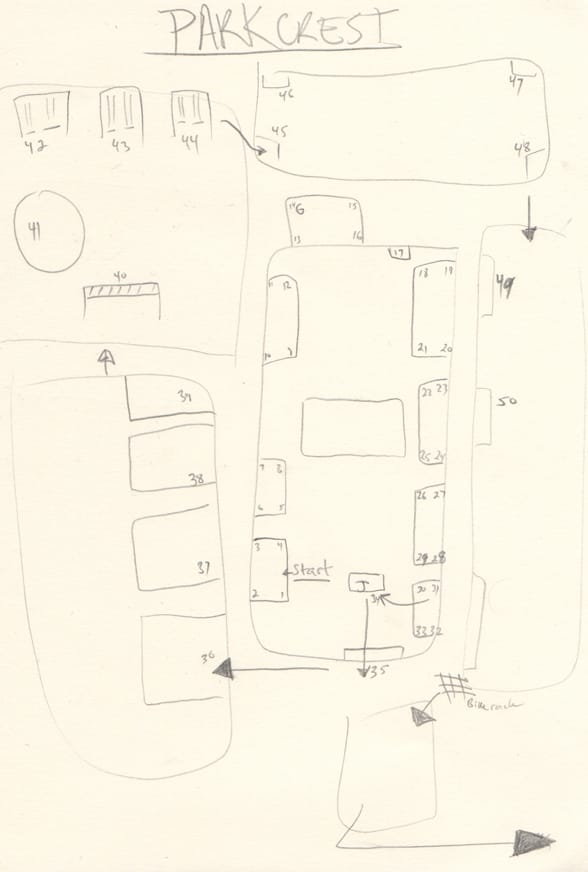
Like Hansel and Gretel, you then just place “crumbs” of association along this journey that help you remember information.
For example, one of the most mentally expanding projects I’ve completed involved memorizing over 2000 words in hundreds of Sanskrit phrases.
Each phrase, or small cluster of words is woven together with a simple mental association and placed like a crumb along the journey.

Once you have this simple tool under your belt, you can use it to extend your knowledge of many topics and skills.
For example, you can use Memory Palaces for a variety of expansive learning exercises:
- Learn the planets
- Memorize the presidents
- Remember the periodic table of elements
- Recall geographical information from maps
- Absorb new vocabulary within minutes
- Memorize ideas while reading
For more on this technique, check out my Complete Memory Palace Guide.
Two: Practice Multisensory Visualization

A lot of people visualize, but they make a weird mistake:
They limit visualization to seeing mental pictures.
This habit prevents them from expanding their minds effectively.
Instead, make sure you touch on at least eight of the major multisensory modes. We call them the “Magnetic Modes” in our community.
Start using them and pick one of the activities on this page and practice visualizing yourself doing it right now.
For example, imagine yourself reading a book and using a Memory Palace to leave some of its ideas along a journey based on the Hansel and Gretel metaphor I shared above.
Three: Read Using Active Recall
Unfortunately, there’s a lot of hogwash out there about so-called “speed reading.”
Yet, you can learn how to read faster.
The trick is in selecting books worth reading – books that will actually expand your mind.
To do this, I suggest you create a vision statement. What is it that you want to accomplish or experience in life?
Next, do some research and identify 1-3 key texts on that topic.
For example, when I wanted to learn about consciousness, I quickly came across a book called Gödel Escher Bach.
To find more related books, I simply looked at the list of works cited and picked a couple. This process quickly led me to reading both Spinoza and Hume.
Of course, you’ll find that not every lead proves worth the time in the end. But learning how to separate the wheat from the chaff cannot take place if you don’t encounter a few bad apples along the way.
In other words, bad books also expand your awareness of what doesn’t work too. It’s win-win no matter how you look at it from this perspective.
You want to add what scientists call active recall to the ways you engage with books. Rather than passively read and put the book aside, ask questions about what you’re reading as you’re reading.
Then later test yourself on the content. Journal about it by summarizing key points in your own writing.
This will not only lodge the material deeper into your memory, but also help you forge more contextual connections with other books you read over time.
Four: Learn Multiple Languages
If you really want to use more of your brain, learning just one other language won’t do.
Of course, there are challenges when it comes to learning more than one language at a time. But with strategy these are readily overcome.
The benefits of learning another language are huge because even just a small amount of multilingual study will:
- Reveal connections between cultures
- Teach you the history of how languages evolved historically
- Stimulate critical thinking skills thanks to exposure to multiple points of comparison

You’ll also meet many more people you can chat with, and some of them will be the “next level” thinkers we discussed above.
Five: Journal From Memory
Keeping a journal has been proven to improve memory and expand your experience of time. (See Richard Wiseman’s 59 Seconds for the research data.)
You can journal in a number of ways at the same time, including:
- Progress journaling (goals, books you’ve read)
- Biographical journaling (daily events)
- Gratitude journaling (things you’re thankful for)
- Dream journaling (recording your dreams)
The more you practice different styles of journaling, the more you’ll find the space in your mind expanding.

For a simple journaling exercise you can practice right now, get out a piece of paper.
Write down five impressions you’ve had from going through this article today.
Then, without peeking into your journal, use active recall to test how many of the ideas you can recall the following day.
Six: Juggling With Added Challenges
Hang on, you might be thinking.
Juggling?

Well, yes. It expands your mind for quite a few reasons.
Research shows that it:
- Increases connections between the neurons in your brain
- Improves vision
- Improves memory
- Improves oxygen and blood flow for better cognition
To get all the research in one highly readable account, check out The Hand: How Its Use Shapes the Brain, Language, and Human Culture by neurologist Frank R. Wilson.
To take your juggling to the next level, include other skills, such as reciting from memory. I share how I learned to do this here:

To get started, get yourself some suitable balls and make it simple. Add one level of complexity at a time.
When you’re ready to supplement juggling with memorized material, I suggest you start with a song you already know.
Then increase the challenge by reciting new content you’ve only recently memorized. You can also juggle while completing many of these powerful brain exercises.
Practice at least four times a week for best results.
Seven: Seek Out Incredible Thinkers

If you want to know how to use more of your brain, you really can just let it rub off on you.
We know that people learn by modeling others, so one of the easiest and fastest activities for stimulating mental expansion is simply to be around great thinkers.
Now, do you really have to be in the same room?
Yes and no. Obviously, listening to podcasts and watching videos of great debates can play a role.
But I’m pretty confident you’ll pick up more thinking skills when you’re together with people who regularly use more of their minds.
Options include:
- Attending public lectures and mingling
- Going to meetup groups
- Joining a chess club
- Going to a memory competition
- Hanging out with smart friends and family members

If you really can’t find people offline, seek out online discussion groups and forums where people demonstrate their expertise.
It can take some time to find the right mix, but it’s worth the search. The search itself should expand your mind too.
Just keep this principle in mind:
If you’re the smartest person in the room, it’s probably the wrong room.
Eight: Meditate
Meditation is all the rage these days, and for good reason.
Few mental activities have produced as much scientific evidence of the benefits you can experience than meditation.

I suggest you start simply:
- Set a time for less time than you think you can sit
- Sit in a chair or on the floor
- Focus on your breath
- Let your thoughts flow unobstructed
- When the timer rings, sit for just a little longer
- Journal to capture your reflections on the experience
Nine: Practice Philosophy In Everyday Life
If you do any serious amount of reading, you’ll wind up covering a fair amount of philosophy.
But to enjoy an expanded mind, reading is not enough.
You have to do philosophy.

There are a few ways to do this.
For one thing, Gilles Deleuze thought that doing philosophy at its highest level revolves around the creation of new concepts.
Now, “new” doesn’t necessarily mean “unique” or “original.” So if you want to do philosophy, you don’t have to stress out about this particular term. There’s also the power of exploring concepts that are “new to you.”
For example, I often come up with my own pet phrases for concepts that have certainly existed before. But because I craft them by interacting with them, they take on a special emphasis.
Nir Eyal presents research from science on how and why this kind of interaction helps people focus and gain traction in life. Ramon Llull, Nietzsche and many other people have promoted this form of self-invention throughout history too.
Ten: Learn Ars Combinatoria (The Art of Combination)
Ars combinatoria is a big topic, but here are the broad strokes:

Basically, you create a Memory Wheel. On this wheel, you place individual letters. These letters represent larger concepts.
For example, if you want to remember how to act in certain situations, you would place letters on your Memory Wheel to remember those actions.
Instead of arguing, for example, you might choose to:
S: Say nothing
T: Take a deep breath
O: Open the dialog with a new question after suggesting a quick
P: Pause
Now, you might be thinking…
Hang on! Learning acronyms sounds like limiting the mind, not expanding it.

I understand the objection, but in this case, nothing could be further from the truth.
Sometimes by limiting ourselves to pre-memorized options, we wind up increasing our options. Then we’re able to learn more and enjoy the benefits of objective reasoning as a result.
It’s a big topic and there are more ways to use this technique for expanding your mind. Learn more about ars combinatoria today.
Eleven: Learn New Manual Skills
We’ve already talked about juggling. But there’s also:
- Musical instruments
- Typing
- Fencing (swords and yes, building picket fences)
- Drawing
- Knitting, etc.
You might laugh at knitting, but one of my best friends is an avid knitter. He’s really brilliant and very successful and attributes some of his ability to concentrate and remember conversations to his knitting habit.
I’ve certainly noticed he pays more attention when we speak even though he’s clacking away at a new sweater or scarf.
Twelve: Practice Self Inquiry
It can take a while to understand the idea of asking yourself questions. It certainly took me a while.
But it’s very powerful and can help you experience consciousness in a whole new way.
Basically, the tradition is very old and appears in everything from Advaita Vedanta and Zen to hermeticism and Cognitive Behavioral Therapy. I believe it has stood the test of time because it is an incredibly powerful cognitive activity.

My favorite questions are:
- How do my thoughts behave?
- Are my thoughts useful?
- What value do my thoughts have?
- Who is having this thought?
- Where is this thought taking place in my mind?
There are many more self-inquiry questions you can learn. The core idea behind using them to increase your mental capacities is that they offer a “pattern interrupt.” Instead of being constantly lost in thought, you manage to experience the consciousness that your thoughts arise in.
These questions do something else too, and it’s the reason I keep coming back to them.
They catch your dismissals before you act on them.
Most of us walk around with a running list of things we’ve already decided aren’t worth our time. The trouble is that we rarely notice we’ve decided. The judgment just sits there feeling like a fact about the world rather than a position we’re holding.
So the next time you catch yourself writing something off, try running it through a few questions:
- Whose thought is this? Mine, or one I absorbed from someone else?
- When did I decide this, and what was I basing it on?
- What would I have to find out to change my mind?
- What am I protecting by keeping this judgment in place?
- You don’t have to reverse the judgment.
Often you’ll run questions like these and find your original assessment was correct. But you’ll be holding it as an assessment rather than a wall, and that’s a meaningful difference.
I go into this practice in more depth in this TEDx Talk:

Thirteen: Macro and Micro Travel
The more places you see, the more references you’ll have to locations, people and experiences.
This is true at multiple levels of travel:
- Other countries
- Other cities and states or provinces
- Other parts of your city

No matter what’s going on, you can always take a walk to a part of the area you live in to expand your mental model of the world.
Fourteen: Practice Empathy
Next time you’re meditating, try this simple exercise:
As you recite the alphabet from A-Z, think of people you know and embrace them with love in your heart.
For example:
- A – Adam
- B – Bonnie
- C – Carl
- Etc.
Within just a few moments, you will have created positive emotions for multiple people.
Here’s another exercise:
The next time someone annoys you at the grocery store or when you’re backed up in traffic, catch yourself. Hold the person who has irritated you in your heart and forgive them.
You’ll have more space in your mind for better quality thoughts this way.
Fifteen: Explore Your Dislikes Earnestly
For awhile, klezmer was not exactly the kind of music I liked.
However, to improve the quality of my mind, I took it upon myself to dive deep into several genres of music I normally avoided.

I’m still not a huge fan, but as with embracing those we don’t like in our environment, spending some time with material you normally dismiss gives you more perspective.
Now, sometimes exploring a dislike gives you nothing more than perspective. And that’s fine. Expanded perspective is what we’re after and it’s very worthy of our time.
But sometimes plundering dislikes hands you something much larger.
Remember the Sanskrit memorization project earlier? I very nearly never did it.
For years I dismissed meditative mantras as religious woo-woo. I had the judgment filed away and I wasn’t examining it. It was just something I knew.
When I finally relaxed that judgment enough to look properly, the practice opened onto much more robust levels of meditation than I’d been capable of before.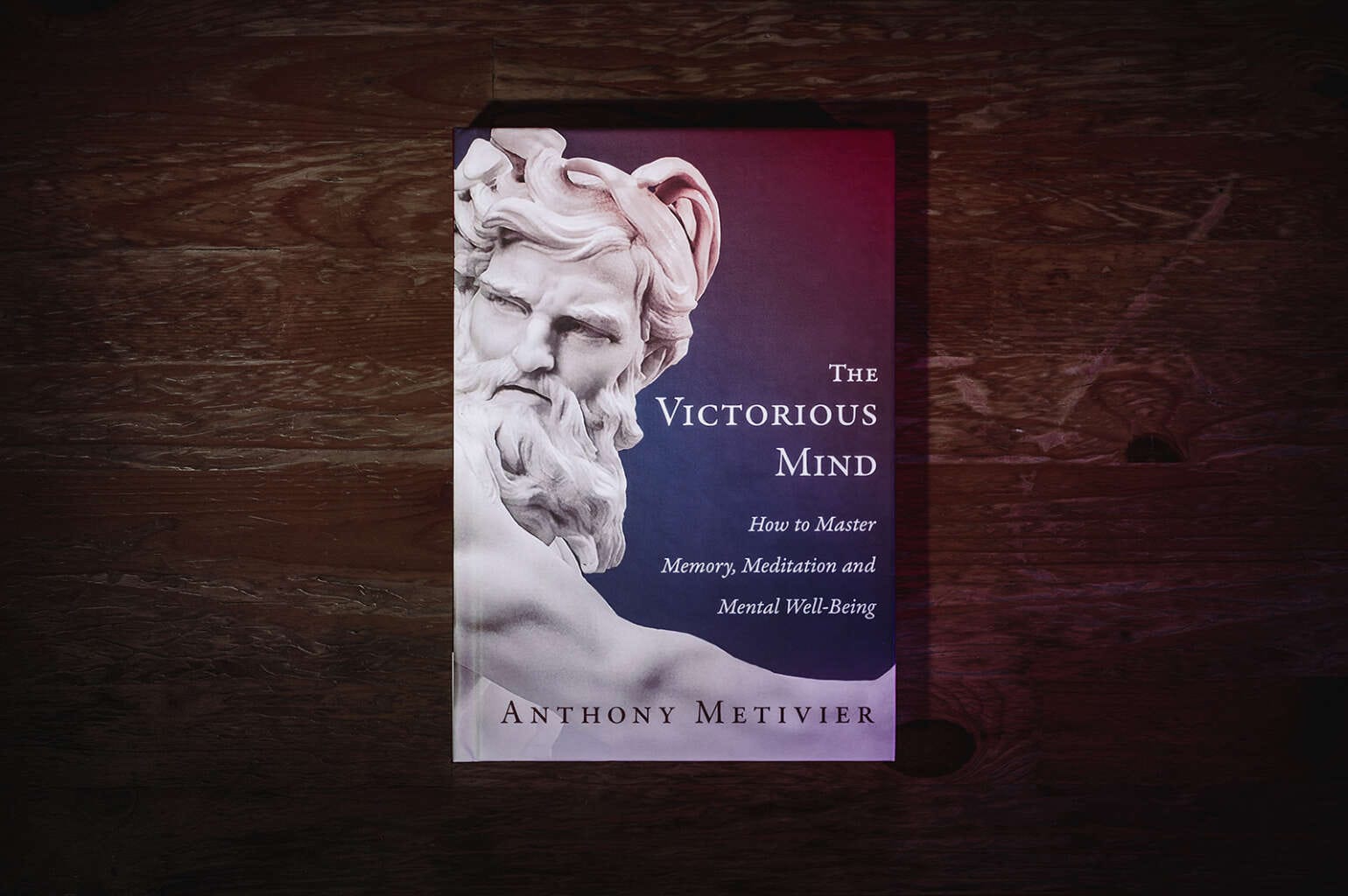
With this growth came a degree of mental clarity and focus I hadn’t previously experienced. For the full story, I wrote about how it all unfolded in The Victorious Mind.
Here’s a key point:
Judgment blocks your growth because it rules out taking a second look.
And so this is where self-inquiry earns its place.
Before you act on a dislike, run it through at least a few of the questions I’ve shared.
Although some of your dislikes will survive the questioning, you’ll often find that you give more things in life a second try, if not a third.
How To Use More Of Your Mind and Memory Habitually
There are many more activities you’ll come up with along your personal journey of mental improvement. And I hope you’ll share your updates along the way.
To make sure that these strategies become habitual, schedule the activities in a calendar and show up.
Plan to explore each for at least 90 days at a rate of at least four times per week. If you can get more sessions in, all the better.
This approach works because your brain forms neuronal connections through repetition. And if you want even more help, grab my free memory improvement course here:
So what do you say? Are you ready to expand your brain’s capacity?
Dive in and keep us posted on your progress. I’ll be right there with you!

 Anthony Metivier is the founder of the Magnetic Memory Method, a systematic, 21st century approach to memorizing foreign language vocabulary, names, music, poetry and more in ways that are easy, elegant, effective and fun.
Dr. Metivier holds a Ph.D. in Humanities from York University and has been featured in Forbes, Viva Magazine, Fluent in 3 Months, Daily Stoic, Learning How to Learn and he has delivered one of the most popular TEDx Talks on memory improvement.
His most popular books include, The Victorious Mind and…
Anthony Metivier is the founder of the Magnetic Memory Method, a systematic, 21st century approach to memorizing foreign language vocabulary, names, music, poetry and more in ways that are easy, elegant, effective and fun.
Dr. Metivier holds a Ph.D. in Humanities from York University and has been featured in Forbes, Viva Magazine, Fluent in 3 Months, Daily Stoic, Learning How to Learn and he has delivered one of the most popular TEDx Talks on memory improvement.
His most popular books include, The Victorious Mind and… 



2 Responses
I am currently 28. I have been told multiple times over the past decade by various people that meditation can be extremely helpful. I have never before really tried to get into the groove of it, but, today I am making a self-promise to make this a daily thing for myself. Thank you very much for all the information you provide and am looking forward to taking in as much as I can to improve my mind, my health, ect.
Thanks for stopping by.
The best part is that there is a wide variety of meditation types to explore.
If one doesn’t suit you in the beginning, you can always explore another and then come back for another attempt later.
You can also interleave between different meditation types to create a variety of interesting states.