
Podcast: Download
Subscribe: Apple Podcasts | RSS
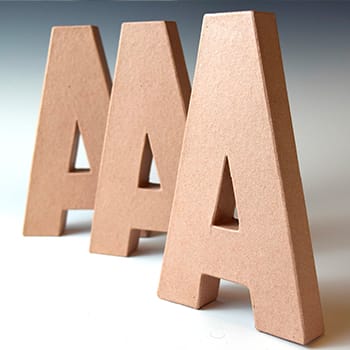 If you want to know how to remember the spelling of words, here’s the good news:
You usually don’t need to memorize every letter.
Instead, identify the part of the word you keep getting wrong. Then associate those troublesome letters with memorable images.
For example, if you can never remember whether “accommodate” has one C and M or two, you don’t need a mnemonic for all eleven letters.
You just need something memorable for CC and MM.
I might imagine Charlie Chaplin doing something outrageous to Mickey Mouse.
That’s much faster than trying to memorize the entire word.
Of course, sometimes you do need to memorize every letter. Children learning new words and people studying foreign languages are two obvious examples.
Either way, the basic process is simple:
- Identify the letters you need to remember.
- Turn those letters into memorable images.
- Place the images in a familiar location to preserve their order.
- Wait a few minutes before testing yourself.
- Write or type the word from memory.
- If you make a mistake, retrieve and improve your mnemonics rather than immediately relying on autocorrect.
Let’s look at exactly how to do it.
Why Is It So Hard to Remember How Words Are Spelled?
English spelling has always presented challenges.
Pronunciation doesn’t reliably tell you how every word should be spelled. Silent letters, doubled consonants and unusual combinations can all cause problems.
Our digital environment adds another challenge.
Autocorrect and spellcheck are useful, but they can also encourage us to outsource remembering. Instead of retrieving the correct spelling ourselves, we let the device supply it.
This problem relates to what researchers sometimes call digital amnesia: the tendency to rely on devices for information we might otherwise remember ourselves.
Education matters too.
In my discussion with memory expert Richard Rubin, we talked about the podcast Sold a Story and debates surrounding phonics and how reading has been taught. You can hear that discussion in my Richard Rubin interview.
Whatever caused a particular spelling weakness, the solution I’m going to show you involves active recall.
Rather than repeatedly staring at a troublesome word and hoping it sticks, you’ll give your memory something concrete to work with.
Your First Step to Remember Spellings: Build an Alphabet List
Start by developing an Alphabet List.
That means assigning one dynamic association to each letter of the alphabet.
This mnemonic strategy is related to the pegword method.
Your first list can be extremely simple:
- A = apple
- B = boat
- C = cat
- D = dog
- E = elephant
- …and so on.
Personally, I often prefer using people, particularly celebrities and other familiar figures.
People tend to be dynamic. They move, interact and do interesting things in the imagination.
For example:
- A = Al Pacino
- B = Bob Newhart
- C = Cory Hart
- D = Dame Edna
- …and so on.
Don’t simply copy my list, however.
Write your own A-Z list out by hand.
Looking at my examples can help you get started, but your own associations will usually be stronger because they already mean something to you.
You might struggle to find an association for every letter at first.
That’s okay.
Get started anyway.
There’s no reason to doubt these techniques. Mnemonic systems like these have a very long history. People such as Peter of Ravenna discussed systematic approaches to memory centuries ago.
Once you have enough alphabet associations to work with, you can start applying them to actual spelling problems.
Memorize the Uncertainty, Not the Entire Word
This is the most important improvement you can make to the basic technique.
If you already know 80 or 90 percent of a word, don’t create extra work by memorizing information you can already recall.
Focus your mnemonic on the letters that cause trouble.
Here are several examples.
Necessary
Suppose the part of “necessary” that causes trouble is remembering the double S.
I would use Sam Spade.
There’s no need for me to create an elaborate mnemonic for N-E-C-E-S-S-A-R-Y if those other letters aren’t causing the problem.
Accommodate
For the double C and double M in “accommodate,” I can imagine Charlie Chaplin interacting with Mickey Mouse.
Make the interaction exaggerated enough to remember.
The exact action matters much less than making it vivid and memorable to you.
Conscientious
“Conscientious” contains something you can easily turn into an image:
A scientist, ideally someone specific Bill Nye the Science Guy.
I can imagine this scientist encountering a mouse and squealing “eeee!”
The connection doesn’t need to make logical sense. It needs to direct you toward the spelling you’re trying to retrieve.
Mnemonic
“Mnemonic” is appropriately tricky to spell for a word about memory.
For the first letter, I can imagine Morpheus from The Matrix chewing on the letter N.
Again, strange is useful.
Rhythm
“Rhythm” gives us another spelling that doesn’t provide many comfortable vowel cues.
I can use Rick Hart the wrestler throwing a yacht.
The images give me concrete hooks where the letters themselves might otherwise remain abstract.
How to Memorize an Entire Spelling in a Memory Palace
Sometimes you may need to learn the entire sequence.
In that case, combine your alphabet associations in the exact order the word is spelled. Then place the sequence inside a Memory Palace.
Let’s use “toxic.”
I could imagine:
Tony Robbins sending an Owl to someone named Xavier, who throws an Iguana at a Cat.
T-O-X-I-C.
The story itself is ridiculous. The key is to use a familiar location to give each association a stable set of reference points that preserve their order.
A Spelling Memory Palace for Children
Using a Memory Palace can be particularly fun when helping children learn spelling.
Take the word “hilarious,” which I’m thinking of because I really loved learning that word when I was a kid.
Choose a room the child knows well. Then assign one letter to each location as you move systematically around it.
You might use corners and walls before moving to the ceiling and floor to complete the sequence.
H-I-L-A-R-I-O-U-S.
Now the child isn’t using rote learning.
They’re travelling mentally through a familiar space and actively retrieving each association and then decoding each letter in order.
How to Review Spelling Words So They Actually Stick
Creating a mnemonic is only the beginning.
Don’t immediately test yourself after encoding your associations.
Wait a few minutes.
Adding a delay matters because you want to practice retrieval, not simply repeat something that is still sitting in your immediate awareness.
Then, after a few minutes, write the word from memory.
Typing works too.
However, there’s an important catch.
Resist Autocorrect While Testing Yourself
If your computer or phone immediately fixes every mistake, you lose an opportunity to discover what you actually know.
Try to retrieve the spelling yourself first.
When you hesitate, think back to your mnemonic and ask questions like this of your own mnemonic examples:
- Where was Charlie Chaplin?
- What was Mickey Mouse doing?
- Was Sam Spade involved?
That moment of effort is useful.
You’re training yourself to retrieve the information instead of outsourcing the answer to software.
Once you’ve attempted the spelling yourself, by all means verify it.
Then repeat the encoding process later if necessary.
Write the Word From Memory
Writing is especially important because spelling isn’t merely recognition.
You need to be able to produce the letters in the correct order.
Seeing “accommodate” and thinking, “Yes, that looks right,” is not the same skill as producing A-C-C-O-M-M-O-D-A-T-E yourself.
That’s why I suggest writing troublesome words during your review.
Speak them aloud too.
Using your voice gives you another way to engage with the information, particularly when learning another language.
How I Use These Spelling Techniques With Foreign Languages
I’ve used variations of this approach while learning foreign languages and complicated terminology.
German provides some straightforward examples.
Take Drehbuch, the German word for screenplay or script.
I used Dr. Dre throwing an H-shaped boomerang at a book.
Dr. Dre gives me “Dre.” The unusual H-shaped boomerang helps me deal with the spelling, while the book gives me another concrete image connected to Buch.
Here’s another example where knowing multiple languages becomes useful.
The German word Tür means “door.”
That gave me material for remembering the Latin legal phrase res ipsa loquitur. I could imagine some licorice quitting its identity as candy and becoming a Tür, or door.
The more languages and associations you acquire, the more raw material you have for making new information memorable.
Sometimes I Invent My Own Spellings While Learning
Speaking aloud has also been important in my language learning.
When I was learning Chinese with Pimsleur, I didn’t initially have written versions of the recordings.
So I created what you might call my own “invented Pinyin.”
I listened carefully and wrote down my own approximations of what I heard.
Later, I could refine what I’d written as my knowledge developed.
I discuss this experience in more detail in my article about the Pimsleur Method.
The larger principle is useful for spelling:
Don’t remain passive.
Listen, speak, write, retrieve and correct.
What to Do When Your Spelling Mnemonic Fails
Sometimes an association doesn’t work.
That’s not a reason to abandon mnemonic techniques.
Failure is useful information.
If you’re keeping a memory journal, you can look back at the associations you created and ask why a particular image failed.
- Perhaps it wasn’t vivid enough.
- Maybe two associations were too similar.
- Or perhaps the interaction between the images wasn’t clear.
When this happens, elaborate the association.
One framework I use for strengthening mnemonic imagery is KAVE COGS. The point is to give your associations more sensory and imaginative characteristics so they’re easier to retrieve.
Instead of merely seeing Charlie Chaplin standing beside Mickey Mouse, make something happen.
Add movement, physical sensation and sound.
Make the characters interact and then exaggerate what they’re doing.
Then wait and test yourself again.
Remember:
Review is never just repetition. It’s always an opportunity to diagnose and repair your mnemonics.
How Long Should You Review a Spelling Mnemonic?
There’s no universal number of reviews you need.
Your goal is generally to reach the point where you can spell the word without having to consciously recall the mnemonic.
But you also don’t have to forget the association.
For example, many people can still recite:
“I before E except after C.”
They may not consciously need that mnemonic every time they write, but knowing it doesn’t cause a problem.
The same applies to your associations.
If Charlie Chaplin and Mickey Mouse continue popping into your mind when you spell “accommodate,” that’s fine.
Over time, however, regular reading and writing will often make deliberate mnemonic review unnecessary.
Once you consistently produce the correct spelling, you can usually let the mnemonic go.
How to Remember Spelling Words: Put the Technique Into Practice
Summing up, if you want to remember difficult spellings, don’t just reread them on an endless loop.
Identify exactly which letters keep causing trouble and apply memorable associations to them.
When you need the entire spelling, use your alphabet images in sequence and place them along a familiar mental journey.
Then wait a few minutes and test yourself by writing the word.
Avoid letting autocorrect answer too quickly.
If you make a mistake, return to the mnemonic, diagnose the problem and strengthen the association.
Most importantly, make the images your own.
My Charlie Chaplin, Mickey Mouse, Sam Spade, Morpheus, Rick Rubin and Dr. Dre associations work because they’re meaningful to me.
Your associations should come from your own life.
The broader collection of memory techniques I teach can help you build an even larger toolbox. You can also try my exercise on memorizing the books of the Bible if you want practice dealing with unusual names and intricate spellings.
And if you need help getting the Memory Palace part right, get my free course here:

It will help you create Memory Palaces you can use for spelling and many other kinds of information.
Start with one word you regularly misspell.
Give it an image.
Then wait a few minutes, pick up a pen and see if you can spell it correctly without help.

 Anthony Metivier is the founder of the Magnetic Memory Method, a systematic, 21st century approach to memorizing foreign language vocabulary, names, music, poetry and more in ways that are easy, elegant, effective and fun.
Dr. Metivier holds a Ph.D. in Humanities from York University and has been featured in Forbes, Viva Magazine, Fluent in 3 Months, Daily Stoic, Learning How to Learn and he has delivered one of the most popular TEDx Talks on memory improvement.
His most popular books include, The Victorious Mind and…
Anthony Metivier is the founder of the Magnetic Memory Method, a systematic, 21st century approach to memorizing foreign language vocabulary, names, music, poetry and more in ways that are easy, elegant, effective and fun.
Dr. Metivier holds a Ph.D. in Humanities from York University and has been featured in Forbes, Viva Magazine, Fluent in 3 Months, Daily Stoic, Learning How to Learn and he has delivered one of the most popular TEDx Talks on memory improvement.
His most popular books include, The Victorious Mind and… 



2 Responses
Hi, I’m trying out for my English UIL spelling team and was hoping that you’d have some advice on how to memorize the words because there are over a thousand and they’re not easy words. Plus I have to know when a certain word is capitalized or not.
The language is my native one but the spelling is killer. Please help of you can.
Thanks for this, Courtney.
The Magnetic Memory Method does describe exactly how to memorize this amount of words. In fact, Eldom Clem used it last year to cover 1000 words of Ancient Ethiopic in 6 weeks.
Have you taken the free video course offered on this site or read How to Learn and Memorize English Vocabulary? Those resources will help and contain all my best advice. All you need to do is follow the steps and you can repeat Eldon’s results and perhaps even with greater speed! 🙂