
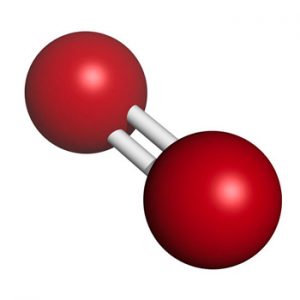
There are seven diatomic elements to remember in chemistry.
Today, you’ll learn how to memorize what they are and upgrade a diatomic elements mnemonic you may already know:
“Have No Fear of Ice Cold Beer.”
It’s useful. But it’s only the beginning.
A simple mnemonic phrase can certainly help you remember the names of the seven diatomic elements. But what if you also want to remember them confidently and connect them with their chemical symbols and formulas?
That’s where stronger memory techniques become useful.
In this tutorial, I’ll show you how to remember the diatomic elements using a Memory Palace combined with association and linking. Instead of endlessly repeating a sentence and hoping it sticks, you’ll turn the information into memorable associations placed in locations you already know.
Best of all, the same approach can be expanded far beyond these seven elements. Once you understand the underlying memory technique, you can apply it to the Periodic Table and many other kinds of information you need to learn for chemistry, medicine and other subjects.
Let’s start with the seven diatomic elements and build the mnemonic step-by-step.
How to Remember The Diatomic Elements in 3 Steps
The technique I’m going to teach you has been used for thousands of years.
People have used it to memorize and recite entire books backwards and forwards.
You can use it to learn languages much faster, and it will help you never forget a name again.
And since you’re dealing with just seven elements, this simple task won’t take long at all.
The technique involves combining mnemonic methods like linking and alphabetical associations within a Memory Palace.
Let’s look at how this combination of techniques works step-by-step.
Step One: Create A Seven Station Memory Palace
A Memory Palace is simply a mental recreation of a home, office or other familiar building.
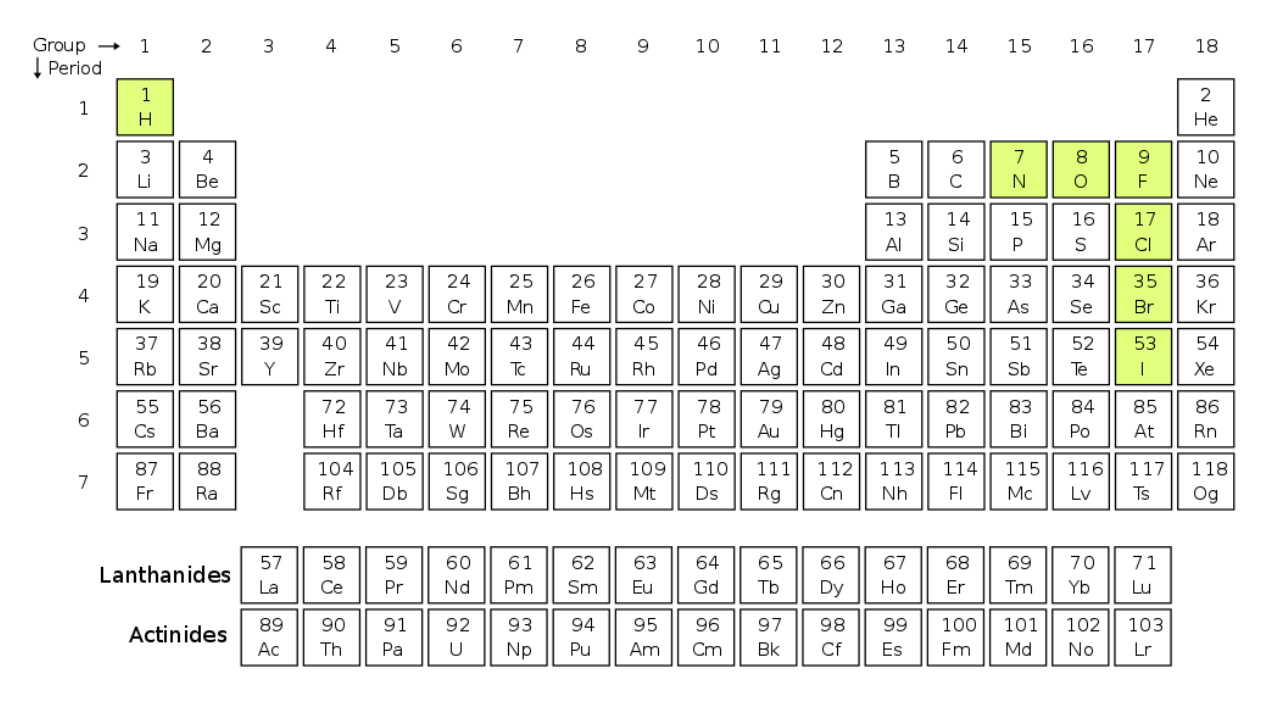
Although you can memorize all of these molecules according to location by noticing that everything after hydrogen makes a “seven” shape on the right side of the Periodic Table, we can do better.
We just need to pick a room and assign seven distinct spots in it.
Let’s say we have a bedroom that looks like the following illustration that I’ve highlighted with seven loci based on the method of loci, one place for each of the diatomic elements:
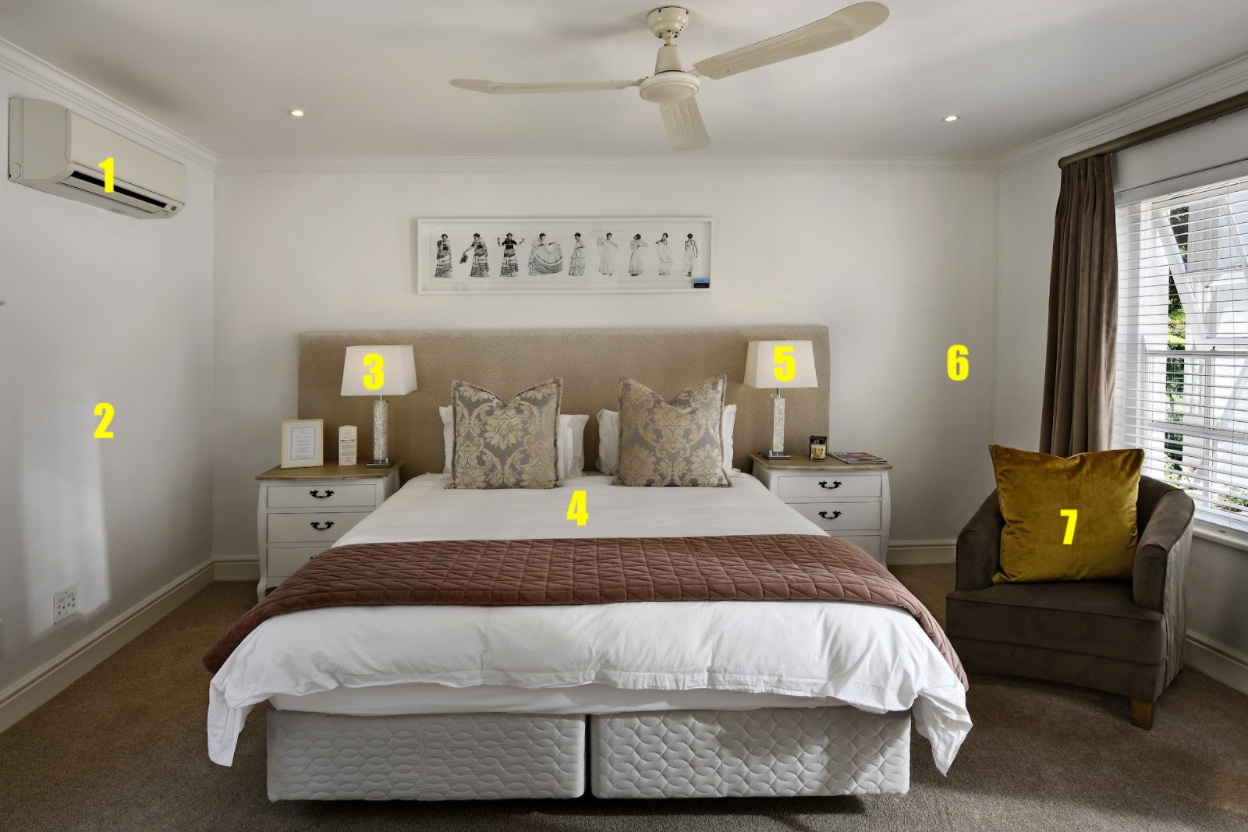
Obviously, the room you use will look different than the illustration.
The point is to identify a few locations that make sense to you in a way that resembles the clear and linear journey I’ve illustrated. It’s important that your journeys flow like this in order to keep the memorization process free from distraction.
In other words, you don’t want to have to think about the journey. You want it based on what you remember so you can easily travel it forward and backward just as you would in real life.
Once you have a list of locations (or loci), you’re going to pair the seven diatomic elements to each of the spots you’ve identified in your chosen room.
Step Two: Use Pop Culture To Create Highly Memorable Associations
To memorize a list quickly, place dynamic associations along a journey. These mnemonic references should ideally be pop culture figures, friends, family members or any kind of person already in your memory.
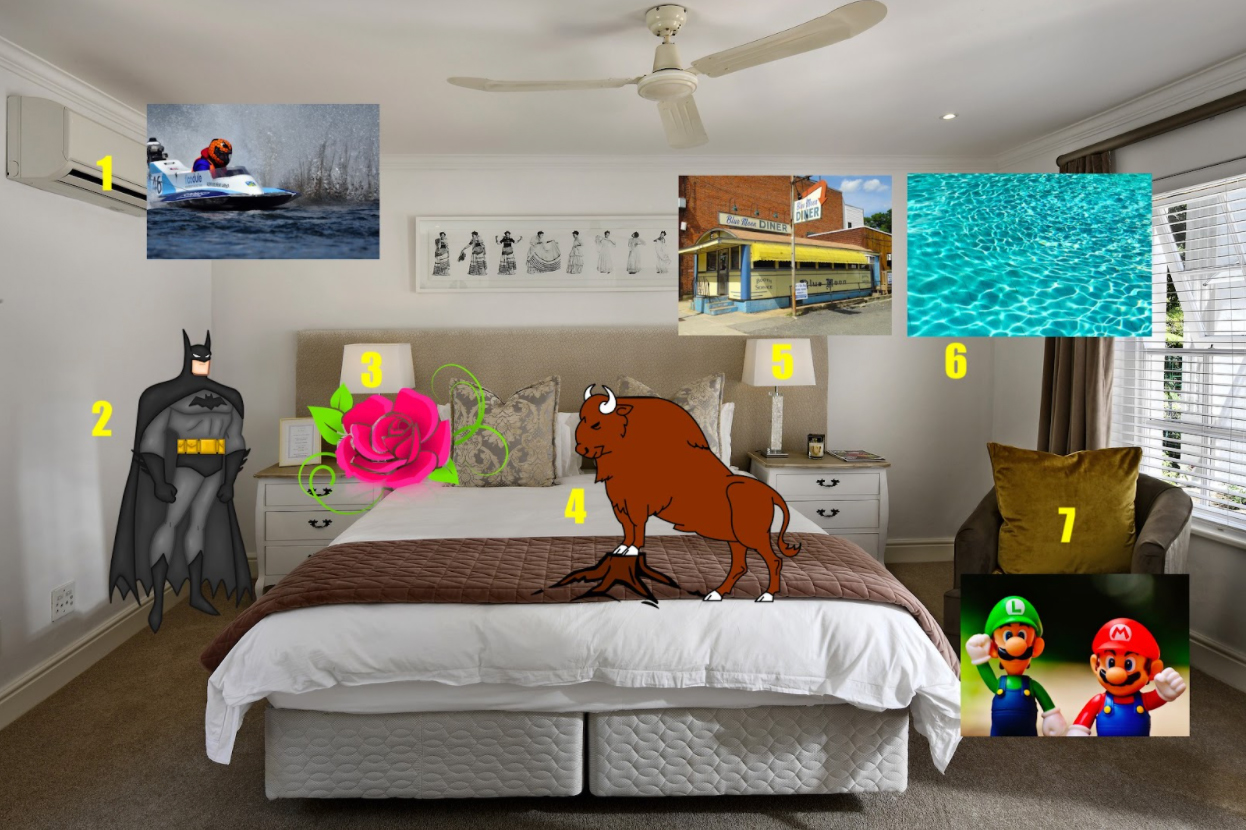
Check out the illustration below to look at my mnemonic examples before I explain them. I’ve placed a number of mnemonic associations using the linking method in combination with a Memory Palace in order to make each diatomic element.
The seven diatomic elements are:
- Hydrogen
- Nitrogen
- Fluorine
- Oxygen
- Iodine
- Chlorine
- Bromine
On the Periodic Table, they are placed like this:
Now, with this list in mind, imagine that the following scenarios are happening in your bedroom:
A hydroplane operated by Batman is shooting roses at an ox. It goes into a diner only to find that it’s been replaced by a swimming pool filled with turtles from Super Mario Brothers.
This story is so much easier to remember than the list elements on its own. That’s because I’ve encoded them in a story that uses as many pop culture references as possible. I would suggest the same approach if you also want to know how to remember diatomic molecules.
The technique worked for me because hydroplane reminds me of hydrogen based on the similarity of the two words and how easy they are to imagine in combination with a superhero. And since Batman is the “Dark Knight,” nitrogen instantly comes to mind because “Knight” and “nitrogen” have a very similar sounding first syllable.
Obviously, you’ll want to work with mnemonic associations that make sense to you and draw from references already in your memory. If you don’t know who the Mario Brothers are, for example, think of some other brothers for Bromine. Or perhaps imagine a “broken” mine to get close to the sound of the word.
This alphabetical association step is important because personalization is the key to forming effective active recall.
And if you need more information about the history of this focus on breaking words down to forge alphabetical associations that link with famous people, check out the medieval work of Peter of Ravenna. He was an early originator of breaking words down and associating them in this way.
Step Three: Add Numbers
If you want to also recall the atomic numbers, learn to use the Major System and the Pegword Method.
These additional mnemonic devices work by giving you an image for each and every number.
For example, you can add a swan’s wings to help you remember H2 because swans look a lot like 2.
If you want to know the number of the element itself on the Periodic Table of the Elements, please consider developing a PAO System. This will give you an image for every 2-digit number from 00-99.
I suggest that you secure the diatomic element in the Memory Palace first, then add the numbers you need after.
Add More Memory Skills
Now that you have a fun and easy alternative to using acronyms, why not continue piling on more memory skills?
For example, you can use similar approach to help yourself learn all about:
And if you’re really keen, you can use the same technique to memorize the entire Periodic Table of the Elements.
The trick is to really understand the Memory Palace technique.
And for that, I have a FREE Memory Improvement training course I’d love you to benefit from:

Its four video tutorials and three worksheets will help you rapidly scale this technique so you can learn complex information at least 3x faster.
So what do you say?
Are you ready to master the diatomic elements?
I know that you can and wish you great success!

 Anthony Metivier is the founder of the Magnetic Memory Method, a systematic, 21st century approach to memorizing foreign language vocabulary, names, music, poetry and more in ways that are easy, elegant, effective and fun.
Dr. Metivier holds a Ph.D. in Humanities from York University and has been featured in Forbes, Viva Magazine, Fluent in 3 Months, Daily Stoic, Learning How to Learn and he has delivered one of the most popular TEDx Talks on memory improvement.
His most popular books include, The Victorious Mind and…
Anthony Metivier is the founder of the Magnetic Memory Method, a systematic, 21st century approach to memorizing foreign language vocabulary, names, music, poetry and more in ways that are easy, elegant, effective and fun.
Dr. Metivier holds a Ph.D. in Humanities from York University and has been featured in Forbes, Viva Magazine, Fluent in 3 Months, Daily Stoic, Learning How to Learn and he has delivered one of the most popular TEDx Talks on memory improvement.
His most popular books include, The Victorious Mind and…