Podcast: Download
Subscribe: Apple Podcasts | RSS
 If you want to know how to think faster, there’s an important distinction to make first.
I’m not talking about somehow forcing your brain to process information at a higher speed.
I’m talking about something much more practical:
Reducing the amount of time you spend searching your memory for information you already know.
Think about how often you’ve experienced scenarios like these:
- Someone asks you a question and you know the answer, but you can’t quite bring it to mind.
- You’re giving a presentation and suddenly lose your next point.
- You’re in a conversation and remember the perfect example five minutes after the topic has changed.
- Or you’re trying to solve a problem, but the facts, ideas and frameworks you need feel scattered around your mind.
In situations like these, faster thinking has a lot to do with faster, better-organized recall.
I’ve experienced this relationship between memory and thinking from several angles.
Before becoming known worldwide as a memory expert and accelerated learning instructor, I spent years teaching critical thinking and Film Studies at the university level.
I also had to defend a doctoral dissertation, lecture in multiple languages and respond to unexpected questions from students.
Over the years, one lesson has become increasingly clear to me:
The easier it is to access what you’ve learned, the easier it is to work with that knowledge in real time.
Memory techniques like the Memory Palace can help because they give information structure.
Other tools, such as Memory Wheels, can help you rapidly explore different ideas and perspectives.
And even simple retrieval techniques can sometimes help when a name, fact or idea feels stuck on the tip of your tongue.
To that end, here’s what we’ll cover today:
- Why Better Recall Can Help You Think Faster
- How to Preload What You Need With a Memory Palace
- How I Used a Memory Palace to Think on My Feet at TEDx
- What to Do When You Know Something But Can’t Recall It
- How to Use Memory Wheels to Generate Ideas Faster
- How to Memorize Thinking Frameworks
- Why Knowledge and Vocabulary Matter
- How to Build Networks of Knowledge
- Why You Should Practice Retrieval
Ready?
Let’s dive in.
Why Better Recall Can Help You Think Faster
Thinking requires material, often of a complex nature. Especially when:
- Trying to answer a question about history, you need historical knowledge available.
- Discussing a book, it helps to remember its arguments and examples.
- Delivering a presentation, you need access to the points you planned to make.
- Trying to make a decision, you may want relevant facts, previous experiences and useful decision-making frameworks readily available.
This is why I don’t think of memory as a passive storage system.
Memory gives thinking something to work with.
Imagine two people have both read the same ten books on a subject.
One can recall only a vague impression of what the books said.
The other can readily bring key arguments, examples, terminology and quotations to mind.
Both technically read the same information.
But only one has much of it available for use.
That difference can make the second person appear to “think faster.”
In reality, they may simply be spending less time searching for useful information.
This is one reason I spend so much time encouraging people to actively train their memory rather than merely consuming more information.
Preload What You Need With a Memory Palace
One of the best ways I know to make information more readily available is to organize it before you need it.
I call this preloading.
Suppose you have an important presentation coming up.
You could read your notes several times and hope the sequence sticks.
Or you could deliberately encode the main points into a Memory Palace.
If you haven’t used one before, a Memory Palace involves choosing a familiar location and mentally placing information along a predetermined series of locations.
Instead of remembering an abstract list of points, you create a structured retrieval path.
For example, you might use:
- Your front door for your opening point
- The hallway for your first major argument
- The kitchen for your main example
- The living room for your next section
- Your bedroom for the conclusion
Of course, a well-developed Memory Palace uses more detailed associations than this simple example.
But the important principle is straightforward:
You decide in advance where the information is going to be encoded.
Then, instead of desperately asking yourself, “What was I supposed to say next?” you have a route to follow.
This approach can be useful for much more than speeches.
You can preload:
- Key facts before an exam
- Names before an important meeting
- Questions before an interview
- Vocabulary before speaking another language
- Arguments before a discussion
- Quotations you regularly want to use
- Examples related to your professional field
- Frameworks for solving recurring problems
The objective isn’t to eliminate thought.
It’s to reduce unnecessary searching so you have more attention available for whatever is happening in front of you.
New to the Memory Palace technique?
If you’ve never built a Memory Palace before, I have a free course that walks you through the process step by step.
You’ll learn how to create your first Memory Palace, encode information using memorable associations and practice recalling what you’ve stored.
If you’ve never built a Memory Palace before, I have a free course that walks you through the process step by step.
You’ll learn how to create your first Memory Palace, encode information using memorable associations and practice recalling what you’ve stored.
Then come back to this article, because once you understand the basic technique, the examples that follow will make a lot more sense.
Then come back to this article, because once you understand the basic technique, the examples that follow will make a lot more sense.
How a Memory Palace Helped Me Think on My Feet During My TEDx Talk
One of my clearest examples happened during my TEDx Talk.
I had memorized the presentation using the techniques I teach in my guide on how to memorize a speech.
The talk was not loosely memorized.
I knew it extremely well.
Then something happened that every speaker eventually encounters:
The audience didn’t react the way I expected.
A joke that had worked during rehearsal landed with almost no response.
Later, they laughed at something I hadn’t intended to be particularly funny.
You can see what I mean by watching the video of the TEDx here:

At that point, I had a choice.
I could cling to the performance I had imagined beforehand.
Or I could pay attention to the actual audience.
Because I wasn’t staring at notes or struggling to remember what came next, I could look at people and respond to what was happening in the room and make an unscripted joke.
Then, when that moment was finished, I simply returned to the next location in my Memory Palace and continued with the presentation.
The audience experienced the adjustment as spontaneity.
But the spontaneity was possible largely because so much had been prepared in advance.
When recall requires less attention, you have more attention available for adaptation.
You don’t have to choose between preparation and spontaneity.
Thorough preparation can help make spontaneity possible.
Mental Recall Under Pressure: What to Do When You Know Something But Can’t Access It
Of course, even trained memory sometimes fails.
One of the most common experiences of not being able to think quickly is this:
You know the information, but you can’t access it in the moment.
A person’s name is somewhere in your memory.
So is the title of a book.
Or the point you wanted to make.
But the harder you search for it, the further away it seems to move.
When this happens to me, I have a couple of simple retrieval strategies.
The Alphabet Retrieval Technique
When I suddenly can’t recall a name, fact or word, I sometimes mentally scan through the alphabet from A to Z.
I’m not claiming that this works every time.
It doesn’t.
But it works often enough that I continue using it. For example, the other day I was thinking about Alexander the Great and my mind blipped on the name Diogenes. Using this technique, I quickly restored the philosopher’s name to mind when I reached the letter D.
The idea is simple.
Letters can function as retrieval cues.
When I hit the correct first letter, that cue will sometimes help the rest of the name or word come back.
You’re probably familiar with similar experiences.
A few opening notes can bring an entire melody to mind.
The beginning of a quotation can make the rest suddenly accessible.
One detail about a place can cause an entire episode from your past to return.
Memory is highly associative, which is exactly why mnemonic techniques are so useful in the first place.
So the next time a word or name seems almost accessible, try the alphabet.
Don’t force it.
Just scan.
The “Let It Go” Retrieval Technique
If scanning doesn’t help, I often do something even simpler:
I stop trying to remember.
Instead of continuing to mentally wrestle with the missing information, I move on.
Sometimes the answer returns later.
You’ve probably experienced this yourself when a forgotten name suddenly comes back in the shower, while walking or halfway through an unrelated conversation.
The practical lesson isn’t that you should depend on information magically reappearing.
It’s that forcing recall indefinitely isn’t always useful.
Give yourself a reasonable attempt.
Try a retrieval cue.
Then move forward.
And when the information does return, consider whether it’s worth deliberately memorizing so that you have a stronger retrieval path next time.
That’s the larger goal.
Recovery tactics can help when memory fails.
But good encoding and retrieval practice help reduce how often you’re forced to rely on recovery tactics at all.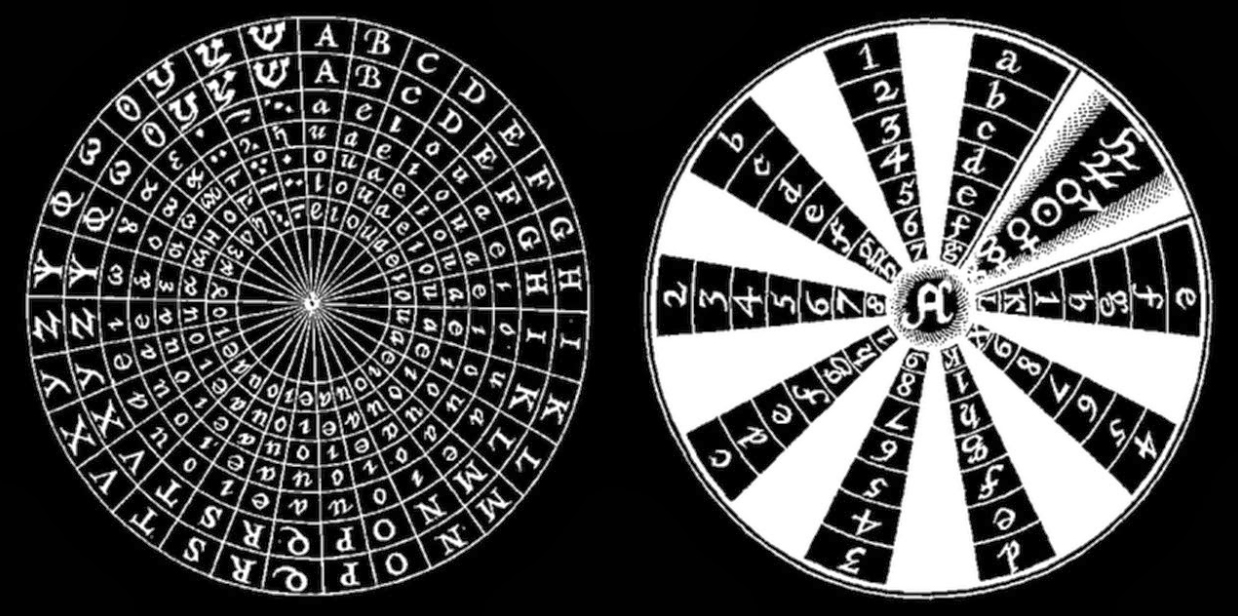
Use Memory Wheels to Generate More Than One Possible Answer
Remembering individual facts is useful.
But thinking often requires something more complex:
You need to combine ideas.
That’s where one of my favorite advanced memory tools enters the picture.
I call it a Memory Wheel, and it draws inspiration from figures in the historical memory tradition such as Ramon Llull and Giordano Bruno.
The larger tradition involves what is sometimes called ars combinatoria — the art of combination.
Here’s a simple way to understand how I use the principle.
Imagine you assign a thinker, framework or subject to different letters of the alphabet.
For example:
- A = Aristotle
- C = Cicero
- D = Descartes
- K = Kant
- M = Marcus Aurelius
- P = Plato
- S = Seneca
- Z = Žižek
Those are just examples drawn from the alphabet. If you’d like to see my using this structure out and about in public, here’s a YouTube short where I demonstrate the technique:

You could build a wheel around anything relevant to your interests or profession.
If someone asks me a complex philosophical question, I don’t necessarily need to wait passively for one brilliant answer to appear.
I can mentally move through thinkers I have studied and ask:
- What perspective does Aristotle give me?
- What does Marcus Aurelius add?
- Is there a useful contrast with another thinker?
- What ideas can I combine?
This is where memory training becomes much more interesting than simply remembering isolated facts.
You’re creating an organized inventory of knowledge you can search deliberately.
Instead of:
Quick, think of something intelligent.
you have:
Let’s inspect what I already know.
Those are very different mental situations and in this way, a Memory Wheel can give your thinking more flexibility and direction.
Memorize Thinking Frameworks Before You Need Them
You don’t need a medieval or Renaissance memory system every time you have to make a decision.
Sometimes you just need a useful framework available.
One I have used for years is W.R.A.P., which I learned from Chip and Dan Heath’s book Decisive.
It stands for:
- Widen your options
- Reality-test your assumptions
- Attain distance before deciding
- Prepare to be wrong
The framework itself isn’t a memory technique.
What interests me is what happens when you memorize the framework thoroughly enough that you don’t have to look it up.
Now it can appear when you need it.
Rather than vaguely thinking:
I should probably consider this problem more carefully…
you have four concrete prompts available.
Widen.
Reality-test.
Attain distance.
Prepare.
I’ve even placed frameworks like this on Memory Wheels so I can rotate through them.
You can do the same thing with other useful structures.
For example, the classic:
- Who?
- What?
- Where?
- When?
- Why?
- How?
Or a speaking framework like PREP:
The point is:
A framework you cannot remember when you need it is much less useful than one you have deliberately made retrievable.
This is where memory techniques can support better thinking.
Give Your Memory Better Raw Material
There is another obvious problem we have to deal with.
Fast retrieval isn’t particularly valuable if there’s nothing worth retreiving.
You need knowledge.
One reason knowledgeable people often seem quick is that they have more material available for comparison.
They know more:
- Words
- Examples
- Stories
- Historical events
- Quotations
- Arguments
- Counterarguments
- Models
- Principles
- People
- Books
Vocabulary is a good example.
If you encounter an unfamiliar word every few sentences, reading becomes slower because you repeatedly have to stop and work out what something means.
As your vocabulary grows, more language becomes immediately available.
The same principle applies within specialized fields. For example:
- Musicians who know harmony deeply thanks to memorizing music and can recognize musical relationships quickly.
- Historians familiar with date, people and events and the ability to spot patterns someone else misses.
- Language learners who have memorized thousands of useful words have more possibilities available when speaking.
- Someone who has deliberately memorized quotations, examples and frameworks has more material available during conversations.
This is one reason I enjoy memorizing poetry.
Poetry gives me language I can recall, contemplate and connect with other ideas.
I also memorize philosophical material, Sanskrit, speeches and other texts that matter to me.
You don’t need to memorize what I memorize.
But if you want your mind to have useful material available, deliberately choose what goes into it.
Build Networks Instead of Isolated Facts
Another reason I use Memory Palaces and Memory Wheels is that I don’t want everything I learn sitting in isolation.
I want ideas connecting with other ideas.
I’ve sometimes described this as the Rhizomatic Effect.
A rhizome spreads through interconnected roots.
Knowledge can develop in a similar way.
You learn one idea.
That idea reminds you of another.
The second idea reveals a connection with a book you read years ago.
That connection produces a new question.
Then the question gives you a reason to learn something else.
The richer your knowledge becomes, the more potential connections you have available.
Memory techniques help because you aren’t merely hoping these connections happen.
You can deliberately review information, move between structures and ask how one remembered idea relates to another.
A mature Memory Palace practice can become part of a much larger personal knowledge system.
This is one reason I don’t view the Memory Palace merely as a technique for remembering grocery lists or playing memory games.
The point is to make useful knowledge available for thinking, learning and creating.
Practice Retrieval, Not Just Consumption
If there’s one behavior I would encourage you to change after reading this article, it’s this:
Spend more time trying to retrieve what you’ve learned.
It’s very easy to confuse recognition with memory.
You reread a paragraph and think:
Yes, I know this.
But close the book and yourself if you can:
- Explain it?
- Give any key examples?
- Define the important terms?
- Reconstruct the argument?
- Connect it with something else you know?
- Describe any key charts or diagrams?
Those questions reveal whether the information is actually available to you.
One simple exercise is to stop after reading a section of a book and ask yourself what you remember before looking back.
Another is to explain what you learned aloud.
You can also deliberately encode especially important material in a Memory Palace and practice recalling it later.
The exact method matters less than one underlying principle:
Retrieval needs practice.
If you want information available during a conversation, exam or presentation, give yourself opportunities to retrieve it before the important moment arrives.
How to Think Faster by Remembering Better
So, can memory techniques really help you think faster?
In the practical sense I’ve described here, yes.
But notice what I’m not promising.
I’m not suggesting you can perform a few mental exercises and suddenly upgrade the processing speed of your brain.
Instead, I’m suggesting something both simpler and more useful:
- You can reduce the amount of time you spend searching for information.
- You can deliberately organize knowledge.
- You can memorize frameworks so they’re available when you need them.
- You can build retrieval structures like Memory Palaces and Memory Wheels.
- You can practice bringing knowledge back instead of merely exposing yourself to more and more information.
That gives thinking better material to work with.
My experience during presentations, teaching, studying, writing and conversation has shown me the value of this repeatedly.
Often, thinking faster starts with remembering better.
If you want to experience this for yourself, start with the Memory Palace technique with the help of this free course:

Choose something genuinely useful to you.
Encode it.
Practice recalling it.
Then put yourself in situations where you actually use what you’ve remembered.
That’s where memory stops being a party trick and becomes a tool for thinking.

 Anthony Metivier is the founder of the Magnetic Memory Method, a systematic, 21st century approach to memorizing foreign language vocabulary, names, music, poetry and more in ways that are easy, elegant, effective and fun.
Dr. Metivier holds a Ph.D. in Humanities from York University and has been featured in Forbes, Viva Magazine, Fluent in 3 Months, Daily Stoic, Learning How to Learn and he has delivered one of the most popular TEDx Talks on memory improvement.
His most popular books include, The Victorious Mind and…
Anthony Metivier is the founder of the Magnetic Memory Method, a systematic, 21st century approach to memorizing foreign language vocabulary, names, music, poetry and more in ways that are easy, elegant, effective and fun.
Dr. Metivier holds a Ph.D. in Humanities from York University and has been featured in Forbes, Viva Magazine, Fluent in 3 Months, Daily Stoic, Learning How to Learn and he has delivered one of the most popular TEDx Talks on memory improvement.
His most popular books include, The Victorious Mind and…