
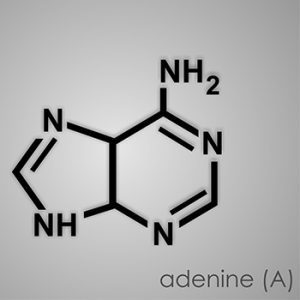
 Chances are, you already understand what you need to know about purines and the pyrimidines.
The problem is that you can’t remember the details.
Even after drawing out the structures by hand multiple times.
Unfortunately, there’s an abundance of horrible mnemonic examples out there for these structures.
And that’s a shame because using memory techniques properly is by far the best way to help yourself learn and remember complex information like this.
But if your purine pyrimidine mnemonic is not well-formed or striking enough, it’s unlikely to help you.
That’s why on this page you’re going to learn how to rapidly create and amplify the mnemonics you need to improve your recall.
Ready?
Let’s dive in.
How to Remember Purines and Pyrimidines Fast: The Purine Pyrimidine Mnemonic
One of the biggest ways to help yourself remember facts about purines and pyrimidines, is to know what’s coming on your exam.
Some of the information involves identifying chemical structures, Lewis dots and other information. You might also need to be able to identify functional groups.
Other parts involve being able to define words such as guanine and uracil.
Some people suggest using acronyms like “Pure As Gold” to help you remember:
- Purines
- Adenine
- Guanine
But what if this approach doesn’t work for you?
Give the following steps a try instead.
Step One: Use A Memory Palace
Since you need to know that purines have two rings, it’s useful to arrange this information spatially.
Let me take you into the deep end of the technique first, then I’ll break it down.

Imagine you walk into your living room. You see an angel shooting an arrow through one of two golden rings at a magician wearing an Adidas sweater. He’s producing a number nine between his hands as an iguana tries to eat the second ring.
This scene encodes everything you need to remember about purines: they have two rings, one is called adenine and the other guanine.
Can you puzzle through how the Adidas magician producing nines helps trigger back the word “adenine?”
When you use associations like this with little stories that create memorable links, you make it easier to learn faster.
Although the phrase, “Pure As Gold” is helpful, it doesn’t encode the actual words you need to recall.
But with your own Memory Palace in play, you will have the specific words embedded in a dynamic story that combines a specific location with an association.
That way, you can think back to the location and ask yourself, “What did I imagine was happening there?” You can apply mnemonic devices like these for each and every piece of information you need to pass the MCAT, making learning everything much more enjoyable and accurate.
Step Two: Amplify Your Associations
Mnemonic associations help you recall even the most abstract and figure-based information because you take unfamiliar material and pair it with sounds and images already in your memory.
The challenge when you learn the pyrimidines is that you face lot of different kinds of information to cover.
But you can find a way to use mnemonic associations in Memory Palaces for complex words and figures, so let’s start by looking the following terms first:
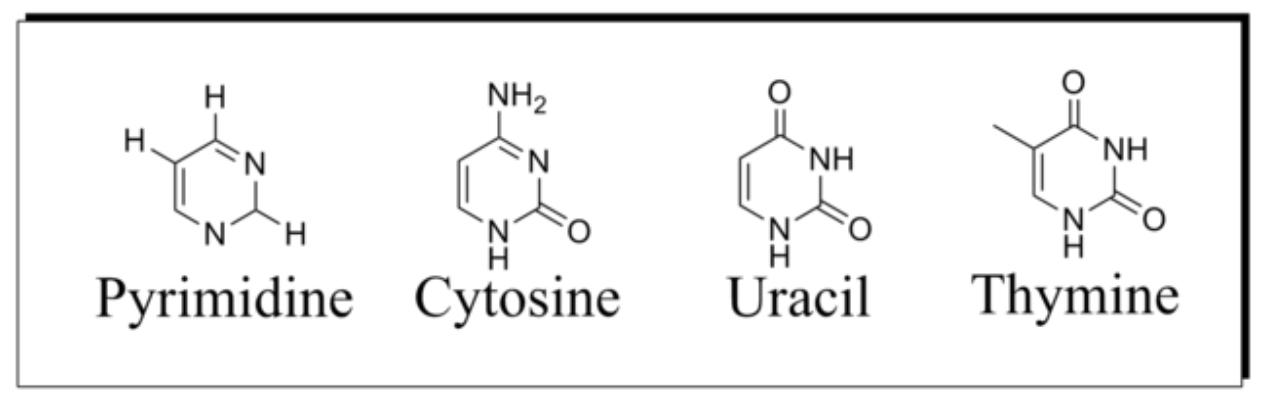
A lot of people have suggested that you use an acronym like “CUT” to help you recall cytosine, uracil and thymine.
For some people, that word on its own will work just fine. But for most of us, this kind of acronym fails to help us remember each individual word in the acronym. That’s because neither the sounds or the visual appearance of the chemical structures are made clear by “CUT.”
But what if an imaginary version of living room includes an imaginary poster that helps you remember both the word and the structure at the same time?
Here’s an illustration to help you understand the difference between using an acronym and associations in a Memory Palace:
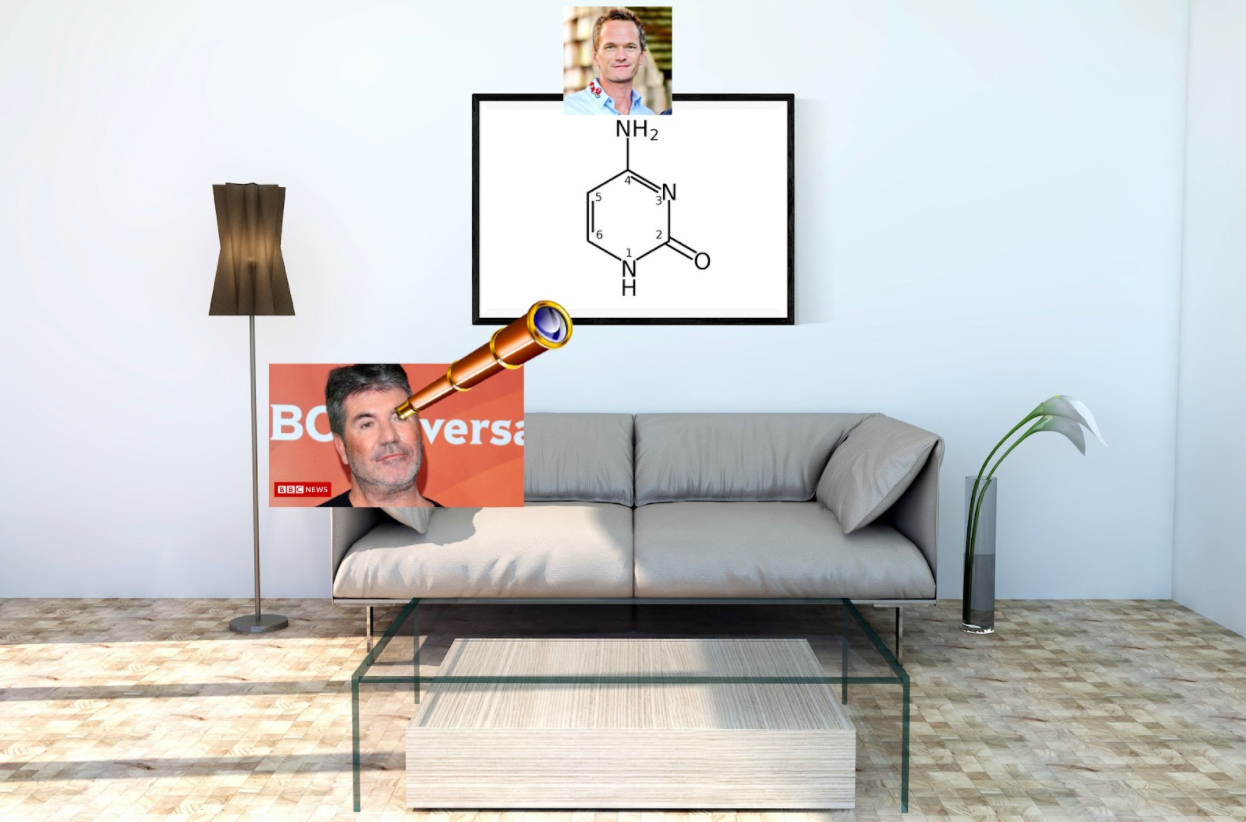
Take the word “cytosine.”
Instead of embedding it in an acronym, this illustration details a person with a similar sounding name doing something with a similar sounding object.
Simon Cowell, for example, is using a sight to look at a constellation shaped like cytosine in the illustration. Both the name Simon and the word “sight” resemble the sound of cytosine, forming a much stronger link for you to remember than just “C” in the acronym “CUT.”
Next, for NH, you can pick someone like Neil Patrick Harris to trigger that knowledge because his initials are NH.
All you have to do next is exaggerate the images and revisit the associations. Make Simon angry and Harris annoyed. Maybe have Simon throwing his site at a “sign” Harris is holding to make the sound stronger in your mind.
Next, use the principles of active recall. This means deliberately asking yourself to revisit what you encoded so that your brain can create neural connections that lead to durable memories.
Step Three: Practice
Learning these mnemonic strategies takes most people about two afternoons.
All you need to do is craft a few Memory Palaces and then create some lists of associations based around the alphabet.
To learn more about how to do so, check out this full discussion of the best memory techniques. And if you want more examples for learning goals related to the purines and the pyrimidines, check out how you can apply mnemonics to remembering details pertaining to:
And if you need more help when it comes to improving your memory for studying, feel free to register for this FREE Memory Improvement Kit:

It will guide you through everything step-by-step and comes with four videos and detailed worksheets with even more examples.
The Best Purine Pyrimidine Mnemonic?
At the end of the day, there’s nothing completely wrong with any mnemonic example you find on the Internet. Some people are okay with vague and generic mnemonics
What matters is that the process works for you.
I hope what you’ve discovered on this page helps you out if you’ve found that other solutions don’t work.
Yes, the Magnetic Memory Method approach is more robust. That’s because it works for memorizing all kinds of things, not just medical terms.
And if you’re interested in the same technique people have learned for thousands of years, check out this list of ancient memory techniques next.
To your success!

 Anthony Metivier is the founder of the Magnetic Memory Method, a systematic, 21st century approach to memorizing foreign language vocabulary, names, music, poetry and more in ways that are easy, elegant, effective and fun.
Dr. Metivier holds a Ph.D. in Humanities from York University and has been featured in Forbes, Viva Magazine, Fluent in 3 Months, Daily Stoic, Learning How to Learn and he has delivered one of the most popular TEDx Talks on memory improvement.
His most popular books include, The Victorious Mind and…